mirror of
https://github.com/ggerganov/llama.cpp.git
synced 2026-02-26 14:23:22 +02:00
Compare commits
30 Commits
master-018
...
master-54b
| Author | SHA1 | Date | |
|---|---|---|---|

|
54bb60e268 | ||
|
|
8a0f8673ba | ||
|
|
0c5692345d | ||
|
|
957c8ae21d | ||
|
|
9b0a4d4214 | ||
|
|
2ec83428de | ||
|
|
e4cf982e0d | ||
|
|
c4fe84fb0d | ||
|
|
1d78fecdab | ||
|
|
284685f169 | ||
|
|
edce63baa9 | ||
|
|
ec9cdb6752 | ||
|
|
e4422e299c | ||
|
|
53c8434398 | ||
|
|
c6524f46eb | ||
|
|
c9e2c26f41 | ||
|
|
0e018fe008 | ||
|
|
857308d1e8 | ||
|
|
c50b628810 | ||
|
|
5f939498d5 | ||
|
|
36b4f7e064 | ||
|
|
10f19c1121 | ||
|
|
7e312f165c | ||
|
|
872c365a91 | ||
|
|
955ef9a5d5 | ||
|
|
c5aa5e5777 | ||
|
|
e9a9cb0c54 | ||
|
|
b6e7f9b09e | ||
|
|
50cb666b8a | ||
|
|
25d7abbd1f |
26
.github/workflows/build.yml
vendored
26
.github/workflows/build.yml
vendored
@@ -12,17 +12,15 @@ on:
|
||||
- master
|
||||
paths: ['.github/workflows/**', '**/CMakeLists.txt', '**/Makefile', '**/*.h', '**/*.c', '**/*.cpp']
|
||||
pull_request:
|
||||
types: [opened, synchronize, edited, reopened, review_requested, ready_for_review]
|
||||
types: [opened, synchronize, reopened]
|
||||
paths: ['**/CMakeLists.txt', '**/Makefile', '**/*.h', '**/*.c', '**/*.cpp']
|
||||
|
||||
env:
|
||||
BRANCH_NAME: ${{ github.head_ref || github.ref_name }}
|
||||
|
||||
jobs:
|
||||
ubuntu-latest-make:
|
||||
if: github.event.pull_request.draft == false
|
||||
|
||||
runs-on: ubuntu-latest
|
||||
ubuntu-focal-make:
|
||||
runs-on: ubuntu-20.04
|
||||
|
||||
steps:
|
||||
- name: Clone
|
||||
@@ -33,16 +31,14 @@ jobs:
|
||||
id: depends
|
||||
run: |
|
||||
sudo apt-get update
|
||||
sudo apt-get install build-essential
|
||||
sudo apt-get install build-essential gcc-8
|
||||
|
||||
- name: Build
|
||||
id: make_build
|
||||
run: |
|
||||
make
|
||||
CC=gcc-8 make
|
||||
|
||||
ubuntu-latest-cmake:
|
||||
if: github.event.pull_request.draft == false
|
||||
|
||||
runs-on: ubuntu-latest
|
||||
|
||||
steps:
|
||||
@@ -71,8 +67,6 @@ jobs:
|
||||
ctest --verbose
|
||||
|
||||
ubuntu-latest-cmake-sanitizer:
|
||||
if: github.event.pull_request.draft == false
|
||||
|
||||
runs-on: ubuntu-latest
|
||||
|
||||
continue-on-error: true
|
||||
@@ -108,8 +102,6 @@ jobs:
|
||||
ctest --verbose
|
||||
|
||||
macOS-latest-make:
|
||||
if: github.event.pull_request.draft == false
|
||||
|
||||
runs-on: macos-latest
|
||||
|
||||
steps:
|
||||
@@ -128,8 +120,6 @@ jobs:
|
||||
make
|
||||
|
||||
macOS-latest-cmake:
|
||||
if: github.event.pull_request.draft == false
|
||||
|
||||
runs-on: macOS-latest
|
||||
|
||||
steps:
|
||||
@@ -157,8 +147,6 @@ jobs:
|
||||
ctest --verbose
|
||||
|
||||
windows-latest-cmake:
|
||||
if: github.event.pull_request.draft == false
|
||||
|
||||
runs-on: windows-latest
|
||||
|
||||
strategy:
|
||||
@@ -169,7 +157,7 @@ jobs:
|
||||
- build: 'avx'
|
||||
defines: '-DLLAMA_AVX2=OFF'
|
||||
- build: 'avx512'
|
||||
defines: '-DLLAMA_AVX512=ON'
|
||||
defines: '-DLLAMA_AVX512=ON -DBUILD_SHARED_LIBS=ON'
|
||||
|
||||
steps:
|
||||
- name: Clone
|
||||
@@ -228,7 +216,7 @@ jobs:
|
||||
runs-on: ubuntu-latest
|
||||
|
||||
needs:
|
||||
- ubuntu-latest-make
|
||||
- ubuntu-focal-make
|
||||
- ubuntu-latest-cmake
|
||||
- macOS-latest-make
|
||||
- macOS-latest-cmake
|
||||
|
||||
@@ -201,6 +201,10 @@ endif()
|
||||
|
||||
if (MSVC)
|
||||
add_compile_definitions(_CRT_SECURE_NO_WARNINGS)
|
||||
|
||||
if (BUILD_SHARED_LIBS)
|
||||
set(CMAKE_WINDOWS_EXPORT_ALL_SYMBOLS ON)
|
||||
endif()
|
||||
endif()
|
||||
|
||||
if (LLAMA_LTO)
|
||||
@@ -308,6 +312,7 @@ add_library(ggml OBJECT
|
||||
target_include_directories(ggml PUBLIC .)
|
||||
target_compile_features(ggml PUBLIC c_std_11) # don't bump
|
||||
target_link_libraries(ggml PUBLIC Threads::Threads ${LLAMA_EXTRA_LIBS})
|
||||
|
||||
if (BUILD_SHARED_LIBS)
|
||||
set_target_properties(ggml PROPERTIES POSITION_INDEPENDENT_CODE ON)
|
||||
endif()
|
||||
@@ -320,6 +325,7 @@ add_library(llama
|
||||
target_include_directories(llama PUBLIC .)
|
||||
target_compile_features(llama PUBLIC cxx_std_11) # don't bump
|
||||
target_link_libraries(llama PRIVATE ggml ${LLAMA_EXTRA_LIBS})
|
||||
|
||||
if (BUILD_SHARED_LIBS)
|
||||
set_target_properties(llama PROPERTIES POSITION_INDEPENDENT_CODE ON)
|
||||
target_compile_definitions(llama PRIVATE LLAMA_SHARED LLAMA_BUILD)
|
||||
|
||||
24
Makefile
24
Makefile
@@ -74,13 +74,17 @@ endif
|
||||
# feel free to update the Makefile for your architecture and send a pull request or issue
|
||||
ifeq ($(UNAME_M),$(filter $(UNAME_M),x86_64 i686))
|
||||
# Use all CPU extensions that are available:
|
||||
CFLAGS += -march=native -mtune=native
|
||||
CFLAGS += -march=native -mtune=native
|
||||
CXXFLAGS += -march=native -mtune=native
|
||||
|
||||
# Usage AVX-only
|
||||
#CFLAGS += -mfma -mf16c -mavx
|
||||
#CXXFLAGS += -mfma -mf16c -mavx
|
||||
endif
|
||||
ifneq ($(filter ppc64%,$(UNAME_M)),)
|
||||
POWER9_M := $(shell grep "POWER9" /proc/cpuinfo)
|
||||
ifneq (,$(findstring POWER9,$(POWER9_M)))
|
||||
CFLAGS += -mcpu=power9
|
||||
CFLAGS += -mcpu=power9
|
||||
CXXFLAGS += -mcpu=power9
|
||||
endif
|
||||
# Require c++23's std::byteswap for big-endian support.
|
||||
@@ -101,18 +105,24 @@ ifdef LLAMA_OPENBLAS
|
||||
LDFLAGS += -lopenblas
|
||||
endif
|
||||
ifdef LLAMA_CUBLAS
|
||||
CFLAGS += -DGGML_USE_CUBLAS -I/usr/local/cuda/include
|
||||
LDFLAGS += -lcublas -lculibos -lcudart -lcublasLt -lpthread -ldl -lrt -L/usr/local/cuda/lib64
|
||||
OBJS += ggml-cuda.o
|
||||
CFLAGS += -DGGML_USE_CUBLAS -I/usr/local/cuda/include
|
||||
LDFLAGS += -lcublas -lculibos -lcudart -lcublasLt -lpthread -ldl -lrt -L/usr/local/cuda/lib64
|
||||
OBJS += ggml-cuda.o
|
||||
NVCC = nvcc
|
||||
NVCCFLAGS = --forward-unknown-to-host-compiler -arch=native
|
||||
ggml-cuda.o: ggml-cuda.cu ggml-cuda.h
|
||||
nvcc -arch=native -c -o $@ $<
|
||||
$(NVCC) $(NVCCFLAGS) $(CXXFLAGS) -Wno-pedantic -c $< -o $@
|
||||
endif
|
||||
ifdef LLAMA_GPROF
|
||||
CFLAGS += -pg
|
||||
CXXFLAGS += -pg
|
||||
endif
|
||||
ifdef LLAMA_PERF
|
||||
CFLAGS += -DGGML_PERF
|
||||
CXXFLAGS += -DGGML_PERF
|
||||
endif
|
||||
ifneq ($(filter aarch64%,$(UNAME_M)),)
|
||||
CFLAGS += -mcpu=native
|
||||
CFLAGS += -mcpu=native
|
||||
CXXFLAGS += -mcpu=native
|
||||
endif
|
||||
ifneq ($(filter armv6%,$(UNAME_M)),)
|
||||
|
||||
23
README.md
23
README.md
@@ -241,7 +241,7 @@ Here is an example of a few-shot interaction, invoked with the command
|
||||
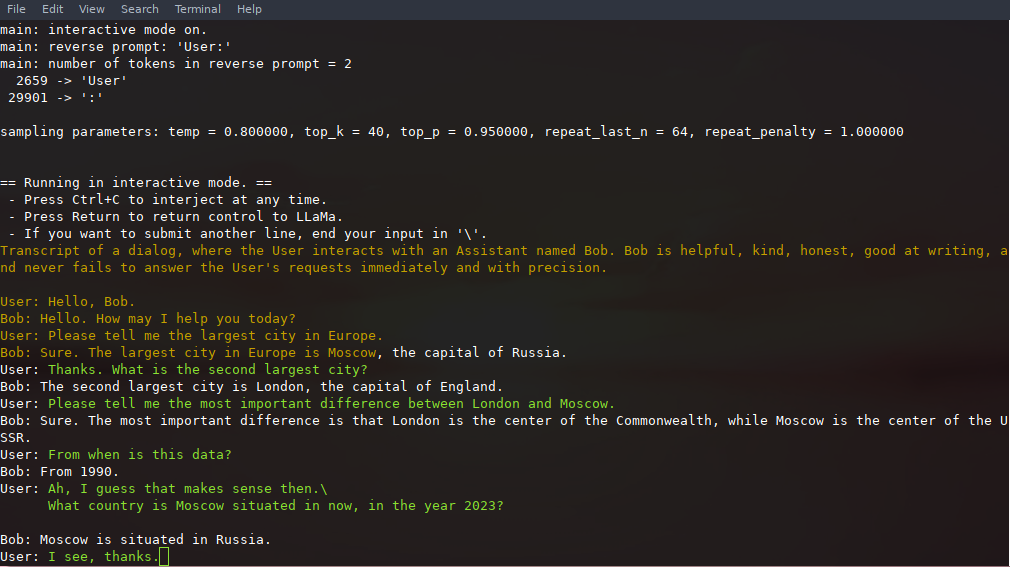
./main -m ./models/13B/ggml-model-q4_0.bin -n 256 --repeat_penalty 1.0 --color -i -r "User:" -f prompts/chat-with-bob.txt
|
||||
```
|
||||
|
||||
Note the use of `--color` to distinguish between user input and generated text.
|
||||
Note the use of `--color` to distinguish between user input and generated text. Other parameters are explained in more detail in the [README](examples/main/README.md) for the `main` example program.
|
||||
|
||||
|
||||
|
||||
@@ -275,18 +275,19 @@ cadaver, cauliflower, cabbage (vegetable), catalpa (tree) and Cailleach.
|
||||
|
||||
### Using [GPT4All](https://github.com/nomic-ai/gpt4all)
|
||||
|
||||
- Obtain the `gpt4all-lora-quantized.bin` model
|
||||
- It is distributed in the old `ggml` format, which is now obsoleted
|
||||
- You have to convert it to the new format using [./convert-gpt4all-to-ggml.py](./convert-gpt4all-to-ggml.py). You may also need to
|
||||
convert the model from the old format to the new format with [./migrate-ggml-2023-03-30-pr613.py](./migrate-ggml-2023-03-30-pr613.py):
|
||||
- Obtain the `tokenizer.model` file from LLaMA model and put it to `models`
|
||||
- Obtain the `added_tokens.json` file from Alpaca model and put it to `models`
|
||||
- Obtain the `gpt4all-lora-quantized.bin` file from GPT4All model and put it to `models/gpt4all-7B`
|
||||
- It is distributed in the old `ggml` format which is now obsoleted
|
||||
- You have to convert it to the new format using `convert.py`:
|
||||
|
||||
```bash
|
||||
python3 convert-gpt4all-to-ggml.py models/gpt4all-7B/gpt4all-lora-quantized.bin ./models/tokenizer.model
|
||||
python3 migrate-ggml-2023-03-30-pr613.py models/gpt4all-7B/gpt4all-lora-quantized.bin models/gpt4all-7B/gpt4all-lora-quantized-new.bin
|
||||
```
|
||||
```bash
|
||||
python3 convert.py models/gpt4all-7B/gpt4all-lora-quantized.bin
|
||||
```
|
||||
|
||||
- You can now use the newly generated `gpt4all-lora-quantized-new.bin` model in exactly the same way as all other models
|
||||
- The original model is saved in the same folder with a suffix `.orig`
|
||||
- You can now use the newly generated `models/gpt4all-7B/ggml-model-q4_0.bin` model in exactly the same way as all other models
|
||||
|
||||
- The newer GPT4All-J model is not yet supported!
|
||||
|
||||
### Obtaining and verifying the Facebook LLaMA original model and Stanford Alpaca model data
|
||||
|
||||
|
||||
@@ -34,4 +34,5 @@ else()
|
||||
add_subdirectory(quantize-stats)
|
||||
add_subdirectory(perplexity)
|
||||
add_subdirectory(embedding)
|
||||
add_subdirectory(save-load-state)
|
||||
endif()
|
||||
|
||||
@@ -7,4 +7,13 @@
|
||||
cd `dirname $0`
|
||||
cd ..
|
||||
|
||||
./main -m ./models/ggml-alpaca-7b-q4.bin --color -f ./prompts/alpaca.txt --ctx_size 2048 -n -1 -ins -b 256 --top_k 10000 --temp 0.2 --repeat_penalty 1 -t 7
|
||||
./main -m ./models/ggml-alpaca-7b-q4.bin \
|
||||
--color \
|
||||
-f ./prompts/alpaca.txt \
|
||||
--ctx_size 2048 \
|
||||
-n -1 \
|
||||
-ins -b 256 \
|
||||
--top_k 10000 \
|
||||
--temp 0.2 \
|
||||
--repeat_penalty 1.1 \
|
||||
-t 7
|
||||
|
||||
@@ -156,10 +156,8 @@ bool gpt_params_parse(int argc, char ** argv, gpt_params & params) {
|
||||
params.interactive = true;
|
||||
} else if (arg == "--embedding") {
|
||||
params.embedding = true;
|
||||
} else if (arg == "--interactive-start") {
|
||||
params.interactive = true;
|
||||
} else if (arg == "--interactive-first") {
|
||||
params.interactive_start = true;
|
||||
params.interactive_first = true;
|
||||
} else if (arg == "-ins" || arg == "--instruct") {
|
||||
params.instruct = true;
|
||||
} else if (arg == "--color") {
|
||||
|
||||
@@ -20,7 +20,7 @@ struct gpt_params {
|
||||
int32_t repeat_last_n = 64; // last n tokens to penalize
|
||||
int32_t n_parts = -1; // amount of model parts (-1 = determine from model dimensions)
|
||||
int32_t n_ctx = 512; // context size
|
||||
int32_t n_batch = 8; // batch size for prompt processing
|
||||
int32_t n_batch = 512; // batch size for prompt processing (must be >=32 to use BLAS)
|
||||
int32_t n_keep = 0; // number of tokens to keep from initial prompt
|
||||
|
||||
// sampling parameters
|
||||
@@ -43,7 +43,7 @@ struct gpt_params {
|
||||
bool interactive = false; // interactive mode
|
||||
|
||||
bool embedding = false; // get only sentence embedding
|
||||
bool interactive_start = false; // wait for user input immediately
|
||||
bool interactive_first = false; // wait for user input immediately
|
||||
|
||||
bool instruct = false; // instruction mode (used for Alpaca models)
|
||||
bool ignore_eos = false; // do not stop generating after eos
|
||||
|
||||
@@ -1,3 +1,191 @@
|
||||
# main
|
||||
# llama.cpp/example/main
|
||||
|
||||
TODO
|
||||
This example program allows you to use various LLaMA language models in an easy and efficient way. It is specifically designed to work with the [llama.cpp](https://github.com/ggerganov/llama.cpp) project, which provides a plain C/C++ implementation with optional 4-bit quantization support for faster, lower memory inference, and is optimized for desktop CPUs. This program can be used to perform various inference tasks with LLaMA models, including generating text based on user-provided prompts and chat-like interactions with reverse prompts.
|
||||
|
||||
## Table of Contents
|
||||
|
||||
1. [Quick Start](#quick-start)
|
||||
2. [Common Options](#common-options)
|
||||
3. [Input Prompts](#input-prompts)
|
||||
4. [Interaction](#interaction)
|
||||
5. [Context Management](#context-management)
|
||||
6. [Generation Flags](#generation-flags)
|
||||
7. [Performance Tuning and Memory Options](#performance-tuning-and-memory-options)
|
||||
8. [Additional Options](#additional-options)
|
||||
|
||||
## Quick Start
|
||||
|
||||
To get started right away, run the following command, making sure to use the correct path for the model you have:
|
||||
|
||||
```bash
|
||||
./main -m models/7B/ggml-model.bin --prompt "Once upon a time"
|
||||
```
|
||||
|
||||
The following command generates "infinite" text from a starting prompt (you can use `Ctrl-C` to stop it):
|
||||
|
||||
```bash
|
||||
./main -m models/7B/ggml-model.bin --ignore-eos --n_predict -1 --keep -1 --prompt "Once upon a time"
|
||||
```
|
||||
|
||||
For an interactive experience, try this command:
|
||||
|
||||
```bash
|
||||
./main -m models/7B/ggml-model.bin -n -1 --color -r "User:" --in-prefix " " --prompt $'User: Hi\nAI: Hello. I am an AI chatbot. Would you like to talk?\nUser: Sure!\nAI: What would you like to talk about?\nUser:'
|
||||
```
|
||||
|
||||
Note that the newline characters in the prompt string above only work on Linux. On Windows, you will have to use the ``--file`` option (see below) to load a multi-line prompt from file instead.
|
||||
|
||||
## Common Options
|
||||
|
||||
In this section, we cover the most commonly used options for running the `main` program with the LLaMA models:
|
||||
|
||||
- `-m FNAME, --model FNAME`: Specify the path to the LLaMA model file (e.g., `models/7B/ggml-model.bin`).
|
||||
- `-i, --interactive`: Run the program in interactive mode, allowing you to provide input directly and receive real-time responses.
|
||||
- `-ins, --instruct`: Run the program in instruction mode, which is particularly useful when working with Alpaca models.
|
||||
- `-t N, --threads N`: Set the number of threads to use during computation. It is recommended to set this to the number of physical cores your CPU has.
|
||||
- `-n N, --n_predict N`: Set the number of tokens to predict when generating text. Adjusting this value can influence the length of the generated text.
|
||||
- `-c N, --ctx_size N`: Set the size of the prompt context. The default is 512, but LLaMA models were built with a context of 2048, which will provide better results for longer input/inference.
|
||||
|
||||
## Input Prompts
|
||||
|
||||
The `main` program provides several ways to interact with the LLaMA models using input prompts:
|
||||
|
||||
- `--prompt PROMPT`: Provide a prompt directly as a command-line option.
|
||||
- `--file FNAME`: Provide a file containing a prompt or multiple prompts.
|
||||
- `--interactive-first`: Run the program in interactive mode and wait for input right away. (More on this below.)
|
||||
- `--random-prompt`: Start with a randomized prompt.
|
||||
|
||||
## Interaction
|
||||
|
||||
The `main` program offers a seamless way to interact with LLaMA models, allowing users to engage in real-time conversations or provide instructions for specific tasks. The interactive mode can be triggered using various options, including `--interactive`, `--interactive-first`, and `--instruct`.
|
||||
|
||||
In interactive mode, users can participate in text generation by injecting their input during the process. Users can press `Ctrl+C` at any time to interject and type their input, followed by pressing `Return` to submit it to the LLaMA model. To submit additional lines without finalizing input, users can end the current line with a backslash (`\`) and continue typing.
|
||||
|
||||
### Interaction Options
|
||||
|
||||
- `-i, --interactive`: Run the program in interactive mode, allowing users to engage in real-time conversations or provide specific instructions to the model.
|
||||
- `--interactive-first`: Run the program in interactive mode and immediately wait for user input before starting the text generation.
|
||||
- `-ins, --instruct`: Run the program in instruction mode, which is specifically designed to work with Alpaca models that excel in completing tasks based on user instructions.
|
||||
- `--color`: Enable colorized output to differentiate visually distinguishing between prompts, user input, and generated text.
|
||||
|
||||
By understanding and utilizing these interaction options, you can create engaging and dynamic experiences with the LLaMA models, tailoring the text generation process to your specific needs.
|
||||
|
||||
### Reverse Prompts
|
||||
|
||||
Reverse prompts are a powerful way to create a chat-like experience with a LLaMA model by pausing the text generation when specific text strings are encountered:
|
||||
|
||||
- `-r PROMPT, --reverse-prompt PROMPT`: Specify one or multiple reverse prompts to pause text generation and switch to interactive mode. For example, `-r "User:"` can be used to jump back into the conversation whenever it's the user's turn to speak. This helps create a more interactive and conversational experience. However, the reverse prompt doesn't work when it ends with a space.
|
||||
|
||||
To overcome this limitation, you can use the `--in-prefix` flag to add a space or any other characters after the reverse prompt.
|
||||
|
||||
### In-Prefix
|
||||
|
||||
The `--in-prefix` flag is used to add a prefix to your input, primarily, this is used to insert a space after the reverse prompt. Here's an example of how to use the `--in-prefix` flag in conjunction with the `--reverse-prompt` flag:
|
||||
|
||||
```sh
|
||||
./main -r "User:" --in-prefix " "
|
||||
```
|
||||
|
||||
### Instruction Mode
|
||||
|
||||
Instruction mode is particularly useful when working with Alpaca models, which are designed to follow user instructions for specific tasks:
|
||||
|
||||
- `-ins, --instruct`: Enable instruction mode to leverage the capabilities of Alpaca models in completing tasks based on user-provided instructions.
|
||||
|
||||
Technical detail: the user's input is internally prefixed with the reverse prompt (or ``### Instruction:`` as the default), and followed by ``### Response:`` (except if you just press Return without any input, to keep generating a longer response).
|
||||
|
||||
By understanding and utilizing these interaction options, you can create engaging and dynamic experiences with the LLaMA models, tailoring the text generation process to your specific needs.
|
||||
|
||||
## Context Management
|
||||
|
||||
During text generation, LLaMA models have a limited context size, which means they can only consider a certain number of tokens from the input and generated text. When the context fills up, the model resets internally, potentially losing some information from the beginning of the conversation or instructions. Context management options help maintain continuity and coherence in these situations.
|
||||
|
||||
### Context Size
|
||||
|
||||
The `--ctx_size` option allows you to set the size of the prompt context used by the LLaMA models during text generation. A larger context size helps the model to better comprehend and generate responses for longer input or conversations.
|
||||
|
||||
- `-c N, --ctx_size N`: Set the size of the prompt context (default: 512). The LLaMA models were built with a context of 2048, which will yield the best results on longer input/inference. However, increasing the context size beyond 2048 may lead to unpredictable results.
|
||||
|
||||
### Keep Prompt
|
||||
|
||||
The `--keep` option allows users to retain the original prompt when the model runs out of context, ensuring a connection to the initial instruction or conversation topic is maintained.
|
||||
|
||||
- `--keep N`: Specify the number of tokens from the initial prompt to retain when the model resets its internal context. By default, this value is set to 0 (meaning no tokens are kept). Use `-1` to retain all tokens from the initial prompt.
|
||||
|
||||
By utilizing context management options like `--ctx_size` and `--keep`, you can maintain a more coherent and consistent interaction with the LLaMA models, ensuring that the generated text remains relevant to the original prompt or conversation.
|
||||
|
||||
## Generation Flags
|
||||
|
||||
The following options are related to controlling the text generation process, influencing the diversity, creativity, and quality of the generated text. Understanding these options will help you fine-tune the output according to your needs:
|
||||
|
||||
### Number of Tokens to Predict
|
||||
|
||||
- `-n N, --n_predict N`: Set the number of tokens to predict when generating text (default: 128, -1 = infinity).
|
||||
|
||||
The `--n_predict` option controls the number of tokens the model generates in response to the input prompt. By adjusting this value, you can influence the length of the generated text. A higher value will result in longer text, while a lower value will produce shorter text. A value of -1 will cause text to be generated without limit.
|
||||
|
||||
It is important to note that the generated text may be shorter than the specified number of tokens if an End-of-Sequence (EOS) token or a reverse prompt is encountered. In interactive mode text generation will pause and control will be returned to the user. In non-interactive mode, the program will end. In both cases, the text generation may stop before reaching the specified `n_predict` value. If you want the model to keep going without ever producing End-of-Sequence on its own, you can use the ``--ignore-eos`` parameter.
|
||||
|
||||
### RNG Seed
|
||||
|
||||
- `-s SEED, --seed SEED`: Set the random number generator (RNG) seed (default: -1).
|
||||
|
||||
The RNG seed is used to initialize the random number generator that influences the text generation process. By setting a specific seed value, you can obtain consistent and reproducible results across multiple runs with the same input and settings. This can be helpful for testing, debugging, or comparing the effects of different options on the generated text to see when they diverge. If the seed is set to a value less than or equal to 0, a random seed will be used, which will result in different outputs on each run.
|
||||
|
||||
### Temperature
|
||||
|
||||
- `--temp N`: Adjust the randomness of the generated text (default: 0.8).
|
||||
|
||||
Temperature is a hyperparameter that controls the randomness of the generated text. It affects the probability distribution of the model's output tokens. A higher temperature (e.g., 1.5) makes the output more random and creative, while a lower temperature (e.g., 0.5) makes the output more focused, deterministic, and conservative. The default value is 0.8, which provides a balance between randomness and determinism. At the extreme, a temperature of 0 will always pick the most likely next token, leading to identical outputs in each run.
|
||||
|
||||
Example usage: `--temp 0.8`
|
||||
|
||||
### Repeat Penalty
|
||||
|
||||
- `--repeat_penalty N`: Control the repetition of token sequences in the generated text (default: 1.1).
|
||||
|
||||
Repeat penalty is a hyperparameter used to penalize the repetition of token sequences during text generation. It helps prevent the model from generating repetitive or monotonous text. A higher value (e.g., 1.5) will penalize repetitions more strongly, while a lower value (e.g., 0.9) will be more lenient. The default value is 1.1.
|
||||
|
||||
Example usage: `--repeat_penalty 1.1`
|
||||
|
||||
### Top-K Sampling
|
||||
|
||||
- `--top_k N`: Limit the next token selection to the K most probable tokens (default: 40).
|
||||
|
||||
Top-k sampling is a text generation method that selects the next token only from the top k most likely tokens predicted by the model. It helps reduce the risk of generating low-probability or nonsensical tokens, but it may also limit the diversity of the output. A higher value for top_k (e.g., 100) will consider more tokens and lead to more diverse text, while a lower value (e.g., 10) will focus on the most probable tokens and generate more conservative text. The default value is 40.
|
||||
|
||||
Example usage: `--top_k 40`
|
||||
|
||||
### Top-P Sampling
|
||||
|
||||
- `--top_p N`: Limit the next token selection to a subset of tokens with a cumulative probability above a threshold P (default: 0.9).
|
||||
|
||||
Top-p sampling, also known as nucleus sampling, is another text generation method that selects the next token from a subset of tokens that together have a cumulative probability of at least p. This method provides a balance between diversity and quality by considering both the probabilities of tokens and the number of tokens to sample from. A higher value for top_p (e.g., 0.95) will lead to more diverse text, while a lower value (e.g., 0.5) will generate more focused and conservative text. The default value is 0.9.
|
||||
|
||||
Example usage: `--top_p 0.9`
|
||||
|
||||
By adjusting these options, you can control the diversity, quality, and creativity of the generated text to better suit your needs. You can experiment with different combinations of values to find the best settings for your specific use case.
|
||||
|
||||
## Performance Tuning and Memory Options
|
||||
|
||||
These options help improve the performance and memory usage of the LLaMA models:
|
||||
|
||||
- `-t N, --threads N`: Set the number of threads to use during computation. Using the correct number of threads can greatly improve performance. It is recommended to set this value to the number of CPU cores.
|
||||
- `--mlock`: Lock the model in memory, preventing it from being swapped out when mmaped. This can improve performance.
|
||||
- `--no-mmap`: Do not memory-map the model. This results in a slower load time but may reduce pageouts if you're not using `mlock`.
|
||||
- `--memory_f32`: Use 32 bit floats instead of 16 bit floats for memory key+value, allowing higher quality inference at the cost of memory.
|
||||
- `-b N, --batch_size N`: Set the batch size for prompt processing (default: 512). This large batch size benefits users who have BLAS installed and enabled it during the build. If you don't have BLAS enabled ("BLAS=0"), you can use a smaller number, such as 8, to see the prompt progress as it's evaluated in some situations.
|
||||
|
||||
For information about 4-bit quantization, which can significantly improve performance and reduce memory usage, please refer to llama.cpp's primary [README](../../README.md#prepare-data--run).
|
||||
|
||||
By understanding and using these performance tuning settings, you can optimize the LLaMA model's behavior to achieve the best performance for your specific needs.
|
||||
|
||||
## Additional Options
|
||||
|
||||
These options provide extra functionality and customization when running the LLaMA models:
|
||||
|
||||
- `-h, --help`: Display a help message showing all available options and their default values. This is particularly useful for checking the latest options and default values, as they can change frequently, and the information in this document may become outdated.
|
||||
- `--verbose-prompt`: Print the prompt before generating text.
|
||||
- `--mtest`: Test the model's functionality by running a series of tests to ensure it's working properly.
|
||||
- `--lora FNAME`: Apply a LoRA (Low-Rank Adaptation) adapter to the model (implies --no-mmap). This allows you to adapt the pretrained model to specific tasks or domains.
|
||||
- `--lora-base FNAME`: Optional model to use as a base for the layers modified by the LoRA adapter. This flag is used in conjunction with the `--lora` flag, and specifies the base model for the adaptation.
|
||||
|
||||
@@ -25,6 +25,7 @@
|
||||
#endif
|
||||
|
||||
static console_state con_st;
|
||||
static llama_context ** g_ctx;
|
||||
|
||||
static bool is_interacting = false;
|
||||
|
||||
@@ -36,6 +37,7 @@ void sigint_handler(int signo) {
|
||||
if (!is_interacting) {
|
||||
is_interacting=true;
|
||||
} else {
|
||||
llama_print_timings(*g_ctx);
|
||||
_exit(130);
|
||||
}
|
||||
}
|
||||
@@ -94,6 +96,7 @@ int main(int argc, char ** argv) {
|
||||
//bool is_prime(int n) {)";
|
||||
|
||||
llama_context * ctx;
|
||||
g_ctx = &ctx;
|
||||
|
||||
// load the model
|
||||
{
|
||||
@@ -175,12 +178,12 @@ int main(int argc, char ** argv) {
|
||||
|
||||
// in instruct mode, we inject a prefix and a suffix to each input by the user
|
||||
if (params.instruct) {
|
||||
params.interactive_start = true;
|
||||
params.interactive_first = true;
|
||||
params.antiprompt.push_back("### Instruction:\n\n");
|
||||
}
|
||||
|
||||
// enable interactive mode if reverse prompt or interactive start is specified
|
||||
if (params.antiprompt.size() != 0 || params.interactive_start) {
|
||||
if (params.antiprompt.size() != 0 || params.interactive_first) {
|
||||
params.interactive = true;
|
||||
}
|
||||
|
||||
@@ -243,7 +246,7 @@ int main(int argc, char ** argv) {
|
||||
#endif
|
||||
" - Press Return to return control to LLaMa.\n"
|
||||
" - If you want to submit another line, end your input in '\\'.\n\n");
|
||||
is_interacting = params.interactive_start;
|
||||
is_interacting = params.interactive_first;
|
||||
}
|
||||
|
||||
bool is_antiprompt = false;
|
||||
|
||||
4
examples/save-load-state/CMakeLists.txt
Normal file
4
examples/save-load-state/CMakeLists.txt
Normal file
@@ -0,0 +1,4 @@
|
||||
set(TARGET save-load-state)
|
||||
add_executable(${TARGET} save-load-state.cpp)
|
||||
target_link_libraries(${TARGET} PRIVATE common llama ${CMAKE_THREAD_LIBS_INIT})
|
||||
target_compile_features(${TARGET} PRIVATE cxx_std_11)
|
||||
128
examples/save-load-state/save-load-state.cpp
Normal file
128
examples/save-load-state/save-load-state.cpp
Normal file
@@ -0,0 +1,128 @@
|
||||
#include <vector>
|
||||
#include <cstdio>
|
||||
#include <chrono>
|
||||
|
||||
#include "common.h"
|
||||
#include "llama.h"
|
||||
#include "llama.cpp"
|
||||
|
||||
using namespace std;
|
||||
|
||||
int main(int argc, char ** argv) {
|
||||
gpt_params params;
|
||||
params.model = "models/llama-7B/ggml-model.bin";
|
||||
params.seed = 42;
|
||||
params.n_threads = 4;
|
||||
params.repeat_last_n = 64;
|
||||
params.prompt = "The quick brown fox";
|
||||
|
||||
if (gpt_params_parse(argc, argv, params) == false) {
|
||||
return 1;
|
||||
}
|
||||
|
||||
auto lparams = llama_context_default_params();
|
||||
|
||||
lparams.n_ctx = params.n_ctx;
|
||||
lparams.n_parts = params.n_parts;
|
||||
lparams.seed = params.seed;
|
||||
lparams.f16_kv = params.memory_f16;
|
||||
lparams.use_mmap = params.use_mmap;
|
||||
lparams.use_mlock = params.use_mlock;
|
||||
|
||||
auto n_past = 0;
|
||||
auto last_n_tokens_data = vector<llama_token>(params.repeat_last_n, 0);
|
||||
|
||||
// init
|
||||
auto ctx = llama_init_from_file(params.model.c_str(), lparams);
|
||||
auto tokens = vector<llama_token>(params.n_ctx);
|
||||
auto n_prompt_tokens = llama_tokenize(ctx, params.prompt.c_str(), tokens.data(), tokens.size(), true);
|
||||
|
||||
if (n_prompt_tokens < 1) {
|
||||
fprintf(stderr, "%s : failed to tokenize prompt\n", __func__);
|
||||
return 1;
|
||||
}
|
||||
|
||||
// evaluate prompt
|
||||
|
||||
llama_eval(ctx, tokens.data(), n_prompt_tokens, n_past, params.n_threads);
|
||||
|
||||
last_n_tokens_data.insert(last_n_tokens_data.end(), tokens.data(), tokens.data() + n_prompt_tokens);
|
||||
n_past += n_prompt_tokens;
|
||||
|
||||
// Save state (rng, logits, embedding and kv_cache) to file
|
||||
FILE *fp_write = fopen("dump_state.bin", "wb");
|
||||
auto state_size = llama_get_state_size(ctx);
|
||||
auto state_mem = new uint8_t[state_size];
|
||||
llama_copy_state_data(ctx, state_mem); // could also copy directly to memory mapped file
|
||||
fwrite(state_mem, 1, state_size, fp_write);
|
||||
fclose(fp_write);
|
||||
|
||||
// save state (last tokens)
|
||||
auto last_n_tokens_data_saved = vector<llama_token>(last_n_tokens_data);
|
||||
auto n_past_saved = n_past;
|
||||
|
||||
// first run
|
||||
printf("\n%s", params.prompt.c_str());
|
||||
for (auto i = 0; i < params.n_predict; i++) {
|
||||
auto next_token = llama_sample_top_p_top_k(
|
||||
ctx,
|
||||
&last_n_tokens_data.back() - params.repeat_last_n,
|
||||
params.repeat_last_n,
|
||||
40,
|
||||
1.0,
|
||||
1.0,
|
||||
1.1);
|
||||
auto next_token_str = llama_token_to_str(ctx, next_token);
|
||||
last_n_tokens_data.push_back(next_token);
|
||||
printf("%s", next_token_str);
|
||||
if (llama_eval(ctx, &next_token, 1, n_past, params.n_threads)) {
|
||||
fprintf(stderr, "\n%s : failed to evaluate\n", __func__);
|
||||
return 1;
|
||||
}
|
||||
n_past += 1;
|
||||
}
|
||||
printf("\n\n");
|
||||
|
||||
// free old model
|
||||
llama_free(ctx);
|
||||
|
||||
// load new model
|
||||
|
||||
auto ctx2 = llama_init_from_file(params.model.c_str(), lparams);
|
||||
|
||||
// Load state (rng, logits, embedding and kv_cache) from file
|
||||
FILE *fp_read = fopen("dump_state.bin", "rb");
|
||||
auto state_size2 = llama_get_state_size(ctx2);
|
||||
if (state_size != state_size2) {
|
||||
fprintf(stderr, "\n%s : failed to validate state size\n", __func__);
|
||||
}
|
||||
fread(state_mem, 1, state_size, fp_read);
|
||||
llama_set_state_data(ctx2, state_mem); // could also read directly from memory mapped file
|
||||
fclose(fp_read);
|
||||
|
||||
// restore state (last tokens)
|
||||
last_n_tokens_data = last_n_tokens_data_saved;
|
||||
n_past = n_past_saved;
|
||||
|
||||
// second run
|
||||
for (auto i = 0; i < params.n_predict; i++) {
|
||||
auto next_token = llama_sample_top_p_top_k(
|
||||
ctx2,
|
||||
&last_n_tokens_data.back() - params.repeat_last_n,
|
||||
params.repeat_last_n,
|
||||
40,
|
||||
1.0,
|
||||
1.0,
|
||||
1.1);
|
||||
auto next_token_str = llama_token_to_str(ctx2, next_token);
|
||||
last_n_tokens_data.push_back(next_token);
|
||||
printf("%s", next_token_str);
|
||||
if (llama_eval(ctx2, &next_token, 1, n_past, params.n_threads)) {
|
||||
fprintf(stderr, "\n%s : failed to evaluate\n", __func__);
|
||||
return 1;
|
||||
}
|
||||
n_past += 1;
|
||||
}
|
||||
printf("\n\n");
|
||||
return 0;
|
||||
}
|
||||
116
ggml-cuda.cu
116
ggml-cuda.cu
@@ -1,5 +1,7 @@
|
||||
#include <stdint.h>
|
||||
#include <stdio.h>
|
||||
#include <cuda_fp16.h>
|
||||
#include <atomic>
|
||||
#include "ggml-cuda.h"
|
||||
|
||||
typedef uint16_t ggml_fp16_t;
|
||||
@@ -29,14 +31,12 @@ static_assert(sizeof(block_q4_2) == sizeof(ggml_fp16_t) + QK4_2 / 2, "wrong q4_2
|
||||
|
||||
#define QK4_3 16
|
||||
typedef struct {
|
||||
__half d; // delta
|
||||
__half m; // min
|
||||
uint8_t qs[QK4_3 / 2]; // nibbles / quants
|
||||
__half d; // delta
|
||||
__half m; // min
|
||||
uint8_t qs[QK4_3 / 2]; // nibbles / quants
|
||||
} block_q4_3;
|
||||
static_assert(sizeof(block_q4_3) == 2 * sizeof(ggml_fp16_t) + QK4_3 / 2, "wrong q4_3 block size/padding");
|
||||
|
||||
|
||||
|
||||
static __global__ void dequantize_block_q4_0(const void * vx, float * y) {
|
||||
const block_q4_0 * x = (const block_q4_0 *) vx;
|
||||
|
||||
@@ -131,24 +131,98 @@ static __global__ void dequantize_block_q4_3(const void * vx, float * y) {
|
||||
}
|
||||
}
|
||||
|
||||
extern "C" {
|
||||
__host__ void dequantize_row_q4_0_cuda(const void * vx, float * y, int k, cudaStream_t stream) {
|
||||
const int nb = k / QK4_0;
|
||||
dequantize_block_q4_0<<<nb, 1, 0, stream>>>(vx, y);
|
||||
}
|
||||
void dequantize_row_q4_0_cuda(const void * vx, float * y, int k, cudaStream_t stream) {
|
||||
const int nb = k / QK4_0;
|
||||
dequantize_block_q4_0<<<nb, 1, 0, stream>>>(vx, y);
|
||||
}
|
||||
|
||||
__host__ void dequantize_row_q4_1_cuda(const void * vx, float * y, int k, cudaStream_t stream) {
|
||||
const int nb = k / QK4_1;
|
||||
dequantize_block_q4_1<<<nb, 1, 0, stream>>>(vx, y);
|
||||
}
|
||||
void dequantize_row_q4_1_cuda(const void * vx, float * y, int k, cudaStream_t stream) {
|
||||
const int nb = k / QK4_1;
|
||||
dequantize_block_q4_1<<<nb, 1, 0, stream>>>(vx, y);
|
||||
}
|
||||
|
||||
__host__ void dequantize_row_q4_2_cuda(const void * vx, float * y, int k, cudaStream_t stream) {
|
||||
const int nb = k / QK4_2;
|
||||
dequantize_block_q4_2<<<nb, 1, 0, stream>>>(vx, y);
|
||||
}
|
||||
void dequantize_row_q4_2_cuda(const void * vx, float * y, int k, cudaStream_t stream) {
|
||||
const int nb = k / QK4_2;
|
||||
dequantize_block_q4_2<<<nb, 1, 0, stream>>>(vx, y);
|
||||
}
|
||||
|
||||
__host__ void dequantize_row_q4_3_cuda(const void * vx, float * y, int k, cudaStream_t stream) {
|
||||
const int nb = k / QK4_3;
|
||||
dequantize_block_q4_3<<<nb, 1, 0, stream>>>(vx, y);
|
||||
void dequantize_row_q4_3_cuda(const void * vx, float * y, int k, cudaStream_t stream) {
|
||||
const int nb = k / QK4_3;
|
||||
dequantize_block_q4_3<<<nb, 1, 0, stream>>>(vx, y);
|
||||
}
|
||||
|
||||
// buffer pool for cuda
|
||||
#define MAX_CUDA_BUFFERS 16
|
||||
|
||||
struct scoped_spin_lock {
|
||||
std::atomic_flag& lock;
|
||||
scoped_spin_lock(std::atomic_flag& lock) : lock(lock) {
|
||||
while (lock.test_and_set(std::memory_order_acquire)) {
|
||||
; // spin
|
||||
}
|
||||
}
|
||||
~scoped_spin_lock() {
|
||||
lock.clear(std::memory_order_release);
|
||||
}
|
||||
scoped_spin_lock(const scoped_spin_lock&) = delete;
|
||||
scoped_spin_lock& operator=(const scoped_spin_lock&) = delete;
|
||||
};
|
||||
|
||||
struct cuda_buffer {
|
||||
void * ptr = nullptr;
|
||||
size_t size = 0;
|
||||
};
|
||||
|
||||
static cuda_buffer g_cuda_buffer_pool[MAX_CUDA_BUFFERS];
|
||||
static std::atomic_flag g_cuda_pool_lock = ATOMIC_FLAG_INIT;
|
||||
|
||||
void * ggml_cuda_pool_malloc(size_t size, size_t * actual_size) {
|
||||
scoped_spin_lock lock(g_cuda_pool_lock);
|
||||
|
||||
for (int i = 0; i < MAX_CUDA_BUFFERS; ++i) {
|
||||
cuda_buffer& b = g_cuda_buffer_pool[i];
|
||||
if (b.size >= size && b.ptr != nullptr) {
|
||||
void * ptr = b.ptr;
|
||||
*actual_size = b.size;
|
||||
b.ptr = nullptr;
|
||||
b.size = 0;
|
||||
return ptr;
|
||||
}
|
||||
}
|
||||
void * ptr;
|
||||
CUDA_CHECK(cudaMalloc((void **) &ptr, size));
|
||||
*actual_size = size;
|
||||
return ptr;
|
||||
}
|
||||
|
||||
void ggml_cuda_pool_free(void * ptr, size_t size) {
|
||||
scoped_spin_lock lock(g_cuda_pool_lock);
|
||||
|
||||
for (int i = 0; i < MAX_CUDA_BUFFERS; ++i) {
|
||||
cuda_buffer& b = g_cuda_buffer_pool[i];
|
||||
if (b.ptr == nullptr) {
|
||||
b.ptr = ptr;
|
||||
b.size = size;
|
||||
return;
|
||||
}
|
||||
}
|
||||
fprintf(stderr, "WARNING: cuda buffer pool full, increase MAX_CUDA_BUFFERS\n");
|
||||
CUDA_CHECK(cudaFree(ptr));
|
||||
}
|
||||
|
||||
cublasHandle_t g_cublasH = NULL;
|
||||
cudaStream_t g_cudaStream = NULL;
|
||||
|
||||
void ggml_init_cublas(void) {
|
||||
if (g_cublasH == NULL) {
|
||||
// create cublas handle, bind a stream
|
||||
CUBLAS_CHECK(cublasCreate(&g_cublasH));
|
||||
|
||||
CUDA_CHECK(cudaStreamCreateWithFlags(&g_cudaStream, cudaStreamNonBlocking));
|
||||
|
||||
CUBLAS_CHECK(cublasSetStream(g_cublasH, g_cudaStream));
|
||||
|
||||
// configure logging to stdout
|
||||
// CUBLAS_CHECK(cublasLoggerConfigure(1, 1, 0, NULL));
|
||||
}
|
||||
}
|
||||
|
||||
29
ggml-cuda.h
29
ggml-cuda.h
@@ -1,7 +1,36 @@
|
||||
#include <cublas_v2.h>
|
||||
#include <cuda_runtime.h>
|
||||
|
||||
#ifdef __cplusplus
|
||||
extern "C" {
|
||||
#endif
|
||||
|
||||
#define CUDA_CHECK(err) \
|
||||
do { \
|
||||
cudaError_t err_ = (err); \
|
||||
if (err_ != cudaSuccess) { \
|
||||
fprintf(stderr, "CUDA error %d at %s:%d: %s\n", err_, __FILE__, __LINE__, \
|
||||
cudaGetErrorString(err_)); \
|
||||
exit(1); \
|
||||
} \
|
||||
} while (0)
|
||||
|
||||
#define CUBLAS_CHECK(err) \
|
||||
do { \
|
||||
cublasStatus_t err_ = (err); \
|
||||
if (err_ != CUBLAS_STATUS_SUCCESS) { \
|
||||
fprintf(stderr, "cuBLAS error %d at %s:%d\n", err_, __FILE__, __LINE__); \
|
||||
exit(1); \
|
||||
} \
|
||||
} while (0)
|
||||
|
||||
extern cublasHandle_t g_cublasH;
|
||||
extern cudaStream_t g_cudaStream;
|
||||
|
||||
void ggml_init_cublas(void);
|
||||
void * ggml_cuda_pool_malloc(size_t size, size_t * actual_size);
|
||||
void ggml_cuda_pool_free(void * ptr, size_t size);
|
||||
|
||||
void dequantize_row_q4_0_cuda(const void * vx, float * y, int k, cudaStream_t stream);
|
||||
void dequantize_row_q4_1_cuda(const void * vx, float * y, int k, cudaStream_t stream);
|
||||
void dequantize_row_q4_2_cuda(const void * vx, float * y, int k, cudaStream_t stream);
|
||||
|
||||
537
ggml.c
537
ggml.c
@@ -148,44 +148,7 @@ inline static void* ggml_aligned_malloc(size_t size) {
|
||||
#elif defined(GGML_USE_OPENBLAS)
|
||||
#include <cblas.h>
|
||||
#elif defined(GGML_USE_CUBLAS)
|
||||
#include <cublas_v2.h>
|
||||
#include <cuda_runtime.h>
|
||||
#include "ggml-cuda.h"
|
||||
|
||||
#define CUDA_CHECK(err) \
|
||||
do { \
|
||||
cudaError_t err_ = (err); \
|
||||
if (err_ != cudaSuccess) { \
|
||||
printf("CUDA error %d at %s:%d: %s\n", err_, __FILE__, __LINE__, \
|
||||
cudaGetErrorString(err_)); \
|
||||
exit(1); \
|
||||
} \
|
||||
} while (0)
|
||||
|
||||
#define CUBLAS_CHECK(err) \
|
||||
do { \
|
||||
cublasStatus_t err_ = (err); \
|
||||
if (err_ != CUBLAS_STATUS_SUCCESS) { \
|
||||
printf("cuBLAS error %d at %s:%d\n", err_, __FILE__, __LINE__); \
|
||||
exit(1); \
|
||||
} \
|
||||
} while (0)
|
||||
|
||||
static cublasHandle_t cublasH = NULL;
|
||||
static cudaStream_t cudaStream = NULL;
|
||||
static void init_cublas(void) {
|
||||
if (cublasH == NULL) {
|
||||
// create cublas handle, bind a stream
|
||||
CUBLAS_CHECK(cublasCreate(&cublasH));
|
||||
|
||||
CUDA_CHECK(cudaStreamCreateWithFlags(&cudaStream, cudaStreamNonBlocking));
|
||||
|
||||
CUBLAS_CHECK(cublasSetStream(cublasH, cudaStream));
|
||||
|
||||
// configure logging to stdout
|
||||
// CUBLAS_CHECK(cublasLoggerConfigure(1, 1, 0, NULL));
|
||||
}
|
||||
}
|
||||
#endif
|
||||
|
||||
#undef MIN
|
||||
@@ -473,7 +436,7 @@ static const size_t CACHE_LINE_SIZE_F32 = CACHE_LINE_SIZE/sizeof(float);
|
||||
static inline __m128i bytes_from_nibbles_16(const uint8_t * rsi)
|
||||
{
|
||||
// Load 8 bytes from memory
|
||||
__m128i tmp = _mm_loadu_si64( ( const __m128i* )rsi );
|
||||
__m128i tmp = _mm_loadl_epi64( ( const __m128i* )rsi );
|
||||
|
||||
// Expand bytes into uint16_t values
|
||||
__m128i bytes = _mm_cvtepu8_epi16( tmp );
|
||||
@@ -487,6 +450,32 @@ static inline __m128i bytes_from_nibbles_16(const uint8_t * rsi)
|
||||
return bytes;
|
||||
}
|
||||
|
||||
// horizontally add 8 floats
|
||||
static inline float hsum_float_8(const __m256 x) {
|
||||
__m128 res = _mm256_extractf128_ps(x, 1);
|
||||
res = _mm_add_ps(res, _mm256_castps256_ps128(x));
|
||||
res = _mm_add_ps(res, _mm_movehl_ps(res, res));
|
||||
res = _mm_add_ss(res, _mm_movehdup_ps(res));
|
||||
return _mm_cvtss_f32(res);
|
||||
}
|
||||
|
||||
// horizontally add 8 int32_t
|
||||
static inline int hsum_i32_8(const __m256i a) {
|
||||
const __m128i sum128 = _mm_add_epi32(_mm256_castsi256_si128(a), _mm256_extractf128_si256(a, 1));
|
||||
const __m128i hi64 = _mm_unpackhi_epi64(sum128, sum128);
|
||||
const __m128i sum64 = _mm_add_epi32(hi64, sum128);
|
||||
const __m128i hi32 = _mm_shuffle_epi32(sum64, _MM_SHUFFLE(2, 3, 0, 1));
|
||||
return _mm_cvtsi128_si32(_mm_add_epi32(sum64, hi32));
|
||||
}
|
||||
|
||||
// horizontally add 4 int32_t
|
||||
static inline int hsum_i32_4(const __m128i a) {
|
||||
const __m128i hi64 = _mm_unpackhi_epi64(a, a);
|
||||
const __m128i sum64 = _mm_add_epi32(hi64, a);
|
||||
const __m128i hi32 = _mm_shuffle_epi32(sum64, _MM_SHUFFLE(2, 3, 0, 1));
|
||||
return _mm_cvtsi128_si32(_mm_add_epi32(sum64, hi32));
|
||||
}
|
||||
|
||||
#if __AVX2__ || __AVX512F__
|
||||
// Unpack 32 4-bit fields into 32 bytes
|
||||
// The output vector contains 32 bytes, each one in [ 0 .. 15 ] interval
|
||||
@@ -507,9 +496,38 @@ static inline __m256i bytes_from_nibbles_32(const uint8_t * rsi)
|
||||
return bytes;
|
||||
}
|
||||
|
||||
// add int16_t pairwise and return as float vector
|
||||
static inline __m256 sum_i16_pairs_float(const __m256i x) {
|
||||
const __m256i ones = _mm256_set1_epi16(1);
|
||||
const __m256i summed_pairs = _mm256_madd_epi16(ones, x);
|
||||
return _mm256_cvtepi32_ps(summed_pairs);
|
||||
}
|
||||
|
||||
// multiply int8_t, add results pairwise twice and return as float vector
|
||||
static inline __m256 mul_sum_i8_pairs_float(const __m256i x, const __m256i y) {
|
||||
// Get absolute values of x vectors
|
||||
const __m256i ax = _mm256_sign_epi8(x, x);
|
||||
// Sign the values of the y vectors
|
||||
const __m256i sy = _mm256_sign_epi8(y, x);
|
||||
#if __AVXVNNI__
|
||||
const __m256i zero = _mm256_setzero_si256();
|
||||
const __m256i summed_pairs = _mm256_dpbusd_epi32(zero, ax, sy);
|
||||
return _mm256_cvtepi32_ps(summed_pairs);
|
||||
#else
|
||||
// Perform multiplication and create 16-bit values
|
||||
const __m256i dot = _mm256_maddubs_epi16(ax, sy);
|
||||
return sum_i16_pairs_float(dot);
|
||||
#endif
|
||||
}
|
||||
|
||||
static inline __m128i packNibbles( __m256i bytes )
|
||||
{
|
||||
// Move bits within 16-bit lanes from 0000_abcd_0000_efgh into 0000_0000_abcd_efgh
|
||||
#if __AVX512F__
|
||||
const __m256i bytes_srli_4 = _mm256_srli_epi16(bytes, 4); // 0000_0000_abcd_0000
|
||||
bytes = _mm256_or_si256(bytes, bytes_srli_4); // 0000_abcd_abcd_efgh
|
||||
return _mm256_cvtepi16_epi8(bytes); // abcd_efgh
|
||||
#else
|
||||
const __m256i lowByte = _mm256_set1_epi16( 0xFF );
|
||||
__m256i high = _mm256_andnot_si256( lowByte, bytes );
|
||||
__m256i low = _mm256_and_si256( lowByte, bytes );
|
||||
@@ -520,6 +538,7 @@ static inline __m128i packNibbles( __m256i bytes )
|
||||
__m128i r0 = _mm256_castsi256_si128( bytes );
|
||||
__m128i r1 = _mm256_extracti128_si256( bytes, 1 );
|
||||
return _mm_packus_epi16( r0, r1 );
|
||||
#endif
|
||||
}
|
||||
#else
|
||||
static inline __m128i packNibbles( __m128i bytes1, __m128i bytes2 )
|
||||
@@ -657,10 +676,11 @@ static_assert(sizeof(block_q4_3) == 2 * sizeof(ggml_fp16_t) + QK4_3 / 2, "wrong
|
||||
#define QK8_0 32
|
||||
typedef struct {
|
||||
float d; // delta
|
||||
float s; // d * sum(qs[i])
|
||||
float s0; // d * sum(qs[i]) low
|
||||
float s1; // d * sum(qs[i]) high
|
||||
int8_t qs[QK8_0]; // quants
|
||||
} block_q8_0;
|
||||
static_assert(sizeof(block_q8_0) == 2*sizeof(float) + QK8_0, "wrong q8_0 block size/padding");
|
||||
static_assert(sizeof(block_q8_0) == 3*sizeof(float) + QK8_0, "wrong q8_0 block size/padding");
|
||||
|
||||
|
||||
// reference implementation for deterministic creation of model files
|
||||
@@ -1300,39 +1320,25 @@ static void quantize_row_q8_0_reference(const float * restrict x, block_q8_0 * r
|
||||
|
||||
y[i].d = d;
|
||||
|
||||
int sum = 0;
|
||||
for (int l = 0; l < QK8_0; ++l) {
|
||||
const float v = x[i*QK8_0 + l]*id;
|
||||
y[i].qs[l] = roundf(v);
|
||||
sum += y[i].qs[l];
|
||||
int sum0 = 0;
|
||||
int sum1 = 0;
|
||||
|
||||
for (int l = 0; l < QK8_0/2; ++l) {
|
||||
const float v0 = x[i*QK8_0 + l]*id;
|
||||
const float v1 = x[i*QK8_0 + QK8_0/2 + l]*id;
|
||||
|
||||
y[i].qs[ l] = roundf(v0);
|
||||
y[i].qs[QK8_0/2 + l] = roundf(v1);
|
||||
|
||||
sum0 += y[i].qs[ l];
|
||||
sum1 += y[i].qs[QK8_0/2 + l];
|
||||
}
|
||||
y[i].s = d * sum;
|
||||
|
||||
y[i].s0 = d * sum0;
|
||||
y[i].s1 = d * sum1;
|
||||
}
|
||||
}
|
||||
|
||||
#ifdef __AVX2__
|
||||
// There is no better way of doing this?
|
||||
// I guess not, AVX is not very good at horizontal sums.
|
||||
// The commented solution for a hotrizontal sum was suggested by @pubby as being slightly
|
||||
// faster than the solution below. As I don't have an AVX2 system handt right now to test,
|
||||
// keeping the original.
|
||||
// TODO: Please try and if it does make a differece, uncomment and remove the implementation below.
|
||||
//static inline float horizontal_sum(__m256i a) {
|
||||
// __m256i b = _mm256_castps_si256(_mm256_movehdup_ps(_mm256_castsi256_ps(a)));
|
||||
// __m256i sum = _mm256_add_epi32(a, b);
|
||||
// __m256i hi = _mm256_unpackhi_epi64(sum, sum);
|
||||
// sum = _mm256_add_epi32(sum, hi);
|
||||
// return _mm256_cvtsi256_si32(sum) + _mm256_extract_epi32(sum, 4);
|
||||
//}
|
||||
static inline float horizontal_sum(__m256i a) {
|
||||
__m128i sum128 = _mm_add_epi32(_mm256_castsi256_si128(a), _mm256_extracti128_si256(a, 1));
|
||||
__m128i hi64 = _mm_unpackhi_epi64(sum128, sum128);
|
||||
__m128i sum64 = _mm_add_epi32(hi64, sum128);
|
||||
__m128i hi32 = _mm_shuffle_epi32(sum64, _MM_SHUFFLE(2, 3, 0, 1));
|
||||
return _mm_cvtsi128_si32(_mm_add_epi32(sum64, hi32));
|
||||
}
|
||||
#endif
|
||||
|
||||
static void quantize_row_q8_0(const float * restrict x, void * restrict vy, int k) {
|
||||
assert(k % QK8_0 == 0);
|
||||
const int nb = k / QK8_0;
|
||||
@@ -1359,9 +1365,11 @@ static void quantize_row_q8_0(const float * restrict x, void * restrict vy, int
|
||||
|
||||
y[i].d = d;
|
||||
|
||||
int32x4_t accv = vdupq_n_s32(0);
|
||||
int32x4_t accv0 = vdupq_n_s32(0);
|
||||
int32x4_t accv1 = vdupq_n_s32(0);
|
||||
|
||||
for (int l = 0; l < 8; l++) {
|
||||
// low half
|
||||
for (int l = 0; l < 4; l++) {
|
||||
const float32x4_t v = vmulq_n_f32(srcv[l], id);
|
||||
const int32x4_t vi = vcvtnq_s32_f32(v);
|
||||
|
||||
@@ -1370,10 +1378,27 @@ static void quantize_row_q8_0(const float * restrict x, void * restrict vy, int
|
||||
y[i].qs[4*l + 2] = vgetq_lane_s32(vi, 2);
|
||||
y[i].qs[4*l + 3] = vgetq_lane_s32(vi, 3);
|
||||
|
||||
accv = vaddq_s32(accv, vi);
|
||||
accv0 = vaddq_s32(accv0, vi);
|
||||
}
|
||||
int32_t sum = vaddvq_s32(accv);
|
||||
y[i].s = d * sum;
|
||||
|
||||
// high half
|
||||
for (int l = 4; l < 8; l++) {
|
||||
const float32x4_t v = vmulq_n_f32(srcv[l], id);
|
||||
const int32x4_t vi = vcvtnq_s32_f32(v);
|
||||
|
||||
y[i].qs[4*l + 0] = vgetq_lane_s32(vi, 0);
|
||||
y[i].qs[4*l + 1] = vgetq_lane_s32(vi, 1);
|
||||
y[i].qs[4*l + 2] = vgetq_lane_s32(vi, 2);
|
||||
y[i].qs[4*l + 3] = vgetq_lane_s32(vi, 3);
|
||||
|
||||
accv1 = vaddq_s32(accv1, vi);
|
||||
}
|
||||
|
||||
const int32_t sum0 = vaddvq_s32(accv0);
|
||||
const int32_t sum1 = vaddvq_s32(accv1);
|
||||
|
||||
y[i].s0 = d * sum0;
|
||||
y[i].s1 = d * sum1;
|
||||
}
|
||||
#elif defined(__AVX2__) || defined(__AVX__)
|
||||
for (int i = 0; i < nb; i++) {
|
||||
@@ -1421,9 +1446,10 @@ static void quantize_row_q8_0(const float * restrict x, void * restrict vy, int
|
||||
__m256i i3 = _mm256_cvtps_epi32( v3 );
|
||||
|
||||
#if defined(__AVX2__)
|
||||
|
||||
// Compute the sum of the quants and set y[i].s
|
||||
y[i].s = d * horizontal_sum(_mm256_add_epi32(_mm256_add_epi32(i0, i1), _mm256_add_epi32(i2, i3)));
|
||||
//y[i].s = d * hsum_i32_8(_mm256_add_epi32(_mm256_add_epi32(i0, i1), _mm256_add_epi32(i2, i3)));
|
||||
y[i].s0 = d * hsum_i32_8(_mm256_add_epi32(i0, i1));
|
||||
y[i].s1 = d * hsum_i32_8(_mm256_add_epi32(i2, i3));
|
||||
|
||||
// Convert int32 to int16
|
||||
i0 = _mm256_packs_epi32( i0, i1 ); // 0, 1, 2, 3, 8, 9, 10, 11, 4, 5, 6, 7, 12, 13, 14, 15
|
||||
@@ -1450,6 +1476,12 @@ static void quantize_row_q8_0(const float * restrict x, void * restrict vy, int
|
||||
__m128i ni6 = _mm256_castsi256_si128( i3 );
|
||||
__m128i ni7 = _mm256_extractf128_si256( i3, 1);
|
||||
|
||||
// Compute the sum of the quants and set y[i].s
|
||||
const __m128i s0 = _mm_add_epi32(_mm_add_epi32(ni0, ni1), _mm_add_epi32(ni2, ni3));
|
||||
const __m128i s1 = _mm_add_epi32(_mm_add_epi32(ni4, ni5), _mm_add_epi32(ni6, ni7));
|
||||
y[i].s0 = d * hsum_i32_4(s0);
|
||||
y[i].s1 = d * hsum_i32_4(s1);
|
||||
|
||||
// Convert int32 to int16
|
||||
ni0 = _mm_packs_epi32( ni0, ni1 );
|
||||
ni2 = _mm_packs_epi32( ni2, ni3 );
|
||||
@@ -1467,14 +1499,6 @@ static void quantize_row_q8_0(const float * restrict x, void * restrict vy, int
|
||||
// scalar
|
||||
quantize_row_q8_0_reference(x, y, k);
|
||||
#endif
|
||||
#if defined __AVX__
|
||||
// TODO: vectorize this
|
||||
for (int i=0; i<nb; ++i) {
|
||||
int sum = 0;
|
||||
for (int l=0; l<QK8_0; ++l) sum += y[i].qs[l];
|
||||
y[i].s = y[i].d * sum;
|
||||
}
|
||||
#endif
|
||||
}
|
||||
|
||||
static void dequantize_row_q4_0(const void * restrict vx, float * restrict y, int k) {
|
||||
@@ -2411,8 +2435,6 @@ static void ggml_vec_dot_q4_0_q8_0(const int n, float * restrict s, const void *
|
||||
const block_q4_0 * restrict x = vx;
|
||||
const block_q8_0 * restrict y = vy;
|
||||
|
||||
float sumf = 0.0;
|
||||
|
||||
#if defined(__ARM_NEON)
|
||||
float32x4_t sumv0 = vdupq_n_f32(0.0f);
|
||||
float32x4_t sumv1 = vdupq_n_f32(0.0f);
|
||||
@@ -2425,7 +2447,7 @@ static void ggml_vec_dot_q4_0_q8_0(const int n, float * restrict s, const void *
|
||||
const block_q8_0 * restrict y0 = &y[i + 0];
|
||||
const block_q8_0 * restrict y1 = &y[i + 1];
|
||||
|
||||
sum8 += x0->d * y0->s + x1->d * y1->s;
|
||||
sum8 += x0->d * (y0->s0 + y0->s1) + x1->d * (y1->s0 + y1->s1);
|
||||
|
||||
const uint8x16_t m4b = vdupq_n_u8(0xf);
|
||||
|
||||
@@ -2478,7 +2500,7 @@ static void ggml_vec_dot_q4_0_q8_0(const int n, float * restrict s, const void *
|
||||
#endif
|
||||
}
|
||||
|
||||
sumf = vaddvq_f32(sumv0) + vaddvq_f32(sumv1) - 8 * sum8;
|
||||
*s = vaddvq_f32(sumv0) + vaddvq_f32(sumv1) - 8 * sum8;
|
||||
#elif defined(__AVX2__)
|
||||
// Initialize accumulator with zeros
|
||||
__m256 acc = _mm256_setzero_ps();
|
||||
@@ -2496,32 +2518,13 @@ static void ggml_vec_dot_q4_0_q8_0(const int n, float * restrict s, const void *
|
||||
|
||||
__m256i by = _mm256_loadu_si256((const __m256i *)y[i].qs);
|
||||
|
||||
// Get absolute values of x vectors
|
||||
const __m256i ax = _mm256_sign_epi8(bx, bx);
|
||||
|
||||
// Sign the values of the y vectors
|
||||
const __m256i sy = _mm256_sign_epi8(by, bx);
|
||||
|
||||
// Perform multiplication and create 16-bit values
|
||||
const __m256i dot = _mm256_maddubs_epi16(ax, sy);
|
||||
|
||||
const __m256i ones = _mm256_set1_epi16(1);
|
||||
__m256i xy_q = _mm256_madd_epi16(ones, dot);
|
||||
|
||||
/* Convert to vectore of 8 int32_t to 8 floats */
|
||||
__m256 q = _mm256_cvtepi32_ps( xy_q );
|
||||
const __m256 q = mul_sum_i8_pairs_float(bx, by);
|
||||
|
||||
/* Multiply q with scale and accumulate */
|
||||
acc = _mm256_fmadd_ps( d, q, acc );
|
||||
}
|
||||
|
||||
// Return horizontal sum of the acc vector
|
||||
__m128 res = _mm256_extractf128_ps( acc, 1 );
|
||||
res = _mm_add_ps( res, _mm256_castps256_ps128( acc ) );
|
||||
res = _mm_add_ps( res, _mm_movehl_ps( res, res ) );
|
||||
res = _mm_add_ss( res, _mm_movehdup_ps( res ) );
|
||||
|
||||
sumf = _mm_cvtss_f32( res );
|
||||
*s = hsum_float_8(acc);
|
||||
#elif defined(__AVX__)
|
||||
// Initialize accumulator with zeros
|
||||
__m256 acc = _mm256_setzero_ps();
|
||||
@@ -2560,15 +2563,10 @@ static void ggml_vec_dot_q4_0_q8_0(const int n, float * restrict s, const void *
|
||||
acc = _mm256_add_ps(_mm256_mul_ps( d, p ), acc);
|
||||
}
|
||||
|
||||
// Return horizontal sum of the acc vector
|
||||
__m128 res = _mm256_extractf128_ps( acc, 1 );
|
||||
res = _mm_add_ps( res, _mm256_castps256_ps128( acc ) );
|
||||
res = _mm_add_ps( res, _mm_movehl_ps( res, res ) );
|
||||
res = _mm_add_ss( res, _mm_movehdup_ps( res ) );
|
||||
|
||||
sumf = _mm_cvtss_f32( res );
|
||||
*s = hsum_float_8(acc);
|
||||
#else
|
||||
// scalar
|
||||
float sumf = 0.0;
|
||||
for (int i = 0; i < nb; i++) {
|
||||
const float d0 = x[i].d;
|
||||
const float d1 = y[i].d;
|
||||
@@ -2590,9 +2588,8 @@ static void ggml_vec_dot_q4_0_q8_0(const int n, float * restrict s, const void *
|
||||
}
|
||||
sumf += d0*d1*sumi;
|
||||
}
|
||||
#endif
|
||||
|
||||
*s = sumf;
|
||||
#endif
|
||||
}
|
||||
|
||||
static void ggml_vec_dot_q4_1_q8_0(const int n, float * restrict s, const void * restrict vx, const void * restrict vy) {
|
||||
@@ -2604,8 +2601,6 @@ static void ggml_vec_dot_q4_1_q8_0(const int n, float * restrict s, const void *
|
||||
const block_q4_1 * restrict x = vx;
|
||||
const block_q8_0 * restrict y = vy;
|
||||
|
||||
float sumf = 0.0;
|
||||
|
||||
// TODO: add AVX / WASM SIMD / etc
|
||||
#if defined(__ARM_NEON)
|
||||
float32x4_t sumv0 = vdupq_n_f32(0.0f);
|
||||
@@ -2619,7 +2614,7 @@ static void ggml_vec_dot_q4_1_q8_0(const int n, float * restrict s, const void *
|
||||
const block_q8_0 * restrict y0 = &y[i + 0];
|
||||
const block_q8_0 * restrict y1 = &y[i + 1];
|
||||
|
||||
summs += x0->m * y0->s + x1->m * y1->s;
|
||||
summs += x0->m * (y0->s0 + y0->s1) + x1->m * (y1->s0 + y1->s1);
|
||||
|
||||
const uint8x16_t m4b = vdupq_n_u8(0xf);
|
||||
|
||||
@@ -2632,35 +2627,35 @@ static void ggml_vec_dot_q4_1_q8_0(const int n, float * restrict s, const void *
|
||||
const int8x16_t v0_1l = vreinterpretq_s8_u8(vandq_u8 (v0_1, m4b));
|
||||
const int8x16_t v0_1h = vreinterpretq_s8_u8(vshrq_n_u8(v0_1, 4));
|
||||
|
||||
// interleave
|
||||
const int8x16_t v0_0lz = vzip1q_s8(v0_0l, v0_0h);
|
||||
const int8x16_t v0_0hz = vzip2q_s8(v0_0l, v0_0h);
|
||||
const int8x16_t v0_1lz = vzip1q_s8(v0_1l, v0_1h);
|
||||
const int8x16_t v0_1hz = vzip2q_s8(v0_1l, v0_1h);
|
||||
|
||||
// load y
|
||||
const int8x16_t v1_0l = vld1q_s8(y0->qs);
|
||||
const int8x16_t v1_0h = vld1q_s8(y0->qs + 16);
|
||||
const int8x16_t v1_1l = vld1q_s8(y1->qs);
|
||||
const int8x16_t v1_1h = vld1q_s8(y1->qs + 16);
|
||||
|
||||
// interleave
|
||||
const int8x16_t v1_0ls = vuzp1q_s8(v1_0l, v1_0h);
|
||||
const int8x16_t v1_0hs = vuzp2q_s8(v1_0l, v1_0h);
|
||||
const int8x16_t v1_1ls = vuzp1q_s8(v1_1l, v1_1h);
|
||||
const int8x16_t v1_1hs = vuzp2q_s8(v1_1l, v1_1h);
|
||||
|
||||
#if defined(__ARM_FEATURE_DOTPROD)
|
||||
// dot product into int32x4_t
|
||||
const int32x4_t p_0 = vdotq_s32(vdotq_s32(vdupq_n_s32(0), v0_0l, v1_0ls), v0_0h, v1_0hs);
|
||||
const int32x4_t p_1 = vdotq_s32(vdotq_s32(vdupq_n_s32(0), v0_1l, v1_1ls), v0_1h, v1_1hs);
|
||||
const int32x4_t p_0 = vdotq_s32(vdotq_s32(vdupq_n_s32(0), v0_0lz, v1_0l), v0_0hz, v1_0h);
|
||||
const int32x4_t p_1 = vdotq_s32(vdotq_s32(vdupq_n_s32(0), v0_1lz, v1_1l), v0_1hz, v1_1h);
|
||||
|
||||
sumv0 = vmlaq_n_f32(sumv0, vcvtq_f32_s32(p_0), x0->d*y0->d);
|
||||
sumv1 = vmlaq_n_f32(sumv1, vcvtq_f32_s32(p_1), x1->d*y1->d);
|
||||
#else
|
||||
const int16x8_t pl0l = vmull_s8(vget_low_s8 (v0_0l), vget_low_s8 (v1_0ls));
|
||||
const int16x8_t pl0h = vmull_s8(vget_high_s8(v0_0l), vget_high_s8(v1_0ls));
|
||||
const int16x8_t ph0l = vmull_s8(vget_low_s8 (v0_0h), vget_low_s8 (v1_0hs));
|
||||
const int16x8_t ph0h = vmull_s8(vget_high_s8(v0_0h), vget_high_s8(v1_0hs));
|
||||
const int16x8_t pl0l = vmull_s8(vget_low_s8 (v0_0lz), vget_low_s8 (v1_0l));
|
||||
const int16x8_t pl0h = vmull_s8(vget_high_s8(v0_0lz), vget_high_s8(v1_0l));
|
||||
const int16x8_t ph0l = vmull_s8(vget_low_s8 (v0_0hz), vget_low_s8 (v1_0h));
|
||||
const int16x8_t ph0h = vmull_s8(vget_high_s8(v0_0hz), vget_high_s8(v1_0h));
|
||||
|
||||
const int16x8_t pl1l = vmull_s8(vget_low_s8 (v0_1l), vget_low_s8 (v1_1ls));
|
||||
const int16x8_t pl1h = vmull_s8(vget_high_s8(v0_1l), vget_high_s8(v1_1ls));
|
||||
const int16x8_t ph1l = vmull_s8(vget_low_s8 (v0_1h), vget_low_s8 (v1_1hs));
|
||||
const int16x8_t ph1h = vmull_s8(vget_high_s8(v0_1h), vget_high_s8(v1_1hs));
|
||||
const int16x8_t pl1l = vmull_s8(vget_low_s8 (v0_1lz), vget_low_s8 (v1_1l));
|
||||
const int16x8_t pl1h = vmull_s8(vget_high_s8(v0_1lz), vget_high_s8(v1_1l));
|
||||
const int16x8_t ph1l = vmull_s8(vget_low_s8 (v0_1hz), vget_low_s8 (v1_1h));
|
||||
const int16x8_t ph1h = vmull_s8(vget_high_s8(v0_1hz), vget_high_s8(v1_1h));
|
||||
|
||||
const int32x4_t pl0 = vaddq_s32(vpaddlq_s16(pl0l), vpaddlq_s16(pl0h));
|
||||
const int32x4_t ph0 = vaddq_s32(vpaddlq_s16(ph0l), vpaddlq_s16(ph0h));
|
||||
@@ -2672,7 +2667,7 @@ static void ggml_vec_dot_q4_1_q8_0(const int n, float * restrict s, const void *
|
||||
#endif
|
||||
}
|
||||
|
||||
sumf = vaddvq_f32(sumv0) + vaddvq_f32(sumv1) + summs;
|
||||
*s = vaddvq_f32(sumv0) + vaddvq_f32(sumv1) + summs;
|
||||
#elif defined(__AVX2__)
|
||||
// Initialize accumulator with zeros
|
||||
__m256 acc = _mm256_setzero_ps();
|
||||
@@ -2683,9 +2678,8 @@ static void ggml_vec_dot_q4_1_q8_0(const int n, float * restrict s, const void *
|
||||
for (int i = 0; i < nb; ++i) {
|
||||
const float * d0 = &x[i].d;
|
||||
const float * d1 = &y[i].d;
|
||||
//const float * m0 = &x[i].m;
|
||||
|
||||
summs += x[i].m * y[i].s;
|
||||
summs += x[i].m * (y[i].s0 + y[i].s1);
|
||||
|
||||
const __m256 d0v = _mm256_broadcast_ss( d0 );
|
||||
const __m256 d1v = _mm256_broadcast_ss( d1 );
|
||||
@@ -2697,33 +2691,16 @@ static void ggml_vec_dot_q4_1_q8_0(const int n, float * restrict s, const void *
|
||||
const __m256i bx = bytes_from_nibbles_32(x[i].qs);
|
||||
const __m256i by = _mm256_loadu_si256( (const __m256i *)y[i].qs );
|
||||
|
||||
// Get absolute values of x vectors
|
||||
const __m256i ax = _mm256_sign_epi8( bx, bx );
|
||||
|
||||
// Sign the values of the y vectors
|
||||
const __m256i sy = _mm256_sign_epi8( by, bx );
|
||||
|
||||
// Perform multiplication and create 16-bit values
|
||||
const __m256i dot = _mm256_maddubs_epi16( ax, sy );
|
||||
const __m256i ones = _mm256_set1_epi16( 1 );
|
||||
const __m256i xy_q = _mm256_madd_epi16( ones, dot );
|
||||
|
||||
// Convert to vector of 8 int32_t to 8 floats
|
||||
const __m256 xy = _mm256_cvtepi32_ps( xy_q );
|
||||
const __m256 xy = mul_sum_i8_pairs_float(bx, by);
|
||||
|
||||
// Accumulate d0*d1*x*y
|
||||
acc = _mm256_fmadd_ps( d0d1, xy, acc );
|
||||
}
|
||||
|
||||
// Return horizontal sum of the acc vector
|
||||
__m128 res = _mm256_extractf128_ps( acc, 1 );
|
||||
res = _mm_add_ps( res, _mm256_castps256_ps128( acc ) );
|
||||
res = _mm_add_ps( res, _mm_movehl_ps( res, res ) );
|
||||
res = _mm_add_ss( res, _mm_movehdup_ps( res ) );
|
||||
|
||||
sumf = _mm_cvtss_f32( res ) + summs;
|
||||
*s = hsum_float_8(acc) + summs;
|
||||
#else
|
||||
// scalar
|
||||
float sumf = 0.0;
|
||||
for (int i = 0; i < nb; i++) {
|
||||
const float d0 = x[i].d;
|
||||
const float m0 = x[i].m;
|
||||
@@ -2745,9 +2722,8 @@ static void ggml_vec_dot_q4_1_q8_0(const int n, float * restrict s, const void *
|
||||
sumf += f0*f2 + f1*f3;
|
||||
}
|
||||
}
|
||||
#endif
|
||||
|
||||
*s = sumf;
|
||||
#endif
|
||||
}
|
||||
|
||||
static void ggml_vec_dot_q4_2_q8_0(const int n, float * restrict s, const void * restrict vx, const void * restrict vy) {
|
||||
@@ -2760,8 +2736,6 @@ static void ggml_vec_dot_q4_2_q8_0(const int n, float * restrict s, const void *
|
||||
const block_q4_2 * restrict x = vx;
|
||||
const block_q8_0 * restrict y = vy;
|
||||
|
||||
float sumf = 0.0;
|
||||
|
||||
#if defined(__ARM_NEON)
|
||||
float32x4_t sumv0 = vdupq_n_f32(0.0f);
|
||||
float32x4_t sumv1 = vdupq_n_f32(0.0f);
|
||||
@@ -2839,7 +2813,7 @@ static void ggml_vec_dot_q4_2_q8_0(const int n, float * restrict s, const void *
|
||||
#endif
|
||||
}
|
||||
|
||||
sumf = vaddvq_f32(sumv0) + vaddvq_f32(sumv1);
|
||||
*s = vaddvq_f32(sumv0) + vaddvq_f32(sumv1);
|
||||
#elif defined(__AVX2__)
|
||||
// Initialize accumulator with zeros
|
||||
__m256 acc = _mm256_setzero_ps();
|
||||
@@ -2861,32 +2835,16 @@ static void ggml_vec_dot_q4_2_q8_0(const int n, float * restrict s, const void *
|
||||
|
||||
__m256i by = _mm256_loadu_si256((const __m256i *)y[i].qs);
|
||||
|
||||
// Get absolute values of x vectors
|
||||
const __m256i ax = _mm256_sign_epi8(bx, bx);
|
||||
// Sign the values of the y vectors
|
||||
const __m256i sy = _mm256_sign_epi8(by, bx);
|
||||
// Perform multiplication and create 16-bit values
|
||||
const __m256i dot = _mm256_maddubs_epi16(ax, sy);
|
||||
|
||||
const __m256i ones = _mm256_set1_epi16(1);
|
||||
__m256i xy_q = _mm256_madd_epi16(ones, dot);
|
||||
|
||||
/* Convert to vectore of 8 int32_t to 8 floats */
|
||||
__m256 q = _mm256_cvtepi32_ps(xy_q);
|
||||
const __m256 q = mul_sum_i8_pairs_float(bx, by);
|
||||
|
||||
/* Multiply q with scale and accumulate */
|
||||
acc = _mm256_fmadd_ps(d, q, acc);
|
||||
}
|
||||
|
||||
// Return horizontal sum of the acc vector
|
||||
__m128 res = _mm256_extractf128_ps(acc, 1);
|
||||
res = _mm_add_ps(res, _mm256_castps256_ps128(acc));
|
||||
res = _mm_add_ps(res, _mm_movehl_ps(res, res));
|
||||
res = _mm_add_ss(res, _mm_movehdup_ps(res));
|
||||
|
||||
sumf = _mm_cvtss_f32(res);
|
||||
*s = hsum_float_8(acc);
|
||||
#else
|
||||
// scalar
|
||||
float sumf = 0.0;
|
||||
for (int i = 0; i < nb; i++) {
|
||||
const uint8_t * restrict x0 = x[2*i + 0].qs;
|
||||
const uint8_t * restrict x1 = x[2*i + 1].qs;
|
||||
@@ -2921,9 +2879,8 @@ static void ggml_vec_dot_q4_2_q8_0(const int n, float * restrict s, const void *
|
||||
sumf += (d0 * y[i].d) * sumi_0;
|
||||
sumf += (d1 * y[i].d) * sumi_1;
|
||||
}
|
||||
#endif
|
||||
|
||||
*s = sumf;
|
||||
#endif
|
||||
}
|
||||
|
||||
static void ggml_vec_dot_q4_3_q8_0(const int n, float * restrict s, const void * restrict vx, const void * restrict vy) {
|
||||
@@ -2936,96 +2893,87 @@ static void ggml_vec_dot_q4_3_q8_0(const int n, float * restrict s, const void *
|
||||
const block_q4_3 * restrict x = vx;
|
||||
const block_q8_0 * restrict y = vy;
|
||||
|
||||
float sumf = 0.0;
|
||||
|
||||
#if defined(__ARM_NEON)
|
||||
float32x4_t sumv0 = vdupq_n_f32(0.0f);
|
||||
float32x4_t sumv1 = vdupq_n_f32(0.0f);
|
||||
|
||||
for (int i = 0; i < nb; i += 2) {
|
||||
float summs0 = 0.0f;
|
||||
float summs1 = 0.0f;
|
||||
|
||||
for (int i = 0; i < nb; ++i) {
|
||||
const block_q4_3 * restrict x0_0 = &x[2*(i + 0) + 0];
|
||||
const block_q4_3 * restrict x0_1 = &x[2*(i + 0) + 1];
|
||||
const block_q4_3 * restrict x1_0 = &x[2*(i + 1) + 0];
|
||||
const block_q4_3 * restrict x1_1 = &x[2*(i + 1) + 1];
|
||||
|
||||
const block_q8_0 * restrict y0 = &y[i + 0];
|
||||
const block_q8_0 * restrict y1 = &y[i + 1];
|
||||
|
||||
const uint8x16_t m4b = vdupq_n_u8(0xf);
|
||||
|
||||
const float x0_0d = GGML_FP16_TO_FP32(x0_0->d);
|
||||
const float x0_1d = GGML_FP16_TO_FP32(x0_1->d);
|
||||
const float x1_0d = GGML_FP16_TO_FP32(x1_0->d);
|
||||
const float x1_1d = GGML_FP16_TO_FP32(x1_1->d);
|
||||
|
||||
const float x0_0m = GGML_FP16_TO_FP32(x0_0->m);
|
||||
const float x0_1m = GGML_FP16_TO_FP32(x0_1->m);
|
||||
const float x1_0m = GGML_FP16_TO_FP32(x1_0->m);
|
||||
const float x1_1m = GGML_FP16_TO_FP32(x1_1->m);
|
||||
summs0 += GGML_FP16_TO_FP32(x0_0->m) * y0->s0;
|
||||
summs1 += GGML_FP16_TO_FP32(x0_1->m) * y0->s1;
|
||||
|
||||
const uint8x16_t v0_0 = vcombine_u8(vld1_u8(x0_0->qs), vld1_u8(x0_1->qs));
|
||||
const uint8x16_t v0_1 = vcombine_u8(vld1_u8(x1_0->qs), vld1_u8(x1_1->qs));
|
||||
|
||||
// 4-bit -> 8-bit
|
||||
const int8x16_t v0_0l = vreinterpretq_s8_u8(vandq_u8 (v0_0, m4b));
|
||||
const int8x16_t v0_0l = vreinterpretq_s8_u8(vandq_u8 (v0_0, vdupq_n_u8(0xf)));
|
||||
const int8x16_t v0_0h = vreinterpretq_s8_u8(vshrq_n_u8(v0_0, 4));
|
||||
const int8x16_t v0_1l = vreinterpretq_s8_u8(vandq_u8 (v0_1, m4b));
|
||||
const int8x16_t v0_1h = vreinterpretq_s8_u8(vshrq_n_u8(v0_1, 4));
|
||||
|
||||
// interleave
|
||||
const int8x16_t v0_0lz = vzip1q_s8(v0_0l, v0_0h);
|
||||
const int8x16_t v0_0hz = vzip2q_s8(v0_0l, v0_0h);
|
||||
const int8x16_t v0_1lz = vzip1q_s8(v0_1l, v0_1h);
|
||||
const int8x16_t v0_1hz = vzip2q_s8(v0_1l, v0_1h);
|
||||
|
||||
// load y
|
||||
const int8x16_t v1_0l = vld1q_s8(y0->qs);
|
||||
const int8x16_t v1_0h = vld1q_s8(y0->qs + 16);
|
||||
const int8x16_t v1_1l = vld1q_s8(y1->qs);
|
||||
const int8x16_t v1_1h = vld1q_s8(y1->qs + 16);
|
||||
|
||||
const int16x8_t sy0_0 = vaddq_s16(vmovl_s8(vget_low_s8(v1_0l)), vmovl_s8(vget_high_s8(v1_0l)));
|
||||
const int16x8_t sy0_1 = vaddq_s16(vmovl_s8(vget_low_s8(v1_0h)), vmovl_s8(vget_high_s8(v1_0h)));
|
||||
|
||||
const int16x8_t sy1_0 = vaddq_s16(vmovl_s8(vget_low_s8(v1_1l)), vmovl_s8(vget_high_s8(v1_1l)));
|
||||
const int16x8_t sy1_1 = vaddq_s16(vmovl_s8(vget_low_s8(v1_1h)), vmovl_s8(vget_high_s8(v1_1h)));
|
||||
|
||||
sumv0 = vmlaq_n_f32(sumv0, vcvtq_f32_s32(vaddl_s16(vget_low_s16(sy0_0), vget_high_s16(sy0_0))), x0_0m*y0->d);
|
||||
sumv0 = vmlaq_n_f32(sumv0, vcvtq_f32_s32(vaddl_s16(vget_low_s16(sy0_1), vget_high_s16(sy0_1))), x0_1m*y0->d);
|
||||
sumv1 = vmlaq_n_f32(sumv1, vcvtq_f32_s32(vaddl_s16(vget_low_s16(sy1_0), vget_high_s16(sy1_0))), x1_0m*y1->d);
|
||||
sumv1 = vmlaq_n_f32(sumv1, vcvtq_f32_s32(vaddl_s16(vget_low_s16(sy1_1), vget_high_s16(sy1_1))), x1_1m*y1->d);
|
||||
const float x0_0d = GGML_FP16_TO_FP32(x0_0->d);
|
||||
const float x0_1d = GGML_FP16_TO_FP32(x0_1->d);
|
||||
|
||||
#if defined(__ARM_FEATURE_DOTPROD)
|
||||
sumv0 = vmlaq_n_f32(sumv0, vcvtq_f32_s32(vdotq_s32(vdupq_n_s32(0), v0_0lz, v1_0l)), x0_0d*y0->d);
|
||||
sumv0 = vmlaq_n_f32(sumv0, vcvtq_f32_s32(vdotq_s32(vdupq_n_s32(0), v0_0hz, v1_0h)), x0_1d*y0->d);
|
||||
sumv1 = vmlaq_n_f32(sumv1, vcvtq_f32_s32(vdotq_s32(vdupq_n_s32(0), v0_1lz, v1_1l)), x1_0d*y1->d);
|
||||
sumv1 = vmlaq_n_f32(sumv1, vcvtq_f32_s32(vdotq_s32(vdupq_n_s32(0), v0_1hz, v1_1h)), x1_1d*y1->d);
|
||||
sumv1 = vmlaq_n_f32(sumv1, vcvtq_f32_s32(vdotq_s32(vdupq_n_s32(0), v0_0hz, v1_0h)), x0_1d*y0->d);
|
||||
#else
|
||||
const int16x8_t pl0l = vmull_s8(vget_low_s8 (v0_0lz), vget_low_s8 (v1_0l));
|
||||
const int16x8_t pl0h = vmull_s8(vget_high_s8(v0_0lz), vget_high_s8(v1_0l));
|
||||
const int16x8_t ph0l = vmull_s8(vget_low_s8 (v0_0hz), vget_low_s8 (v1_0h));
|
||||
const int16x8_t ph0h = vmull_s8(vget_high_s8(v0_0hz), vget_high_s8(v1_0h));
|
||||
|
||||
const int16x8_t pl1l = vmull_s8(vget_low_s8 (v0_1lz), vget_low_s8 (v1_1l));
|
||||
const int16x8_t pl1h = vmull_s8(vget_high_s8(v0_1lz), vget_high_s8(v1_1l));
|
||||
const int16x8_t ph1l = vmull_s8(vget_low_s8 (v0_1hz), vget_low_s8 (v1_1h));
|
||||
const int16x8_t ph1h = vmull_s8(vget_high_s8(v0_1hz), vget_high_s8(v1_1h));
|
||||
|
||||
const int32x4_t pl0 = vaddq_s32(vpaddlq_s16(pl0l), vpaddlq_s16(pl0h));
|
||||
const int32x4_t ph0 = vaddq_s32(vpaddlq_s16(ph0l), vpaddlq_s16(ph0h));
|
||||
const int32x4_t pl1 = vaddq_s32(vpaddlq_s16(pl1l), vpaddlq_s16(pl1h));
|
||||
const int32x4_t ph1 = vaddq_s32(vpaddlq_s16(ph1l), vpaddlq_s16(ph1h));
|
||||
|
||||
sumv0 = vmlaq_n_f32(sumv0, vcvtq_f32_s32(pl0), x0_0d*y0->d);
|
||||
sumv0 = vmlaq_n_f32(sumv0, vcvtq_f32_s32(ph0), x0_1d*y0->d);
|
||||
sumv1 = vmlaq_n_f32(sumv1, vcvtq_f32_s32(pl1), x1_0d*y1->d);
|
||||
sumv1 = vmlaq_n_f32(sumv1, vcvtq_f32_s32(ph1), x1_1d*y1->d);
|
||||
sumv1 = vmlaq_n_f32(sumv1, vcvtq_f32_s32(ph0), x0_1d*y0->d);
|
||||
#endif
|
||||
}
|
||||
|
||||
sumf = vaddvq_f32(sumv0) + vaddvq_f32(sumv1);
|
||||
*s = vaddvq_f32(vaddq_f32(sumv0, sumv1)) + summs0 + summs1;
|
||||
#elif defined(__AVX2__)
|
||||
// Initialize accumulator with zeros
|
||||
__m256 acc = _mm256_setzero_ps();
|
||||
float summs = 0.0f;
|
||||
|
||||
// Main loop
|
||||
for (int i = 0; i < nb; i++) {
|
||||
const __m128 d0 = _mm_set1_ps(GGML_FP16_TO_FP32(x[2*i + 0].d));
|
||||
const __m128 d1 = _mm_set1_ps(GGML_FP16_TO_FP32(x[2*i + 1].d));
|
||||
const __m256 dx = _mm256_set_m128(d1, d0);
|
||||
|
||||
summs += GGML_FP16_TO_FP32(x[2*i + 0].m) * y[i].s0
|
||||
+ GGML_FP16_TO_FP32(x[2*i + 1].m) * y[i].s1;
|
||||
|
||||
const __m128i bx0 = bytes_from_nibbles_16(x[2*i + 0].qs);
|
||||
const __m128i bx1 = bytes_from_nibbles_16(x[2*i + 1].qs);
|
||||
const __m256i bx = _mm256_set_m128i(bx1, bx0);
|
||||
|
||||
const __m256 dy = _mm256_broadcast_ss(&y[i].d);
|
||||
const __m256i by = _mm256_loadu_si256((const __m256i *)y[i].qs);
|
||||
|
||||
const __m256 q = mul_sum_i8_pairs_float(bx, by);
|
||||
|
||||
acc = _mm256_fmadd_ps(q, _mm256_mul_ps(dx, dy), acc);
|
||||
}
|
||||
|
||||
*s = hsum_float_8(acc) + summs;
|
||||
#else
|
||||
// scalar
|
||||
float sumf = 0.0;
|
||||
for (int i = 0; i < nb; i++) {
|
||||
const uint8_t * restrict x0 = x[2*i + 0].qs;
|
||||
const uint8_t * restrict x1 = x[2*i + 1].qs;
|
||||
@@ -3036,9 +2984,6 @@ static void ggml_vec_dot_q4_3_q8_0(const int n, float * restrict s, const void *
|
||||
const float d1 = GGML_FP16_TO_FP32(x[2*i + 1].d);
|
||||
const float m1 = GGML_FP16_TO_FP32(x[2*i + 1].m);
|
||||
|
||||
int sy_0 = 0;
|
||||
int sy_1 = 0;
|
||||
|
||||
int sxy_0 = 0;
|
||||
int sxy_1 = 0;
|
||||
|
||||
@@ -3058,19 +3003,14 @@ static void ggml_vec_dot_q4_3_q8_0(const int n, float * restrict s, const void *
|
||||
const int y0_1 = y0[2*(j + QK8_0/4) + 0];
|
||||
const int y1_1 = y0[2*(j + QK8_0/4) + 1];
|
||||
|
||||
sy_0 += y0_0 + y1_0;
|
||||
sy_1 += y0_1 + y1_1;
|
||||
|
||||
sxy_0 += x0_0*y0_0 + x1_0*y1_0;
|
||||
sxy_1 += x0_1*y0_1 + x1_1*y1_1;
|
||||
}
|
||||
|
||||
sumf += (d0*sxy_0 + m0*sy_0)*y[i].d;
|
||||
sumf += (d1*sxy_1 + m1*sy_1)*y[i].d;
|
||||
sumf += (d0*sxy_0 + d1*sxy_1)*y[i].d + m0*y[i].s0 + m1*y[i].s1;
|
||||
}
|
||||
#endif
|
||||
|
||||
*s = sumf;
|
||||
#endif
|
||||
}
|
||||
|
||||
|
||||
@@ -3748,7 +3688,7 @@ struct ggml_context * ggml_init(struct ggml_init_params params) {
|
||||
|
||||
// initialize cuBLAS
|
||||
#if defined(GGML_USE_CUBLAS)
|
||||
init_cublas();
|
||||
ggml_init_cublas();
|
||||
#endif
|
||||
|
||||
is_first_call = false;
|
||||
@@ -6839,15 +6779,20 @@ static void ggml_compute_forward_sum_f32(
|
||||
const size_t nb02 = src0->nb[2];
|
||||
const size_t nb03 = src0->nb[3];
|
||||
|
||||
ggml_float sum = 0;
|
||||
float row_sum = 0;
|
||||
|
||||
for (int64_t i03 = 0; i03 < ne03; i03++) {
|
||||
for (int64_t i02 = 0; i02 < ne02; i02++) {
|
||||
for (int64_t i01 = 0; i01 < ne01; i01++) {
|
||||
ggml_vec_sum_f32(ne00,
|
||||
(float *) (dst->data),
|
||||
&row_sum,
|
||||
(float *) ((char *) src0->data + i01*nb01 + i02*nb02 + i03*nb03));
|
||||
sum += row_sum;
|
||||
}
|
||||
}
|
||||
}
|
||||
((float *) dst->data)[0] = sum;
|
||||
}
|
||||
|
||||
static void ggml_compute_forward_sum(
|
||||
@@ -7594,18 +7539,16 @@ static void ggml_compute_forward_mul_mat_f32(
|
||||
}
|
||||
|
||||
#if defined(GGML_USE_CUBLAS)
|
||||
float *d_X = NULL;
|
||||
float *d_Y = NULL;
|
||||
float *d_D = NULL;
|
||||
const float alpha = 1.0f;
|
||||
const float beta = 0.0f;
|
||||
const int x_ne = ne01 * ne10;
|
||||
const int y_ne = ne11 * ne10;
|
||||
const int d_ne = ne11 * ne01;
|
||||
|
||||
CUDA_CHECK(cudaMalloc((void **)(&d_X), sizeof(float) * x_ne));
|
||||
CUDA_CHECK(cudaMalloc((void **)(&d_Y), sizeof(float) * y_ne));
|
||||
CUDA_CHECK(cudaMalloc((void **)(&d_D), sizeof(float) * d_ne));
|
||||
size_t x_size, y_size, d_size;
|
||||
float *d_X = ggml_cuda_pool_malloc(sizeof(float) * x_ne, &x_size);
|
||||
float *d_Y = ggml_cuda_pool_malloc(sizeof(float) * y_ne, &y_size);
|
||||
float *d_D = ggml_cuda_pool_malloc(sizeof(float) * d_ne, &d_size);
|
||||
#endif
|
||||
|
||||
for (int64_t i03 = 0; i03 < ne03; i03++) {
|
||||
@@ -7617,19 +7560,19 @@ static void ggml_compute_forward_mul_mat_f32(
|
||||
|
||||
#if defined(GGML_USE_CUBLAS)
|
||||
// copy data to device
|
||||
CUDA_CHECK(cudaMemcpyAsync(d_X, x, sizeof(float) * x_ne, cudaMemcpyHostToDevice, cudaStream));
|
||||
CUDA_CHECK(cudaMemcpyAsync(d_Y, y, sizeof(float) * y_ne, cudaMemcpyHostToDevice, cudaStream));
|
||||
CUDA_CHECK(cudaMemcpyAsync(d_X, x, sizeof(float) * x_ne, cudaMemcpyHostToDevice, g_cudaStream));
|
||||
CUDA_CHECK(cudaMemcpyAsync(d_Y, y, sizeof(float) * y_ne, cudaMemcpyHostToDevice, g_cudaStream));
|
||||
|
||||
// compute
|
||||
CUBLAS_CHECK(
|
||||
cublasSgemm(cublasH, CUBLAS_OP_T, CUBLAS_OP_N,
|
||||
cublasSgemm(g_cublasH, CUBLAS_OP_T, CUBLAS_OP_N,
|
||||
ne01, ne11, ne10,
|
||||
&alpha, d_X, ne00,
|
||||
d_Y, ne10,
|
||||
&beta, d_D, ne01));
|
||||
|
||||
// copy data to host
|
||||
CUDA_CHECK(cudaMemcpyAsync(d, d_D, sizeof(float) * d_ne, cudaMemcpyDeviceToHost, cudaStream));
|
||||
CUDA_CHECK(cudaMemcpyAsync(d, d_D, sizeof(float) * d_ne, cudaMemcpyDeviceToHost, g_cudaStream));
|
||||
#else
|
||||
// zT = y * xT
|
||||
cblas_sgemm(CblasRowMajor, CblasNoTrans, CblasTrans,
|
||||
@@ -7641,10 +7584,10 @@ static void ggml_compute_forward_mul_mat_f32(
|
||||
}
|
||||
}
|
||||
#if defined(GGML_USE_CUBLAS)
|
||||
CUDA_CHECK(cudaStreamSynchronize(cudaStream));
|
||||
CUDA_CHECK(cudaFree(d_X));
|
||||
CUDA_CHECK(cudaFree(d_Y));
|
||||
CUDA_CHECK(cudaFree(d_D));
|
||||
CUDA_CHECK(cudaStreamSynchronize(g_cudaStream));
|
||||
ggml_cuda_pool_free(d_X, x_size);
|
||||
ggml_cuda_pool_free(d_Y, y_size);
|
||||
ggml_cuda_pool_free(d_D, d_size);
|
||||
#endif
|
||||
//printf("CBLAS F32 = %f ms, %d x %d x %d x %d\n", (ggml_perf_time_us() - t0)/1000.0, ne0, ne1, ne2, ne3);
|
||||
|
||||
@@ -7794,18 +7737,16 @@ static void ggml_compute_forward_mul_mat_f16_f32(
|
||||
#if defined(GGML_USE_CUBLAS)
|
||||
ggml_fp16_t * const wdata = params->wdata;
|
||||
|
||||
float *d_X = NULL;
|
||||
float *d_Y = NULL;
|
||||
float *d_D = NULL;
|
||||
const float alpha = 1.0f;
|
||||
const float beta = 0.0f;
|
||||
const int x_ne = ne01 * ne10;
|
||||
const int y_ne = ne11 * ne10;
|
||||
const int d_ne = ne11 * ne01;
|
||||
|
||||
CUDA_CHECK(cudaMalloc((void **)(&d_X), sizeof(ggml_fp16_t) * x_ne));
|
||||
CUDA_CHECK(cudaMalloc((void **)(&d_Y), sizeof(float) * y_ne));
|
||||
CUDA_CHECK(cudaMalloc((void **)(&d_D), sizeof(float) * d_ne));
|
||||
size_t x_size, y_size, d_size;
|
||||
float *d_X = ggml_cuda_pool_malloc(sizeof(float) * x_ne, &x_size);
|
||||
float *d_Y = ggml_cuda_pool_malloc(sizeof(float) * y_ne, &y_size);
|
||||
float *d_D = ggml_cuda_pool_malloc(sizeof(float) * d_ne, &d_size);
|
||||
#else
|
||||
float * const wdata = params->wdata;
|
||||
#endif
|
||||
@@ -7839,12 +7780,12 @@ static void ggml_compute_forward_mul_mat_f16_f32(
|
||||
float * d = (float *) ((char *) dst->data + i02*nb2 + i03*nb3);
|
||||
|
||||
// copy data to device
|
||||
CUDA_CHECK(cudaMemcpyAsync(d_X, x, sizeof(ggml_fp16_t) * x_ne, cudaMemcpyHostToDevice, cudaStream));
|
||||
CUDA_CHECK(cudaMemcpyAsync(d_Y, y, sizeof(ggml_fp16_t) * y_ne, cudaMemcpyHostToDevice, cudaStream));
|
||||
CUDA_CHECK(cudaMemcpyAsync(d_X, x, sizeof(ggml_fp16_t) * x_ne, cudaMemcpyHostToDevice, g_cudaStream));
|
||||
CUDA_CHECK(cudaMemcpyAsync(d_Y, y, sizeof(ggml_fp16_t) * y_ne, cudaMemcpyHostToDevice, g_cudaStream));
|
||||
|
||||
// compute
|
||||
CUBLAS_CHECK(
|
||||
cublasGemmEx(cublasH, CUBLAS_OP_T, CUBLAS_OP_N,
|
||||
cublasGemmEx(g_cublasH, CUBLAS_OP_T, CUBLAS_OP_N,
|
||||
ne01, ne11, ne10,
|
||||
&alpha, d_X, CUDA_R_16F, ne00,
|
||||
d_Y, CUDA_R_16F, ne10,
|
||||
@@ -7853,7 +7794,7 @@ static void ggml_compute_forward_mul_mat_f16_f32(
|
||||
CUBLAS_GEMM_DEFAULT));
|
||||
|
||||
// copy data to host
|
||||
CUDA_CHECK(cudaMemcpyAsync(d, d_D, sizeof(float) * d_ne, cudaMemcpyDeviceToHost, cudaStream));
|
||||
CUDA_CHECK(cudaMemcpyAsync(d, d_D, sizeof(float) * d_ne, cudaMemcpyDeviceToHost, g_cudaStream));
|
||||
#else
|
||||
const float * x = wdata;
|
||||
const float * y = (float *) ((char *) src1->data + i02*nb12 + i03*nb13);
|
||||
@@ -7871,10 +7812,10 @@ static void ggml_compute_forward_mul_mat_f16_f32(
|
||||
}
|
||||
|
||||
#if defined(GGML_USE_CUBLAS)
|
||||
CUDA_CHECK(cudaStreamSynchronize(cudaStream));
|
||||
CUDA_CHECK(cudaFree(d_X));
|
||||
CUDA_CHECK(cudaFree(d_Y));
|
||||
CUDA_CHECK(cudaFree(d_D));
|
||||
CUDA_CHECK(cudaStreamSynchronize(g_cudaStream));
|
||||
ggml_cuda_pool_free(d_X, x_size);
|
||||
ggml_cuda_pool_free(d_Y, y_size);
|
||||
ggml_cuda_pool_free(d_D, d_size);
|
||||
#endif
|
||||
/*printf("CBLAS F16 = %f ms, %d x %d x %d x %d\n", (ggml_perf_time_us() - t0)/1000.0, ne0, ne1, ne2, ne3);*/
|
||||
|
||||
@@ -8042,20 +7983,17 @@ static void ggml_compute_forward_mul_mat_q_f32(
|
||||
}
|
||||
|
||||
#if defined(GGML_USE_CUBLAS)
|
||||
float *d_X = NULL;
|
||||
float *d_Y = NULL;
|
||||
float *d_D = NULL;
|
||||
float *d_Q = NULL;
|
||||
const float alpha = 1.0f;
|
||||
const float beta = 0.0f;
|
||||
const int x_ne = ne01 * ne10;
|
||||
const int y_ne = ne11 * ne10;
|
||||
const int d_ne = ne11 * ne01;
|
||||
|
||||
CUDA_CHECK(cudaMalloc((void **)(&d_X), sizeof(float) * x_ne));
|
||||
CUDA_CHECK(cudaMalloc((void **)(&d_Y), sizeof(float) * y_ne));
|
||||
CUDA_CHECK(cudaMalloc((void **)(&d_D), sizeof(float) * d_ne));
|
||||
CUDA_CHECK(cudaMalloc((void **)(&d_Q), GGML_TYPE_SIZE[type] * x_ne / GGML_BLCK_SIZE[type]));
|
||||
size_t x_size, y_size, d_size, q_size;
|
||||
float *d_X = ggml_cuda_pool_malloc(sizeof(float) * x_ne, &x_size);
|
||||
float *d_Y = ggml_cuda_pool_malloc(sizeof(float) * y_ne, &y_size);
|
||||
float *d_D = ggml_cuda_pool_malloc(sizeof(float) * d_ne, &d_size);
|
||||
float *d_Q = ggml_cuda_pool_malloc(GGML_TYPE_SIZE[type] * x_ne / GGML_BLCK_SIZE[type], &q_size);
|
||||
|
||||
void (*dequantize_row_q_cuda)(const void * x, float * y, int k, cudaStream_t stream) = NULL;
|
||||
if (type == GGML_TYPE_Q4_0) {
|
||||
@@ -8067,6 +8005,9 @@ static void ggml_compute_forward_mul_mat_q_f32(
|
||||
else if (type == GGML_TYPE_Q4_2) {
|
||||
dequantize_row_q_cuda = dequantize_row_q4_2_cuda;
|
||||
}
|
||||
else if (type == GGML_TYPE_Q4_3) {
|
||||
dequantize_row_q_cuda = dequantize_row_q4_3_cuda;
|
||||
}
|
||||
else {
|
||||
GGML_ASSERT(false);
|
||||
}
|
||||
@@ -8085,9 +8026,9 @@ static void ggml_compute_forward_mul_mat_q_f32(
|
||||
// copy and dequantize on device
|
||||
CUDA_CHECK(
|
||||
cudaMemcpyAsync(d_Q, (char *) src0->data + i03*nb03 + i02*nb02,
|
||||
GGML_TYPE_SIZE[type] * x_ne / GGML_BLCK_SIZE[type], cudaMemcpyHostToDevice, cudaStream));
|
||||
GGML_TYPE_SIZE[type] * x_ne / GGML_BLCK_SIZE[type], cudaMemcpyHostToDevice, g_cudaStream));
|
||||
|
||||
dequantize_row_q_cuda(d_Q, d_X, ne01 * ne00, cudaStream);
|
||||
dequantize_row_q_cuda(d_Q, d_X, ne01 * ne00, g_cudaStream);
|
||||
CUDA_CHECK(cudaGetLastError());
|
||||
#else
|
||||
{
|
||||
@@ -8103,18 +8044,18 @@ static void ggml_compute_forward_mul_mat_q_f32(
|
||||
|
||||
#if defined(GGML_USE_CUBLAS)
|
||||
// copy data to device
|
||||
CUDA_CHECK(cudaMemcpyAsync(d_Y, y, sizeof(float) * y_ne, cudaMemcpyHostToDevice, cudaStream));
|
||||
CUDA_CHECK(cudaMemcpyAsync(d_Y, y, sizeof(float) * y_ne, cudaMemcpyHostToDevice, g_cudaStream));
|
||||
|
||||
// compute
|
||||
CUBLAS_CHECK(
|
||||
cublasSgemm(cublasH, CUBLAS_OP_T, CUBLAS_OP_N,
|
||||
cublasSgemm(g_cublasH, CUBLAS_OP_T, CUBLAS_OP_N,
|
||||
ne01, ne11, ne10,
|
||||
&alpha, d_X, ne00,
|
||||
d_Y, ne10,
|
||||
&beta, d_D, ne01));
|
||||
|
||||
// copy data to host
|
||||
CUDA_CHECK(cudaMemcpyAsync(d, d_D, sizeof(float) * d_ne, cudaMemcpyDeviceToHost, cudaStream));
|
||||
CUDA_CHECK(cudaMemcpyAsync(d, d_D, sizeof(float) * d_ne, cudaMemcpyDeviceToHost, g_cudaStream));
|
||||
#else
|
||||
// zT = y * xT
|
||||
cblas_sgemm(CblasRowMajor, CblasNoTrans, CblasTrans,
|
||||
@@ -8127,11 +8068,11 @@ static void ggml_compute_forward_mul_mat_q_f32(
|
||||
}
|
||||
|
||||
#if defined(GGML_USE_CUBLAS)
|
||||
CUDA_CHECK(cudaStreamSynchronize(cudaStream));
|
||||
CUDA_CHECK(cudaFree(d_X));
|
||||
CUDA_CHECK(cudaFree(d_Y));
|
||||
CUDA_CHECK(cudaFree(d_D));
|
||||
CUDA_CHECK(cudaFree(d_Q));
|
||||
CUDA_CHECK(cudaStreamSynchronize(g_cudaStream));
|
||||
ggml_cuda_pool_free(d_X, x_size);
|
||||
ggml_cuda_pool_free(d_Y, y_size);
|
||||
ggml_cuda_pool_free(d_D, d_size);
|
||||
ggml_cuda_pool_free(d_Q, q_size);
|
||||
#endif
|
||||
//printf("CBLAS = %f ms, %d x %d x %d x %d\n", (ggml_perf_time_us() - t0)/1000.0, ne0, ne1, ne2, ne3);
|
||||
|
||||
@@ -11301,9 +11242,9 @@ void ggml_graph_print(const struct ggml_cgraph * cgraph) {
|
||||
for (int i = 0; i < cgraph->n_nodes; i++) {
|
||||
struct ggml_tensor * node = cgraph->nodes[i];
|
||||
|
||||
perf_total_per_op_us[node->op] += node->perf_time_us;
|
||||
perf_total_per_op_us[node->op] += MAX(1, node->perf_time_us);
|
||||
|
||||
GGML_PRINT(" - %3d: [ %" PRId64 ", %" PRId64 ", %" PRId64 "] %16s %s (%3d) cpu = %7.3f / %7.3f ms, wall = %7.3f / %7.3f ms\n",
|
||||
GGML_PRINT(" - %3d: [ %5" PRId64 ", %5" PRId64 ", %5" PRId64 "] %16s %s (%3d) cpu = %7.3f / %7.3f ms, wall = %7.3f / %7.3f ms\n",
|
||||
i,
|
||||
node->ne[0], node->ne[1], node->ne[2],
|
||||
GGML_OP_LABEL[node->op], node->is_param ? "x" : node->grad ? "g" : " ", node->perf_runs,
|
||||
@@ -11317,13 +11258,17 @@ void ggml_graph_print(const struct ggml_cgraph * cgraph) {
|
||||
for (int i = 0; i < cgraph->n_leafs; i++) {
|
||||
struct ggml_tensor * node = cgraph->leafs[i];
|
||||
|
||||
GGML_PRINT(" - %3d: [ %" PRId64 ", %" PRId64 "] %8s\n",
|
||||
GGML_PRINT(" - %3d: [ %5" PRId64 ", %5" PRId64 "] %8s\n",
|
||||
i,
|
||||
node->ne[0], node->ne[1],
|
||||
GGML_OP_LABEL[node->op]);
|
||||
}
|
||||
|
||||
for (int i = 0; i < GGML_OP_COUNT; i++) {
|
||||
if (perf_total_per_op_us[i] == 0) {
|
||||
continue;
|
||||
}
|
||||
|
||||
GGML_PRINT("perf_total_per_op_us[%16s] = %7.3f ms\n", GGML_OP_LABEL[i], (double) perf_total_per_op_us[i] / 1000.0);
|
||||
}
|
||||
|
||||
|
||||
224
llama.cpp
224
llama.cpp
@@ -27,6 +27,7 @@
|
||||
#include <thread>
|
||||
#include <atomic>
|
||||
#include <mutex>
|
||||
#include <sstream>
|
||||
|
||||
#define LLAMA_USE_SCRATCH
|
||||
#define LLAMA_MAX_SCRATCH_BUFFERS 16
|
||||
@@ -53,7 +54,7 @@ static const std::map<e_model, size_t> & MEM_REQ_SCRATCH0()
|
||||
{ MODEL_7B, 512ull * MB },
|
||||
{ MODEL_13B, 512ull * MB },
|
||||
{ MODEL_30B, 512ull * MB },
|
||||
{ MODEL_65B, 512ull * MB },
|
||||
{ MODEL_65B, 1024ull * MB },
|
||||
};
|
||||
return _MEM_REQ_SCRATCH0;
|
||||
}
|
||||
@@ -64,10 +65,10 @@ static const std::map<e_model, size_t> & MEM_REQ_SCRATCH1()
|
||||
{ MODEL_7B, 512ull * MB },
|
||||
{ MODEL_13B, 512ull * MB },
|
||||
{ MODEL_30B, 512ull * MB },
|
||||
{ MODEL_65B, 512ull * MB },
|
||||
{ MODEL_65B, 1024ull * MB },
|
||||
};
|
||||
return _MEM_REQ_SCRATCH1;
|
||||
};
|
||||
}
|
||||
|
||||
// 2*n_embd*n_ctx*n_layer*sizeof(float16)
|
||||
static const std::map<e_model, size_t> & MEM_REQ_KV_SELF()
|
||||
@@ -79,7 +80,7 @@ static const std::map<e_model, size_t> & MEM_REQ_KV_SELF()
|
||||
{ MODEL_65B, 5120ull * MB },
|
||||
};
|
||||
return _MEM_REQ_KV_SELF;
|
||||
};
|
||||
}
|
||||
|
||||
// this is mostly needed for temporary mul_mat buffers to dequantize the data
|
||||
// not actually needed if BLAS is disabled
|
||||
@@ -92,7 +93,7 @@ static const std::map<e_model, size_t> & MEM_REQ_EVAL()
|
||||
{ MODEL_65B, 1536ull * MB },
|
||||
};
|
||||
return _MEM_REQ_EVAL;
|
||||
};
|
||||
}
|
||||
|
||||
// default hparams (LLaMA 7B)
|
||||
struct llama_hparams {
|
||||
@@ -1249,9 +1250,11 @@ static bool llama_eval_internal(
|
||||
ggml_build_forward_expand(&gf, inpL);
|
||||
ggml_graph_compute (ctx0, &gf);
|
||||
|
||||
#ifdef GGML_PERF
|
||||
// print timing information per ggml operation (for debugging purposes)
|
||||
// requires GGML_PERF to be defined
|
||||
//ggml_graph_print(&gf);
|
||||
ggml_graph_print(&gf);
|
||||
#endif
|
||||
|
||||
// plot the computation graph in dot format (for debugging purposes)
|
||||
//if (n_past%100 == 0) {
|
||||
@@ -1787,7 +1790,7 @@ struct llama_context * llama_init_from_file(
|
||||
if (params.logits_all) {
|
||||
ctx->logits.reserve(hparams.n_ctx*hparams.n_vocab);
|
||||
} else {
|
||||
ctx->logits.reserve(hparams.n_ctx);
|
||||
ctx->logits.reserve(hparams.n_vocab);
|
||||
}
|
||||
|
||||
if (params.embedding){
|
||||
@@ -2069,35 +2072,191 @@ int llama_apply_lora_from_file(struct llama_context * ctx, const char * path_lor
|
||||
}
|
||||
}
|
||||
|
||||
// Returns the KV cache that will contain the context for the
|
||||
// ongoing prediction with the model.
|
||||
const uint8_t * llama_get_kv_cache(struct llama_context * ctx) {
|
||||
return ctx->model.kv_self.buf.addr;
|
||||
}
|
||||
|
||||
// Returns the size of the KV cache
|
||||
size_t llama_get_kv_cache_size(struct llama_context * ctx) {
|
||||
return ctx->model.kv_self.buf.size;
|
||||
}
|
||||
|
||||
int llama_get_kv_cache_token_count(struct llama_context * ctx) {
|
||||
return ctx->model.kv_self.n;
|
||||
}
|
||||
|
||||
// Sets the KV cache containing the current context for the model
|
||||
void llama_set_kv_cache(
|
||||
struct llama_context * ctx,
|
||||
const uint8_t * kv_cache,
|
||||
size_t n_size,
|
||||
int n_token_count) {
|
||||
// Make sure we have the same kv cache setup
|
||||
LLAMA_ASSERT(ctx->model.kv_self.buf.size == n_size);
|
||||
void * k_data = ctx->model.kv_self.k->data; // remember data pointers
|
||||
void * v_data = ctx->model.kv_self.v->data; // because their value is stored in buf and overwritten by memcpy
|
||||
memcpy(ctx->model.kv_self.buf.addr, kv_cache, n_size);
|
||||
ctx->model.kv_self.k->data = k_data; // restore correct data pointers
|
||||
ctx->model.kv_self.v->data = v_data;
|
||||
ctx->model.kv_self.n = n_token_count;
|
||||
#define LLAMA_MAX_RNG_STATE 64*1024
|
||||
|
||||
// Returns the size of the state
|
||||
size_t llama_get_state_size(struct llama_context * ctx) {
|
||||
// we don't know size of rng until we actually serialize it. so reserve more than enough memory for its serialized state.
|
||||
// for reference, std::mt19937(1337) serializes to 6701 bytes.
|
||||
const size_t s_rng_size = sizeof(size_t);
|
||||
const size_t s_rng = LLAMA_MAX_RNG_STATE;
|
||||
const size_t s_logits_capacity = sizeof(size_t);
|
||||
const size_t s_logits_size = sizeof(size_t);
|
||||
const size_t s_logits = ctx->logits.capacity() * sizeof(float);
|
||||
const size_t s_embedding_size = sizeof(size_t);
|
||||
const size_t s_embedding = ctx->embedding.size() * sizeof(float);
|
||||
const size_t s_kv_size = sizeof(size_t);
|
||||
const size_t s_kv_ntok = sizeof(int);
|
||||
const size_t s_kv = ctx->model.kv_self.buf.size;
|
||||
|
||||
const size_t s_total = (
|
||||
+ s_rng_size
|
||||
+ s_rng
|
||||
+ s_logits_capacity
|
||||
+ s_logits_size
|
||||
+ s_logits
|
||||
+ s_embedding_size
|
||||
+ s_embedding
|
||||
+ s_kv_size
|
||||
+ s_kv_ntok
|
||||
+ s_kv
|
||||
);
|
||||
|
||||
return s_total;
|
||||
}
|
||||
|
||||
// Copies the state to the specified destination address
|
||||
size_t llama_copy_state_data(struct llama_context * ctx, uint8_t * dest) {
|
||||
uint8_t * out = dest;
|
||||
|
||||
// copy rng
|
||||
{
|
||||
std::stringstream rng_ss;
|
||||
rng_ss << ctx->rng;
|
||||
|
||||
const size_t rng_size = rng_ss.str().size();
|
||||
char rng_buf[LLAMA_MAX_RNG_STATE];
|
||||
|
||||
memset(&rng_buf[0], 0, LLAMA_MAX_RNG_STATE);
|
||||
memcpy(&rng_buf[0], rng_ss.str().data(), rng_ss.str().size());
|
||||
|
||||
memcpy(out, &rng_size, sizeof(rng_size)); out += sizeof(rng_size);
|
||||
memcpy(out, &rng_buf[0], LLAMA_MAX_RNG_STATE); out += LLAMA_MAX_RNG_STATE;
|
||||
}
|
||||
|
||||
// copy logits
|
||||
{
|
||||
const size_t logits_cap = ctx->logits.capacity();
|
||||
const size_t logits_size = ctx->logits.size();
|
||||
|
||||
memcpy(out, &logits_cap, sizeof(logits_cap)); out += sizeof(logits_cap);
|
||||
memcpy(out, &logits_size, sizeof(logits_size)); out += sizeof(logits_size);
|
||||
|
||||
if (logits_size) {
|
||||
memcpy(out, ctx->logits.data(), logits_size * sizeof(float));
|
||||
}
|
||||
|
||||
out += logits_cap * sizeof(float);
|
||||
}
|
||||
|
||||
// copy embeddings
|
||||
{
|
||||
const size_t embedding_size = ctx->embedding.size();
|
||||
|
||||
memcpy(out, &embedding_size, sizeof(embedding_size)); out += sizeof(embedding_size);
|
||||
|
||||
if (embedding_size) {
|
||||
memcpy(out, ctx->embedding.data(), embedding_size * sizeof(float));
|
||||
out += embedding_size * sizeof(float);
|
||||
}
|
||||
}
|
||||
|
||||
// copy kv cache
|
||||
{
|
||||
const size_t kv_size = ctx->model.kv_self.buf.size;
|
||||
const int kv_ntok = llama_get_kv_cache_token_count(ctx);
|
||||
|
||||
memcpy(out, &kv_size, sizeof(kv_size)); out += sizeof(kv_size);
|
||||
memcpy(out, &kv_ntok, sizeof(kv_ntok)); out += sizeof(kv_ntok);
|
||||
|
||||
if (kv_size) {
|
||||
memcpy(out, ctx->model.kv_self.buf.addr, kv_size); out += kv_size;
|
||||
}
|
||||
}
|
||||
|
||||
const size_t written = out - dest;
|
||||
const size_t expected = llama_get_state_size(ctx);
|
||||
|
||||
LLAMA_ASSERT(written == expected);
|
||||
|
||||
return written;
|
||||
}
|
||||
|
||||
// Sets the state reading from the specified source address
|
||||
size_t llama_set_state_data(struct llama_context * ctx, const uint8_t * src) {
|
||||
const uint8_t * in = src;
|
||||
|
||||
// set rng
|
||||
{
|
||||
size_t rng_size;
|
||||
char rng_buf[LLAMA_MAX_RNG_STATE];
|
||||
|
||||
memcpy(&rng_size, in, sizeof(rng_size)); in += sizeof(rng_size);
|
||||
memcpy(&rng_buf[0], in, LLAMA_MAX_RNG_STATE); in += LLAMA_MAX_RNG_STATE;
|
||||
|
||||
std::stringstream rng_ss;
|
||||
rng_ss.str(std::string(&rng_buf[0], rng_size));
|
||||
rng_ss >> ctx->rng;
|
||||
|
||||
LLAMA_ASSERT(rng_ss.fail() == false);
|
||||
}
|
||||
|
||||
// set logits
|
||||
{
|
||||
size_t logits_cap;
|
||||
size_t logits_size;
|
||||
|
||||
memcpy(&logits_cap, in, sizeof(logits_cap)); in += sizeof(logits_cap);
|
||||
memcpy(&logits_size, in, sizeof(logits_size)); in += sizeof(logits_size);
|
||||
|
||||
LLAMA_ASSERT(ctx->logits.capacity() == logits_cap);
|
||||
|
||||
if (logits_size) {
|
||||
ctx->logits.resize(logits_size);
|
||||
memcpy(ctx->logits.data(), in, logits_size * sizeof(float));
|
||||
}
|
||||
|
||||
in += logits_cap * sizeof(float);
|
||||
}
|
||||
|
||||
// set embeddings
|
||||
{
|
||||
size_t embedding_size;
|
||||
|
||||
memcpy(&embedding_size, in, sizeof(embedding_size)); in += sizeof(embedding_size);
|
||||
|
||||
LLAMA_ASSERT(ctx->embedding.capacity() == embedding_size);
|
||||
|
||||
if (embedding_size) {
|
||||
memcpy(ctx->embedding.data(), in, embedding_size * sizeof(float));
|
||||
in += embedding_size * sizeof(float);
|
||||
}
|
||||
}
|
||||
|
||||
// set kv cache
|
||||
{
|
||||
size_t kv_size;
|
||||
int kv_ntok;
|
||||
|
||||
memcpy(&kv_size, in, sizeof(kv_size)); in += sizeof(kv_size);
|
||||
memcpy(&kv_ntok, in, sizeof(kv_ntok)); in += sizeof(kv_ntok);
|
||||
|
||||
if (kv_size) {
|
||||
LLAMA_ASSERT(ctx->model.kv_self.buf.size == kv_size);
|
||||
|
||||
void * k_data = ctx->model.kv_self.k->data; // remember data pointers
|
||||
void * v_data = ctx->model.kv_self.v->data; // because their value is stored in buf and overwritten by memcpy
|
||||
|
||||
memcpy(ctx->model.kv_self.buf.addr, in, kv_size); in += kv_size;
|
||||
|
||||
ctx->model.kv_self.k->data = k_data; // restore correct data pointers
|
||||
ctx->model.kv_self.v->data = v_data;
|
||||
|
||||
}
|
||||
|
||||
ctx->model.kv_self.n = kv_ntok;
|
||||
}
|
||||
|
||||
const size_t nread = in - src;
|
||||
const size_t expected = llama_get_state_size(ctx);
|
||||
|
||||
LLAMA_ASSERT(nread == expected);
|
||||
|
||||
return nread;
|
||||
}
|
||||
|
||||
int llama_eval(
|
||||
@@ -2252,3 +2411,4 @@ const char * llama_print_system_info(void) {
|
||||
std::vector<std::pair<std::string, struct ggml_tensor *>>& llama_internal_get_tensor_map(struct llama_context * ctx) {
|
||||
return ctx->model.tensors_by_name;
|
||||
}
|
||||
|
||||
|
||||
24
llama.h
24
llama.h
@@ -112,22 +112,20 @@ extern "C" {
|
||||
const char * path_base_model,
|
||||
int n_threads);
|
||||
|
||||
// Returns the KV cache that will contain the context for the
|
||||
// ongoing prediction with the model.
|
||||
LLAMA_API const uint8_t * llama_get_kv_cache(struct llama_context * ctx);
|
||||
|
||||
// Returns the size of the KV cache
|
||||
LLAMA_API size_t llama_get_kv_cache_size(struct llama_context * ctx);
|
||||
|
||||
// Returns the number of tokens in the KV cache
|
||||
LLAMA_API int llama_get_kv_cache_token_count(struct llama_context * ctx);
|
||||
|
||||
// Sets the KV cache containing the current context for the model
|
||||
LLAMA_API void llama_set_kv_cache(
|
||||
struct llama_context * ctx,
|
||||
const uint8_t * kv_cache,
|
||||
size_t n_size,
|
||||
int n_token_count);
|
||||
// Returns the size in bytes of the state (rng, logits, embedding and kv_cache)
|
||||
LLAMA_API size_t llama_get_state_size(struct llama_context * ctx);
|
||||
|
||||
// Copies the state to the specified destination address.
|
||||
// Destination needs to have allocated enough memory.
|
||||
// Returns the number of bytes copied
|
||||
LLAMA_API size_t llama_copy_state_data(struct llama_context * ctx, uint8_t * dest);
|
||||
|
||||
// Set the state reading from the specified address
|
||||
// Returns the number of bytes read
|
||||
LLAMA_API size_t llama_set_state_data(struct llama_context * ctx, const uint8_t * src);
|
||||
|
||||
// Run the llama inference to obtain the logits and probabilities for the next token.
|
||||
// tokens + n_tokens is the provided batch of new tokens to process
|
||||
|
||||
17
llama_util.h
17
llama_util.h
@@ -21,6 +21,9 @@
|
||||
#if defined(_POSIX_MAPPED_FILES)
|
||||
#include <sys/mman.h>
|
||||
#endif
|
||||
#if defined(_POSIX_MEMLOCK_RANGE)
|
||||
#include <sys/resource.h>
|
||||
#endif
|
||||
#endif
|
||||
#endif
|
||||
|
||||
@@ -303,8 +306,18 @@ struct llama_mlock {
|
||||
if (!mlock(addr, size)) {
|
||||
return true;
|
||||
} else {
|
||||
fprintf(stderr, "warning: failed to mlock %zu-byte buffer (after previously locking %zu bytes): %s\n" MLOCK_SUGGESTION,
|
||||
size, this->size, std::strerror(errno));
|
||||
char* errmsg = std::strerror(errno);
|
||||
bool suggest = (errno == ENOMEM);
|
||||
|
||||
// Check if the resource limit is fine after all
|
||||
struct rlimit lock_limit;
|
||||
if (suggest && getrlimit(RLIMIT_MEMLOCK, &lock_limit))
|
||||
suggest = false;
|
||||
if (suggest && (lock_limit.rlim_max > lock_limit.rlim_cur + size))
|
||||
suggest = false;
|
||||
|
||||
fprintf(stderr, "warning: failed to mlock %zu-byte buffer (after previously locking %zu bytes): %s\n%s",
|
||||
size, this->size, errmsg, suggest ? MLOCK_SUGGESTION : "");
|
||||
return false;
|
||||
}
|
||||
}
|
||||
|
||||
6
scripts/sync-ggml.sh
Executable file
6
scripts/sync-ggml.sh
Executable file
@@ -0,0 +1,6 @@
|
||||
#!/bin/bash
|
||||
|
||||
cp -rpv ../ggml/src/ggml.c ./ggml.c
|
||||
cp -rpv ../ggml/src/ggml-cuda.cu ./ggml-cuda.cu
|
||||
cp -rpv ../ggml/src/ggml-cuda.h ./ggml-cuda.h
|
||||
cp -rpv ../ggml/include/ggml/ggml.h ./ggml.h
|
||||
@@ -6,5 +6,6 @@ function(llama_add_test source)
|
||||
endfunction()
|
||||
|
||||
# llama_add_test(test-double-float.c) # SLOW
|
||||
llama_add_test(test-quantize.c)
|
||||
llama_add_test(test-quantize-fns.cpp)
|
||||
llama_add_test(test-quantize-perf.cpp)
|
||||
llama_add_test(test-tokenizer-0.cpp ${CMAKE_CURRENT_SOURCE_DIR}/../models/ggml-vocab.bin)
|
||||
|
||||
154
tests/test-quantize-fns.cpp
Normal file
154
tests/test-quantize-fns.cpp
Normal file
@@ -0,0 +1,154 @@
|
||||
// Unit tests for quantization specific functions - quantize, dequantize and dot product
|
||||
|
||||
#include "ggml.h"
|
||||
|
||||
#undef NDEBUG
|
||||
#include <assert.h>
|
||||
#include <math.h>
|
||||
#include <stdio.h>
|
||||
#include <string>
|
||||
#include <vector>
|
||||
|
||||
|
||||
const float MAX_QUANTIZATION_REFERENCE_ERROR = 0.0001;
|
||||
const float MAX_QUANTIZATION_TOTAL_ERROR = 0.002;
|
||||
const float MAX_DOT_PRODUCT_ERROR = 0.02;
|
||||
|
||||
const char* RESULT_STR[] = {"ok", "FAILED"};
|
||||
|
||||
|
||||
// Generate synthetic data
|
||||
void generate_data(float offset, size_t n, float * dst) {
|
||||
for (size_t i = 0; i < n; i++) {
|
||||
dst[i] = 0.1 + 2*cosf(i + offset);
|
||||
}
|
||||
}
|
||||
|
||||
// Calculate RMSE between two float arrays
|
||||
float array_rmse(const float * a1, const float * a2, size_t n) {
|
||||
double sum = 0;
|
||||
for (size_t i = 0; i < n; i++) {
|
||||
double diff = a1[i] - a2[i];
|
||||
sum += diff * diff;
|
||||
}
|
||||
return sqrtf(sum) / n;
|
||||
}
|
||||
|
||||
// Total quantization error on test data
|
||||
float total_quantization_error(quantize_fns_t & qfns, size_t test_size, const float * test_data) {
|
||||
std::vector<uint8_t> tmp_q(test_size);
|
||||
std::vector<float> tmp_out(test_size);
|
||||
|
||||
qfns.quantize_row_q(test_data, tmp_q.data(), test_size);
|
||||
qfns.dequantize_row_q(tmp_q.data(), tmp_out.data(), test_size);
|
||||
return array_rmse(test_data, tmp_out.data(), test_size);
|
||||
}
|
||||
|
||||
// Total quantization error on test data
|
||||
float reference_quantization_error(quantize_fns_t & qfns, size_t test_size, const float * test_data) {
|
||||
std::vector<uint8_t> tmp_q(test_size);
|
||||
std::vector<float> tmp_out(test_size);
|
||||
std::vector<float> tmp_out_ref(test_size);
|
||||
|
||||
qfns.quantize_row_q(test_data, tmp_q.data(), test_size);
|
||||
qfns.dequantize_row_q(tmp_q.data(), tmp_out.data(), test_size);
|
||||
|
||||
qfns.quantize_row_q_reference(test_data, tmp_q.data(), test_size);
|
||||
qfns.dequantize_row_q(tmp_q.data(), tmp_out_ref.data(), test_size);
|
||||
|
||||
return array_rmse(tmp_out.data(), tmp_out_ref.data(), test_size);
|
||||
}
|
||||
|
||||
float dot_product(const float * a1, const float * a2, size_t test_size) {
|
||||
double sum = 0;
|
||||
for (size_t i = 0; i < test_size; i++) {
|
||||
sum += a1[i] * a2[i];
|
||||
}
|
||||
return sum;
|
||||
}
|
||||
|
||||
// Total dot product error
|
||||
float dot_product_error(quantize_fns_t & qfns, size_t test_size, const float * test_data1, const float *test_data2) {
|
||||
std::vector<uint8_t> tmp_q1(test_size);
|
||||
std::vector<uint8_t> tmp_q2(test_size*2);
|
||||
|
||||
qfns.quantize_row_q(test_data1, tmp_q1.data(), test_size);
|
||||
qfns.quantize_row_q_dot(test_data2, tmp_q2.data(), test_size);
|
||||
|
||||
float result = INFINITY;
|
||||
qfns.vec_dot_q(test_size, &result, tmp_q1.data(), tmp_q2.data());
|
||||
|
||||
const float dot_ref = dot_product(test_data1, test_data2, test_size);
|
||||
|
||||
return fabsf(result - dot_ref) / test_size;
|
||||
}
|
||||
|
||||
int main(int argc, char * argv[]) {
|
||||
bool verbose = false;
|
||||
const size_t test_size = 32 * 128;
|
||||
|
||||
std::string arg;
|
||||
for (int i = 1; i < argc; i++) {
|
||||
arg = argv[i];
|
||||
|
||||
if (arg == "-v") {
|
||||
verbose = true;
|
||||
} else {
|
||||
fprintf(stderr, "error: unknown argument: %s\n", arg.c_str());
|
||||
return 1;
|
||||
}
|
||||
}
|
||||
|
||||
std::vector<float> test_data(test_size);
|
||||
std::vector<float> test_data2(test_size);
|
||||
|
||||
generate_data(0.0, test_data.size(), test_data.data());
|
||||
generate_data(1.0, test_data2.size(), test_data2.data());
|
||||
|
||||
// Initialize GGML, ensures float conversion tables are initialized
|
||||
struct ggml_init_params ggml_params = {
|
||||
/* .mem_size = */ 1*1024,
|
||||
/* .mem_buffer = */ NULL,
|
||||
/* .no_alloc = */ true,
|
||||
};
|
||||
struct ggml_context * ctx = ggml_init(ggml_params);
|
||||
|
||||
int num_failed = 0;
|
||||
bool failed = false;
|
||||
|
||||
for (int i = 0; i < GGML_TYPE_COUNT; i++) {
|
||||
ggml_type type = (ggml_type) i;
|
||||
quantize_fns_t qfns = ggml_internal_get_quantize_fn(i);
|
||||
|
||||
if (qfns.quantize_row_q && qfns.dequantize_row_q) {
|
||||
const float total_error = total_quantization_error(qfns, test_size, test_data.data());
|
||||
failed = !(total_error < MAX_QUANTIZATION_TOTAL_ERROR);
|
||||
num_failed += failed;
|
||||
if (failed || verbose) {
|
||||
printf("%5s absolute quantization error: %s (%f)\n", ggml_type_name(type), RESULT_STR[failed], total_error);
|
||||
}
|
||||
|
||||
const float reference_error = reference_quantization_error(qfns, test_size, test_data.data());
|
||||
failed = !(reference_error < MAX_QUANTIZATION_REFERENCE_ERROR);
|
||||
num_failed += failed;
|
||||
if (failed || verbose) {
|
||||
printf("%5s reference implementation error: %s (%f)\n", ggml_type_name(type), RESULT_STR[failed], reference_error);
|
||||
}
|
||||
|
||||
const float vec_dot_error = dot_product_error(qfns, test_size, test_data.data(), test_data2.data());
|
||||
failed = !(vec_dot_error < MAX_DOT_PRODUCT_ERROR);
|
||||
num_failed += failed;
|
||||
if (failed || verbose) {
|
||||
printf("%5s dot product error: %s (%f)\n", ggml_type_name(type), RESULT_STR[failed], vec_dot_error);
|
||||
}
|
||||
}
|
||||
}
|
||||
|
||||
if (num_failed || verbose) {
|
||||
printf("%d tests failed\n", num_failed);
|
||||
}
|
||||
|
||||
ggml_free(ctx);
|
||||
|
||||
return num_failed > 0;
|
||||
}
|
||||
310
tests/test-quantize-perf.cpp
Normal file
310
tests/test-quantize-perf.cpp
Normal file
@@ -0,0 +1,310 @@
|
||||
// Benchmark quantization specific functions on synthetic data
|
||||
|
||||
#include "ggml.h"
|
||||
|
||||
#undef NDEBUG
|
||||
#include <algorithm>
|
||||
#include <assert.h>
|
||||
#include <functional>
|
||||
#include <inttypes.h>
|
||||
#include <math.h>
|
||||
#include <memory>
|
||||
#include <stdio.h>
|
||||
#include <string>
|
||||
#include <vector>
|
||||
|
||||
#define MAX_ALIGNMENT 64
|
||||
#define QK 32
|
||||
#define WARMUP 5
|
||||
#define ITERATIONS 10
|
||||
|
||||
#define L1_SIZE 32*128
|
||||
#define L2_SIZE 32*2048
|
||||
#define L3_SIZE 32*20480
|
||||
#define MEM_SIZE 32*2048000
|
||||
|
||||
struct quantize_perf_params {
|
||||
std::vector<std::string> include_types;
|
||||
std::vector<size_t> test_sizes;
|
||||
size_t alignment_offset = 0;
|
||||
bool op_quantize_row_q_reference = false;
|
||||
bool op_quantize_row_q = false;
|
||||
bool op_dequantize_row_q = false;
|
||||
bool op_quantize_row_q_dot = false;
|
||||
bool op_vec_dot_q = false;
|
||||
};
|
||||
|
||||
|
||||
#if defined(__x86_64__) || defined(__i386__)
|
||||
|
||||
#include <x86intrin.h>
|
||||
inline int64_t cpu_cycles() {
|
||||
// Rough way to detect new-ish CPUs
|
||||
#ifdef __POPCNT__
|
||||
unsigned int dummy;
|
||||
return __rdtscp(&dummy);
|
||||
#else
|
||||
return __rdtsc();
|
||||
#endif
|
||||
}
|
||||
|
||||
#else
|
||||
|
||||
#define cpu_cycles() 0
|
||||
|
||||
#endif
|
||||
|
||||
|
||||
// Generate synthetic data
|
||||
void generate_data(float offset, size_t n, float * dst) {
|
||||
for (size_t i = 0; i < n; i++) {
|
||||
dst[i] = 0.1 + 2*cosf(i + offset);
|
||||
}
|
||||
}
|
||||
|
||||
float gigabytes_per_second(size_t bytes, int64_t usecs) {
|
||||
return bytes / (float) usecs * 1000000 / (1024*1024*1024);
|
||||
}
|
||||
|
||||
void * align_with_offset(void * ptr, int offset) {
|
||||
size_t dummy_size = MAX_ALIGNMENT * 4;
|
||||
return (char *) std::align(MAX_ALIGNMENT, MAX_ALIGNMENT, ptr, dummy_size) + offset;
|
||||
}
|
||||
|
||||
void benchmark_function(size_t size, size_t q_size, std::function<size_t(void)> function) {
|
||||
int64_t min_time_us = INT64_MAX;
|
||||
int64_t total_time_us = 0;
|
||||
int64_t min_time_cycles = INT64_MAX;
|
||||
int64_t total_time_cycles = 0;
|
||||
|
||||
for (int i = 0; i < WARMUP; i++) {
|
||||
function();
|
||||
}
|
||||
|
||||
|
||||
for (int i = 0; i < ITERATIONS; i++) {
|
||||
const int64_t start_time = ggml_time_us();
|
||||
const int64_t start_cycles = cpu_cycles();
|
||||
|
||||
function();
|
||||
|
||||
const int64_t end_cycles = cpu_cycles();
|
||||
const int64_t end_time = ggml_time_us();
|
||||
|
||||
total_time_cycles += end_cycles - start_cycles;
|
||||
min_time_cycles = std::min(min_time_cycles, end_cycles - start_cycles);
|
||||
total_time_us += end_time - start_time;
|
||||
min_time_us = std::min(min_time_us, end_time - start_time);
|
||||
}
|
||||
|
||||
printf(" min cycles/%d vals : %9.2f\n", QK, QK * min_time_cycles / (float) size);
|
||||
printf(" avg cycles/%d vals : %9.2f\n", QK, QK * total_time_cycles / (float) (size * ITERATIONS));
|
||||
printf(" float32 throughput : %9.2f GB/s\n", gigabytes_per_second(4 * size * ITERATIONS, total_time_us));
|
||||
printf(" quantized throughput : %9.2f GB/s\n", gigabytes_per_second(q_size * ITERATIONS, total_time_us));
|
||||
}
|
||||
|
||||
int main(int argc, char * argv[]) {
|
||||
quantize_perf_params params {};
|
||||
|
||||
// read command line
|
||||
|
||||
bool invalid_param = false;
|
||||
std::string arg;
|
||||
for (int i = 1; i < argc; i++) {
|
||||
arg = argv[i];
|
||||
|
||||
if (arg == "--size") {
|
||||
if (++i >= argc) {
|
||||
invalid_param = true;
|
||||
break;
|
||||
}
|
||||
size_t size = std::stoi(argv[i]);
|
||||
if (size % 32 != 0) {
|
||||
fprintf(stderr, "error: size %zu not divisible by 32\n", size);
|
||||
invalid_param = true;
|
||||
break;
|
||||
}
|
||||
params.test_sizes.push_back(size);
|
||||
} else if (arg == "-3") {
|
||||
// quick select sizes that probably fit in CPU caches
|
||||
params.test_sizes.push_back(L1_SIZE);
|
||||
params.test_sizes.push_back(L2_SIZE);
|
||||
params.test_sizes.push_back(L3_SIZE);
|
||||
} else if (arg == "-4") {
|
||||
// quick select cache sizes + memory
|
||||
params.test_sizes.push_back(L1_SIZE);
|
||||
params.test_sizes.push_back(L2_SIZE);
|
||||
params.test_sizes.push_back(L3_SIZE);
|
||||
params.test_sizes.push_back(MEM_SIZE);
|
||||
} else if (arg == "--op") {
|
||||
if (++i >= argc) {
|
||||
invalid_param = true;
|
||||
break;
|
||||
}
|
||||
std::string op {argv[i]};
|
||||
if (op == "quantize_row_q_reference") {
|
||||
params.op_quantize_row_q_reference = true;
|
||||
} else if (op == "quantize_row_q") {
|
||||
params.op_quantize_row_q = true;
|
||||
} else if (op == "dequantize_row_q") {
|
||||
params.op_dequantize_row_q = true;
|
||||
} else if (op == "quantize_row_q_dot") {
|
||||
params.op_quantize_row_q_dot = true;
|
||||
} else if (op == "vec_dot_q") {
|
||||
params.op_vec_dot_q = true;
|
||||
} else {
|
||||
invalid_param = true;
|
||||
break;
|
||||
}
|
||||
} else if (arg == "--type") {
|
||||
if (++i >= argc) {
|
||||
invalid_param = true;
|
||||
break;
|
||||
}
|
||||
params.include_types.push_back(argv[i]);
|
||||
} else if (arg == "--alignment-offset") {
|
||||
if (++i >= argc) {
|
||||
invalid_param = true;
|
||||
break;
|
||||
}
|
||||
int alignment = std::stoi(argv[i]);
|
||||
if (alignment < 0 || alignment > MAX_ALIGNMENT) {
|
||||
fprintf(stderr, "error: aligment-offset must be less than %d\n", MAX_ALIGNMENT);
|
||||
invalid_param = true;
|
||||
break;
|
||||
}
|
||||
params.alignment_offset = alignment;
|
||||
} else {
|
||||
fprintf(stderr, "error: unknown argument: %s\n", arg.c_str());
|
||||
return 1;
|
||||
}
|
||||
}
|
||||
if (invalid_param) {
|
||||
fprintf(stderr, "error: invalid parameter for argument: %s\n", arg.c_str());
|
||||
return 1;
|
||||
}
|
||||
|
||||
if (params.test_sizes.empty()) {
|
||||
params.test_sizes.push_back(L1_SIZE);
|
||||
}
|
||||
if (!(params.op_quantize_row_q_reference || params.op_quantize_row_q || params.op_dequantize_row_q || params.op_quantize_row_q_dot || params.op_vec_dot_q)) {
|
||||
params.op_quantize_row_q_reference = params.op_quantize_row_q = params.op_dequantize_row_q = params.op_quantize_row_q_dot = params.op_vec_dot_q = true;
|
||||
}
|
||||
|
||||
std::sort(params.test_sizes.begin(), params.test_sizes.end());
|
||||
size_t largest = params.test_sizes.back();
|
||||
|
||||
std::vector<uint8_t> test_data1_v(largest*4 + MAX_ALIGNMENT*2);
|
||||
std::vector<uint8_t> test_data2_v(largest*4 + MAX_ALIGNMENT*2);
|
||||
std::vector<uint8_t> test_q1_v(largest*4 + MAX_ALIGNMENT*2);
|
||||
std::vector<uint8_t> test_q2_v(largest*4 + MAX_ALIGNMENT*2);
|
||||
std::vector<uint8_t> test_out_v(largest*4 + MAX_ALIGNMENT*2);
|
||||
|
||||
float * test_data1 = (float *) align_with_offset(test_data1_v.data(), params.alignment_offset);
|
||||
float * test_data2 = (float *) align_with_offset(test_data2_v.data(), params.alignment_offset);
|
||||
float * test_q1 = (float *) align_with_offset(test_q1_v.data(), params.alignment_offset);
|
||||
float * test_q2 = (float *) align_with_offset(test_q2_v.data(), params.alignment_offset);
|
||||
float * test_out = (float *) align_with_offset(test_out_v.data(), params.alignment_offset);
|
||||
|
||||
generate_data(0, largest, test_data1);
|
||||
generate_data(1, largest, test_data2);
|
||||
|
||||
|
||||
// Initialize GGML, ensures float conversion tables are initialized
|
||||
struct ggml_init_params ggml_params = {
|
||||
/* .mem_size = */ 1*1024,
|
||||
/* .mem_buffer = */ NULL,
|
||||
/* .no_alloc = */ true,
|
||||
};
|
||||
struct ggml_context * ctx = ggml_init(ggml_params);
|
||||
|
||||
for (int i = 0; i < GGML_TYPE_COUNT; i++) {
|
||||
ggml_type type = (ggml_type) i;
|
||||
quantize_fns_t qfns = ggml_internal_get_quantize_fn(i);
|
||||
if (!params.include_types.empty() && std::find(params.include_types.begin(), params.include_types.end(), ggml_type_name(type)) == params.include_types.end()) {
|
||||
continue;
|
||||
}
|
||||
|
||||
if (qfns.quantize_row_q && qfns.dequantize_row_q) {
|
||||
printf("%s\n", ggml_type_name(type));
|
||||
|
||||
if (params.op_quantize_row_q_reference) {
|
||||
printf(" quantize_row_q_reference\n");
|
||||
for (size_t size : params.test_sizes) {
|
||||
printf(" %zu values (%.2f MB)\n", size, 4*size/(float)(1024*1024));
|
||||
auto quantize_fn = [&](void ) {
|
||||
qfns.quantize_row_q_reference(test_data1, test_q1, size);
|
||||
return test_q1[0];
|
||||
};
|
||||
size_t quantized_size = size / ggml_blck_size(type) * ggml_type_size(type);
|
||||
benchmark_function(size, quantized_size, quantize_fn);
|
||||
}
|
||||
printf("\n");
|
||||
}
|
||||
|
||||
if (params.op_quantize_row_q) {
|
||||
printf(" quantize_row_q\n");
|
||||
for (size_t size : params.test_sizes) {
|
||||
printf(" %zu values (%.2f MB)\n", size, 4*size/(float)(1024*1024));
|
||||
auto quantize_fn = [&](void ) {
|
||||
qfns.quantize_row_q(test_data1, test_q1, size);
|
||||
return test_q1[0];
|
||||
};
|
||||
size_t quantized_size = size / ggml_blck_size(type) * ggml_type_size(type);
|
||||
benchmark_function(size, quantized_size, quantize_fn);
|
||||
}
|
||||
printf("\n");
|
||||
}
|
||||
|
||||
if (params.op_dequantize_row_q) {
|
||||
printf(" dequantize_row_q\n");
|
||||
qfns.quantize_row_q(test_data1, test_q1, largest);
|
||||
for (size_t size : params.test_sizes) {
|
||||
printf(" %zu values (%.2f MB)\n", size, 4*size/(float)(1024*1024));
|
||||
auto quantize_fn = [&](void ) {
|
||||
qfns.dequantize_row_q(test_q1, test_out, size);
|
||||
return test_out[0];
|
||||
};
|
||||
size_t quantized_size = size / ggml_blck_size(type) * ggml_type_size(type);
|
||||
benchmark_function(size, quantized_size, quantize_fn);
|
||||
}
|
||||
printf("\n");
|
||||
}
|
||||
|
||||
if (params.op_quantize_row_q_dot) {
|
||||
printf(" quantize_row_q_dot\n");
|
||||
for (size_t size : params.test_sizes) {
|
||||
printf(" %zu values (%.2f MB)\n", size, 4*size/(float)(1024*1024));
|
||||
auto quantize_fn = [&](void ) {
|
||||
qfns.quantize_row_q_dot(test_data1, test_q1, size);
|
||||
return test_q1[0];
|
||||
};
|
||||
size_t quantized_size = size / ggml_blck_size(type) * ggml_type_size(type);
|
||||
benchmark_function(size, quantized_size, quantize_fn);
|
||||
}
|
||||
printf("\n");
|
||||
}
|
||||
|
||||
if (params.op_vec_dot_q) {
|
||||
printf(" vec_dot_q\n");
|
||||
qfns.quantize_row_q(test_data1, test_q1, largest);
|
||||
qfns.quantize_row_q(test_data2, test_q2, largest);
|
||||
for (size_t size : params.test_sizes) {
|
||||
printf(" %zu values (%.2f MB)\n", size, 4*size/(float)(1024*1024));
|
||||
auto quantize_fn = [&](void ) {
|
||||
float result;
|
||||
qfns.vec_dot_q(size, &result, test_q1, test_q2);
|
||||
return result;
|
||||
};
|
||||
size_t quantized_size = size / ggml_blck_size(type) * ggml_type_size(type);
|
||||
benchmark_function(size, quantized_size, quantize_fn);
|
||||
}
|
||||
printf("\n");
|
||||
}
|
||||
}
|
||||
}
|
||||
|
||||
ggml_free(ctx);
|
||||
|
||||
return 0;
|
||||
}
|
||||
@@ -1,42 +0,0 @@
|
||||
#include "ggml.h"
|
||||
#undef NDEBUG
|
||||
#include <assert.h>
|
||||
#include <math.h>
|
||||
|
||||
int main(void) {
|
||||
#define QK 32
|
||||
float src[QK];
|
||||
uint8_t dst[24];
|
||||
int64_t hist[16];
|
||||
|
||||
for (int i = 0; i < QK; i++) {
|
||||
src[i] = (float)(i + 1);
|
||||
}
|
||||
|
||||
size_t size = ggml_quantize_q4_0(src, dst, QK, QK, hist);
|
||||
assert(size == 20);
|
||||
float max_result = ((float *)dst)[0];
|
||||
float max_expected = src[31] / ((1 << 3) - 1);
|
||||
assert(max_result == max_expected);
|
||||
for (int i = 0; i < QK; i++) {
|
||||
uint8_t q4_result = (i % 2) ? (dst[sizeof(float) + i/2] >> 4) : (dst[sizeof(float) + i/2] & 0xF);
|
||||
uint8_t q4_expected = roundf(src[i] / max_expected) + 8;
|
||||
assert(q4_result == q4_expected);
|
||||
}
|
||||
|
||||
size = ggml_quantize_q4_1(src, dst, QK, QK, hist);
|
||||
assert(size == 24);
|
||||
float delta_result = ((float *)dst)[0];
|
||||
float delta_expected = (src[31] - src[0]) / ((1 << 4) - 1);
|
||||
assert(delta_result == delta_expected);
|
||||
float min_result = ((float *)dst)[1];
|
||||
float min_expected = src[0];
|
||||
assert(min_result == min_expected);
|
||||
for (int i = 0; i < QK; i++) {
|
||||
uint8_t q4_result = (i % 2) ? (dst[sizeof(float)*2 + i/2] >> 4) : (dst[sizeof(float)*2 + i/2] & 0xF);
|
||||
uint8_t q4_expected = roundf((src[i] - min_expected) / delta_expected);
|
||||
assert(q4_result == q4_expected);
|
||||
}
|
||||
|
||||
return 0;
|
||||
}
|
||||
Reference in New Issue
Block a user