mirror of
https://github.com/ggerganov/llama.cpp.git
synced 2026-04-16 16:27:32 +03:00
Compare commits
25 Commits
master-d2c
...
master-0df
| Author | SHA1 | Date | |
|---|---|---|---|

|
0df7d63e5b | ||
|
|
97c9b77c4f | ||
|
|
0ecb1bbbeb | ||
|
|
93618031c7 | ||
|
|
83c54e6da5 | ||
|
|
bdbda1b17a | ||
|
|
66874d4fbc | ||
|
|
1fcdcc28b1 | ||
|
|
ac7876ac20 | ||
|
|
c31bbe934b | ||
|
|
1359b6aba5 | ||
|
|
7d873811f3 | ||
|
|
2e6cd4b025 | ||
|
|
7e4ea5beff | ||
|
|
7780e4f479 | ||
|
|
265db9834e | ||
|
|
fab49c685e | ||
|
|
b8ee340abe | ||
|
|
9ecb30f959 | ||
|
|
29cf5596fe | ||
|
|
3de84b2606 | ||
|
|
affc76edfd | ||
|
|
ea600071cb | ||
|
|
07e9ace0f9 | ||
|
|
ec2e10c444 |
28
.github/workflows/build.yml
vendored
28
.github/workflows/build.yml
vendored
@@ -10,10 +10,10 @@ on:
|
||||
push:
|
||||
branches:
|
||||
- master
|
||||
paths: ['.github/workflows/**', '**/CMakeLists.txt', '**/Makefile', '**/*.h', '**/*.c', '**/*.cpp']
|
||||
paths: ['.github/workflows/**', '**/CMakeLists.txt', '**/Makefile', '**/*.h', '**/*.hpp', '**/*.c', '**/*.cpp']
|
||||
pull_request:
|
||||
types: [opened, synchronize, reopened]
|
||||
paths: ['**/CMakeLists.txt', '**/Makefile', '**/*.h', '**/*.c', '**/*.cpp']
|
||||
paths: ['**/CMakeLists.txt', '**/Makefile', '**/*.h', '**/*.hpp', '**/*.c', '**/*.cpp']
|
||||
|
||||
env:
|
||||
BRANCH_NAME: ${{ github.head_ref || github.ref_name }}
|
||||
@@ -151,21 +151,21 @@ jobs:
|
||||
env:
|
||||
OPENBLAS_VERSION: 0.3.23
|
||||
OPENCL_VERSION: 2023.04.17
|
||||
CLBLAST_VERSION: 1.5.3
|
||||
CLBLAST_VERSION: 1.6.0
|
||||
|
||||
strategy:
|
||||
matrix:
|
||||
include:
|
||||
- build: 'avx2'
|
||||
defines: ''
|
||||
defines: '-DLLAMA_BUILD_SERVER=ON'
|
||||
- build: 'avx'
|
||||
defines: '-DLLAMA_AVX2=OFF'
|
||||
defines: '-DLLAMA_BUILD_SERVER=ON -DLLAMA_AVX2=OFF'
|
||||
- build: 'avx512'
|
||||
defines: '-DLLAMA_AVX512=ON -DBUILD_SHARED_LIBS=ON'
|
||||
defines: '-DLLAMA_BUILD_SERVER=ON -DLLAMA_AVX512=ON -DBUILD_SHARED_LIBS=ON'
|
||||
- build: 'clblast'
|
||||
defines: '-DLLAMA_CLBLAST=ON -DCMAKE_PREFIX_PATH="$env:RUNNER_TEMP/clblast"'
|
||||
defines: '-DLLAMA_BUILD_SERVER=ON -DLLAMA_CLBLAST=ON -DCMAKE_PREFIX_PATH="$env:RUNNER_TEMP/clblast"'
|
||||
- build: 'openblas'
|
||||
defines: '-DLLAMA_OPENBLAS=ON -DBLAS_LIBRARIES="/LIBPATH:$env:RUNNER_TEMP/openblas/lib" -DOPENBLAS_INC="$env:RUNNER_TEMP/openblas/include"'
|
||||
defines: '-DLLAMA_BUILD_SERVER=ON -DLLAMA_BLAS=ON -DLLAMA_BLAS_VENDOR=OpenBLAS -DBLAS_INCLUDE_DIRS="$env:RUNNER_TEMP/openblas/include" -DBLAS_LIBRARIES="$env:RUNNER_TEMP/openblas/lib/openblas.lib"'
|
||||
|
||||
steps:
|
||||
- name: Clone
|
||||
@@ -184,13 +184,13 @@ jobs:
|
||||
id: get_clblast
|
||||
if: ${{ matrix.build == 'clblast' }}
|
||||
run: |
|
||||
curl.exe -o $env:RUNNER_TEMP/clblast.zip -L "https://github.com/CNugteren/CLBlast/releases/download/${env:CLBLAST_VERSION}/CLBlast-${env:CLBLAST_VERSION}-Windows-x64.zip"
|
||||
curl.exe -o $env:RUNNER_TEMP/clblast.7z -L "https://github.com/CNugteren/CLBlast/releases/download/${env:CLBLAST_VERSION}/CLBlast-${env:CLBLAST_VERSION}-windows-x64.7z"
|
||||
curl.exe -o $env:RUNNER_TEMP/CLBlast.LICENSE.txt -L "https://github.com/CNugteren/CLBlast/raw/${env:CLBLAST_VERSION}/LICENSE"
|
||||
mkdir $env:RUNNER_TEMP/clblast
|
||||
tar.exe -xvf $env:RUNNER_TEMP/clblast.zip -C $env:RUNNER_TEMP/clblast
|
||||
7z x "-o${env:RUNNER_TEMP}" $env:RUNNER_TEMP/clblast.7z
|
||||
rename-item $env:RUNNER_TEMP/CLBlast-${env:CLBLAST_VERSION}-windows-x64 clblast
|
||||
foreach ($f in (gci -Recurse -Path "$env:RUNNER_TEMP/clblast" -Filter '*.cmake')) {
|
||||
$txt = Get-Content -Path $f -Raw
|
||||
$txt.Replace('C:/dependencies/opencl/', "$($env:RUNNER_TEMP.Replace('\','/'))/opencl/") | Set-Content -Path $f -Encoding UTF8
|
||||
$txt.Replace('C:/vcpkg/packages/opencl_x64-windows/', "$($env:RUNNER_TEMP.Replace('\','/'))/opencl/") | Set-Content -Path $f -Encoding UTF8
|
||||
}
|
||||
|
||||
- name: Download OpenBLAS
|
||||
@@ -213,7 +213,6 @@ jobs:
|
||||
cd build
|
||||
cmake .. ${{ matrix.defines }}
|
||||
cmake --build . --config Release
|
||||
cp ../LICENSE ./bin/Release/llama.cpp.txt
|
||||
|
||||
- name: Add clblast.dll
|
||||
id: add_clblast_dll
|
||||
@@ -258,6 +257,7 @@ jobs:
|
||||
id: pack_artifacts
|
||||
if: ${{ ( github.event_name == 'push' && github.ref == 'refs/heads/master' ) || github.event.inputs.create_release == 'true' }}
|
||||
run: |
|
||||
Copy-Item LICENSE .\build\bin\Release\llama.cpp.txt
|
||||
7z a llama-${{ env.BRANCH_NAME }}-${{ steps.commit.outputs.short }}-bin-win-${{ matrix.build }}-x64.zip .\build\bin\Release\*
|
||||
|
||||
- name: Upload artifacts
|
||||
@@ -292,7 +292,7 @@ jobs:
|
||||
run: |
|
||||
mkdir build
|
||||
cd build
|
||||
cmake .. -DLLAMA_CUBLAS=ON
|
||||
cmake .. -DLLAMA_BUILD_SERVER=ON -DLLAMA_CUBLAS=ON
|
||||
cmake --build . --config Release
|
||||
|
||||
- name: Get commit hash
|
||||
|
||||
67
BLIS.md
Normal file
67
BLIS.md
Normal file
@@ -0,0 +1,67 @@
|
||||
BLIS Installation Manual
|
||||
------------------------
|
||||
|
||||
BLIS is a portable software framework for high-performance BLAS-like dense linear algebra libraries. It has received awards and recognition, including the 2023 James H. Wilkinson Prize for Numerical Software and the 2020 SIAM Activity Group on Supercomputing Best Paper Prize. BLIS provides a new BLAS-like API and a compatibility layer for traditional BLAS routine calls. It offers features such as object-based API, typed API, BLAS and CBLAS compatibility layers.
|
||||
|
||||
Project URL: https://github.com/flame/blis
|
||||
|
||||
### Prepare:
|
||||
|
||||
Compile BLIS:
|
||||
|
||||
```bash
|
||||
git clone https://github.com/flame/blis
|
||||
cd blis
|
||||
./configure --enable-cblas -t openmp,pthreads auto
|
||||
# will install to /usr/local/ by default.
|
||||
make -j
|
||||
```
|
||||
|
||||
Install BLIS:
|
||||
|
||||
```bash
|
||||
sudo make install
|
||||
```
|
||||
|
||||
We recommend using openmp since it's easier to modify the cores been used.
|
||||
|
||||
### llama.cpp compilation
|
||||
|
||||
Makefile:
|
||||
|
||||
```bash
|
||||
make LLAMA_BLIS=1 -j
|
||||
# make LLAMA_BLIS=1 benchmark-matmult
|
||||
```
|
||||
|
||||
CMake:
|
||||
|
||||
```bash
|
||||
mkdir build
|
||||
cd build
|
||||
cmake -DLLAMA_BLAS=ON -DLLAMA_BLAS_VENDOR=FLAME ..
|
||||
make -j
|
||||
```
|
||||
|
||||
### llama.cpp execution
|
||||
|
||||
According to the BLIS documentation, we could set the following
|
||||
environment variables to modify the behavior of openmp:
|
||||
|
||||
```
|
||||
export GOMP_GPU_AFFINITY="0-19"
|
||||
export BLIS_NUM_THREADS=14
|
||||
```
|
||||
|
||||
And then run the binaries as normal.
|
||||
|
||||
|
||||
### Intel specific issue
|
||||
|
||||
Some might get the error message saying that `libimf.so` cannot be found.
|
||||
Please follow this [stackoverflow page](https://stackoverflow.com/questions/70687930/intel-oneapi-2022-libimf-so-no-such-file-or-directory-during-openmpi-compila).
|
||||
|
||||
### Reference:
|
||||
|
||||
1. https://github.com/flame/blis#getting-started
|
||||
2. https://github.com/flame/blis/blob/master/docs/Multithreading.md
|
||||
@@ -37,40 +37,44 @@ endif()
|
||||
#
|
||||
|
||||
# general
|
||||
option(LLAMA_STATIC "llama: static link libraries" OFF)
|
||||
option(LLAMA_NATIVE "llama: enable -march=native flag" OFF)
|
||||
option(LLAMA_LTO "llama: enable link time optimization" OFF)
|
||||
option(LLAMA_STATIC "llama: static link libraries" OFF)
|
||||
option(LLAMA_NATIVE "llama: enable -march=native flag" OFF)
|
||||
option(LLAMA_LTO "llama: enable link time optimization" OFF)
|
||||
|
||||
# debug
|
||||
option(LLAMA_ALL_WARNINGS "llama: enable all compiler warnings" ON)
|
||||
option(LLAMA_ALL_WARNINGS_3RD_PARTY "llama: enable all compiler warnings in 3rd party libs" OFF)
|
||||
option(LLAMA_GPROF "llama: enable gprof" OFF)
|
||||
option(LLAMA_ALL_WARNINGS "llama: enable all compiler warnings" ON)
|
||||
option(LLAMA_ALL_WARNINGS_3RD_PARTY "llama: enable all compiler warnings in 3rd party libs" OFF)
|
||||
option(LLAMA_GPROF "llama: enable gprof" OFF)
|
||||
|
||||
# sanitizers
|
||||
option(LLAMA_SANITIZE_THREAD "llama: enable thread sanitizer" OFF)
|
||||
option(LLAMA_SANITIZE_ADDRESS "llama: enable address sanitizer" OFF)
|
||||
option(LLAMA_SANITIZE_UNDEFINED "llama: enable undefined sanitizer" OFF)
|
||||
option(LLAMA_SANITIZE_THREAD "llama: enable thread sanitizer" OFF)
|
||||
option(LLAMA_SANITIZE_ADDRESS "llama: enable address sanitizer" OFF)
|
||||
option(LLAMA_SANITIZE_UNDEFINED "llama: enable undefined sanitizer" OFF)
|
||||
|
||||
# instruction set specific
|
||||
option(LLAMA_AVX "llama: enable AVX" ON)
|
||||
option(LLAMA_AVX2 "llama: enable AVX2" ON)
|
||||
option(LLAMA_AVX512 "llama: enable AVX512" OFF)
|
||||
option(LLAMA_AVX512_VBMI "llama: enable AVX512-VBMI" OFF)
|
||||
option(LLAMA_AVX512_VNNI "llama: enable AVX512-VNNI" OFF)
|
||||
option(LLAMA_FMA "llama: enable FMA" ON)
|
||||
option(LLAMA_AVX "llama: enable AVX" ON)
|
||||
option(LLAMA_AVX2 "llama: enable AVX2" ON)
|
||||
option(LLAMA_AVX512 "llama: enable AVX512" OFF)
|
||||
option(LLAMA_AVX512_VBMI "llama: enable AVX512-VBMI" OFF)
|
||||
option(LLAMA_AVX512_VNNI "llama: enable AVX512-VNNI" OFF)
|
||||
option(LLAMA_FMA "llama: enable FMA" ON)
|
||||
# in MSVC F16C is implied with AVX2/AVX512
|
||||
if (NOT MSVC)
|
||||
option(LLAMA_F16C "llama: enable F16C" ON)
|
||||
option(LLAMA_F16C "llama: enable F16C" ON)
|
||||
endif()
|
||||
|
||||
# 3rd party libs
|
||||
option(LLAMA_ACCELERATE "llama: enable Accelerate framework" ON)
|
||||
option(LLAMA_OPENBLAS "llama: use OpenBLAS" OFF)
|
||||
option(LLAMA_CUBLAS "llama: use cuBLAS" OFF)
|
||||
option(LLAMA_CLBLAST "llama: use CLBlast" OFF)
|
||||
option(LLAMA_ACCELERATE "llama: enable Accelerate framework" ON)
|
||||
option(LLAMA_BLAS "llama: use BLAS" OFF)
|
||||
set(LLAMA_BLAS_VENDOR "Generic" CACHE STRING "llama: BLAS library vendor")
|
||||
option(LLAMA_CUBLAS "llama: use cuBLAS" OFF)
|
||||
set(LLAMA_CUDA_DMMV_X "32" CACHE STRING "llama: x stride for dmmv CUDA kernels")
|
||||
set(LLAMA_CUDA_DMMV_Y "1" CACHE STRING "llama: y block size for dmmv CUDA kernels")
|
||||
option(LLAMA_CLBLAST "llama: use CLBlast" OFF)
|
||||
|
||||
option(LLAMA_BUILD_TESTS "llama: build tests" ${LLAMA_STANDALONE})
|
||||
option(LLAMA_BUILD_EXAMPLES "llama: build examples" ${LLAMA_STANDALONE})
|
||||
option(LLAMA_BUILD_TESTS "llama: build tests" ${LLAMA_STANDALONE})
|
||||
option(LLAMA_BUILD_EXAMPLES "llama: build examples" ${LLAMA_STANDALONE})
|
||||
option(LLAMA_BUILD_SERVER "llama: build server example" OFF)
|
||||
|
||||
#
|
||||
# Build info header
|
||||
@@ -145,36 +149,28 @@ if (APPLE AND LLAMA_ACCELERATE)
|
||||
endif()
|
||||
endif()
|
||||
|
||||
if (LLAMA_OPENBLAS)
|
||||
if (LLAMA_BLAS)
|
||||
if (LLAMA_STATIC)
|
||||
set(BLA_STATIC ON)
|
||||
endif()
|
||||
|
||||
set(BLA_VENDOR OpenBLAS)
|
||||
if ($(CMAKE_VERSION) VERSION_GREATER_EQUAL 3.22)
|
||||
set(BLA_SIZEOF_INTEGER 8)
|
||||
endif()
|
||||
set(BLA_VENDOR ${LLAMA_BLAS_VENDOR})
|
||||
find_package(BLAS)
|
||||
if (BLAS_FOUND)
|
||||
message(STATUS "OpenBLAS found")
|
||||
message(STATUS "BLAS found, Libraries: ${BLAS_LIBRARIES}")
|
||||
|
||||
add_compile_options(${BLAS_LINKER_FLAGS})
|
||||
add_compile_definitions(GGML_USE_OPENBLAS)
|
||||
add_link_options(${BLAS_LIBRARIES})
|
||||
set(LLAMA_EXTRA_LIBS ${LLAMA_EXTRA_LIBS} openblas)
|
||||
set(LLAMA_EXTRA_LIBS ${LLAMA_EXTRA_LIBS} ${BLAS_LIBRARIES})
|
||||
|
||||
# find header file
|
||||
set(OPENBLAS_INCLUDE_SEARCH_PATHS
|
||||
/usr/include
|
||||
/usr/include/openblas
|
||||
/usr/include/openblas-base
|
||||
/usr/local/include
|
||||
/usr/local/include/openblas
|
||||
/usr/local/include/openblas-base
|
||||
/opt/OpenBLAS/include
|
||||
$ENV{OpenBLAS_HOME}
|
||||
$ENV{OpenBLAS_HOME}/include
|
||||
)
|
||||
find_path(OPENBLAS_INC NAMES cblas.h PATHS ${OPENBLAS_INCLUDE_SEARCH_PATHS})
|
||||
add_compile_options(-I${OPENBLAS_INC})
|
||||
message("${BLAS_LIBRARIES} ${BLAS_INCLUDE_DIRS}")
|
||||
include_directories(${BLAS_INCLUDE_DIRS})
|
||||
else()
|
||||
message(WARNING "OpenBLAS not found")
|
||||
message(WARNING "BLAS not found, please refer to "
|
||||
"https://cmake.org/cmake/help/latest/module/FindBLAS.html#blas-lapack-vendors"
|
||||
" to set correct LLAMA_BLAS_VENDOR")
|
||||
endif()
|
||||
endif()
|
||||
|
||||
@@ -190,6 +186,8 @@ if (LLAMA_CUBLAS)
|
||||
set(GGML_CUDA_SOURCES ggml-cuda.cu ggml-cuda.h)
|
||||
|
||||
add_compile_definitions(GGML_USE_CUBLAS)
|
||||
add_compile_definitions(GGML_CUDA_DMMV_X=${LLAMA_CUDA_DMMV_X})
|
||||
add_compile_definitions(GGML_CUDA_DMMV_Y=${LLAMA_CUDA_DMMV_Y})
|
||||
|
||||
if (LLAMA_STATIC)
|
||||
set(LLAMA_EXTRA_LIBS ${LLAMA_EXTRA_LIBS} CUDA::cudart_static CUDA::cublas_static CUDA::cublasLt_static)
|
||||
@@ -207,7 +205,7 @@ if (LLAMA_CLBLAST)
|
||||
if (CLBlast_FOUND)
|
||||
message(STATUS "CLBlast found")
|
||||
|
||||
set(GGML_OPENCL_SOURCES ggml-opencl.c ggml-opencl.h)
|
||||
set(GGML_OPENCL_SOURCES ggml-opencl.cpp ggml-opencl.h)
|
||||
|
||||
add_compile_definitions(GGML_USE_CLBLAST)
|
||||
|
||||
|
||||
36
Makefile
36
Makefile
@@ -1,5 +1,11 @@
|
||||
# Define the default target now so that it is always the first target
|
||||
default: main quantize quantize-stats perplexity embedding vdot
|
||||
BUILD_TARGETS = main quantize quantize-stats perplexity embedding vdot
|
||||
|
||||
ifdef LLAMA_BUILD_SERVER
|
||||
BUILD_TARGETS += server
|
||||
endif
|
||||
|
||||
default: $(BUILD_TARGETS)
|
||||
|
||||
ifndef UNAME_S
|
||||
UNAME_S := $(shell uname -s)
|
||||
@@ -122,6 +128,10 @@ ifdef LLAMA_OPENBLAS
|
||||
LDFLAGS += -lopenblas
|
||||
endif
|
||||
endif
|
||||
ifdef LLAMA_BLIS
|
||||
CFLAGS += -DGGML_USE_OPENBLAS -I/usr/local/include/blis -I/usr/include/blis
|
||||
LDFLAGS += -lblis -L/usr/local/lib
|
||||
endif
|
||||
ifdef LLAMA_CUBLAS
|
||||
CFLAGS += -DGGML_USE_CUBLAS -I/usr/local/cuda/include -I/opt/cuda/include -I$(CUDA_PATH)/targets/x86_64-linux/include
|
||||
CXXFLAGS += -DGGML_USE_CUBLAS -I/usr/local/cuda/include -I/opt/cuda/include -I$(CUDA_PATH)/targets/x86_64-linux/include
|
||||
@@ -129,11 +139,22 @@ ifdef LLAMA_CUBLAS
|
||||
OBJS += ggml-cuda.o
|
||||
NVCC = nvcc
|
||||
NVCCFLAGS = --forward-unknown-to-host-compiler -arch=native
|
||||
ifdef LLAMA_CUDA_DMMV_X
|
||||
NVCCFLAGS += -DGGML_CUDA_DMMV_X=$(LLAMA_CUDA_DMMV_X)
|
||||
else
|
||||
NVCCFLAGS += -DGGML_CUDA_DMMV_X=32
|
||||
endif # LLAMA_CUDA_DMMV_X
|
||||
ifdef LLAMA_CUDA_DMMV_Y
|
||||
NVCCFLAGS += -DGGML_CUDA_DMMV_Y=$(LLAMA_CUDA_DMMV_Y)
|
||||
else
|
||||
NVCCFLAGS += -DGGML_CUDA_DMMV_Y=1
|
||||
endif # LLAMA_CUDA_DMMV_Y
|
||||
ggml-cuda.o: ggml-cuda.cu ggml-cuda.h
|
||||
$(NVCC) $(NVCCFLAGS) $(CXXFLAGS) -Wno-pedantic -c $< -o $@
|
||||
endif
|
||||
endif # LLAMA_CUBLAS
|
||||
ifdef LLAMA_CLBLAST
|
||||
CFLAGS += -DGGML_USE_CLBLAST
|
||||
CXXFLAGS += -DGGML_USE_CLBLAST
|
||||
# Mac provides OpenCL as a framework
|
||||
ifeq ($(UNAME_S),Darwin)
|
||||
LDFLAGS += -lclblast -framework OpenCL
|
||||
@@ -141,8 +162,8 @@ ifdef LLAMA_CLBLAST
|
||||
LDFLAGS += -lclblast -lOpenCL
|
||||
endif
|
||||
OBJS += ggml-opencl.o
|
||||
ggml-opencl.o: ggml-opencl.c ggml-opencl.h
|
||||
$(CC) $(CFLAGS) -c $< -o $@
|
||||
ggml-opencl.o: ggml-opencl.cpp ggml-opencl.h
|
||||
$(CXX) $(CXXFLAGS) -c $< -o $@
|
||||
endif
|
||||
ifneq ($(filter aarch64%,$(UNAME_M)),)
|
||||
# Apple M1, M2, etc.
|
||||
@@ -195,7 +216,7 @@ libllama.so: llama.o ggml.o $(OBJS)
|
||||
$(CXX) $(CXXFLAGS) -shared -fPIC -o $@ $^ $(LDFLAGS)
|
||||
|
||||
clean:
|
||||
rm -vf *.o main quantize quantize-stats perplexity embedding benchmark-matmult save-load-state build-info.h
|
||||
rm -vf *.o main quantize quantize-stats perplexity embedding benchmark-matmult save-load-state server vdot build-info.h
|
||||
|
||||
#
|
||||
# Examples
|
||||
@@ -222,6 +243,9 @@ embedding: examples/embedding/embedding.cpp build-info.h ggml.o llama.o common.o
|
||||
save-load-state: examples/save-load-state/save-load-state.cpp build-info.h ggml.o llama.o common.o $(OBJS)
|
||||
$(CXX) $(CXXFLAGS) $(filter-out %.h,$^) -o $@ $(LDFLAGS)
|
||||
|
||||
server: examples/server/server.cpp examples/server/httplib.h examples/server/json.hpp build-info.h ggml.o llama.o common.o $(OBJS)
|
||||
$(CXX) $(CXXFLAGS) -Iexamples/server $(filter-out %.h,$(filter-out %.hpp,$^)) -o $@ $(LDFLAGS)
|
||||
|
||||
build-info.h: $(wildcard .git/index) scripts/build-info.sh
|
||||
@sh scripts/build-info.sh > $@.tmp
|
||||
@if ! cmp -s $@.tmp $@; then \
|
||||
@@ -241,6 +265,6 @@ benchmark-matmult: examples/benchmark/benchmark-matmult.cpp build-info.h ggml.o
|
||||
vdot: pocs/vdot/vdot.cpp ggml.o $(OBJS)
|
||||
$(CXX) $(CXXFLAGS) $^ -o $@ $(LDFLAGS)
|
||||
|
||||
.PHONY: tests
|
||||
.PHONY: tests clean
|
||||
tests:
|
||||
bash ./tests/run-tests.sh
|
||||
|
||||
119
README.md
119
README.md
@@ -56,7 +56,7 @@ The main goal of `llama.cpp` is to run the LLaMA model using 4-bit integer quant
|
||||
- Mixed F16 / F32 precision
|
||||
- 4-bit, 5-bit and 8-bit integer quantization support
|
||||
- Runs on the CPU
|
||||
- OpenBLAS support
|
||||
- Supports OpenBLAS/Apple BLAS/ARM Performance Lib/ATLAS/BLIS/Intel MKL/NVHPC/ACML/SCSL/SGIMATH and [more](https://cmake.org/cmake/help/latest/module/FindBLAS.html#blas-lapack-vendors) in BLAS
|
||||
- cuBLAS and CLBlast support
|
||||
|
||||
The original implementation of `llama.cpp` was [hacked in an evening](https://github.com/ggerganov/llama.cpp/issues/33#issuecomment-1465108022).
|
||||
@@ -240,11 +240,11 @@ In order to build llama.cpp you have three different options.
|
||||
|
||||
Building the program with BLAS support may lead to some performance improvements in prompt processing using batch sizes higher than 32 (the default is 512). BLAS doesn't affect the normal generation performance. There are currently three different implementations of it:
|
||||
|
||||
- Accelerate Framework:
|
||||
- **Accelerate Framework**:
|
||||
|
||||
This is only available on Mac PCs and it's enabled by default. You can just build using the normal instructions.
|
||||
|
||||
- OpenBLAS:
|
||||
- **OpenBLAS**:
|
||||
|
||||
This provides BLAS acceleration using only the CPU. Make sure to have OpenBLAS installed on your machine.
|
||||
|
||||
@@ -274,11 +274,26 @@ Building the program with BLAS support may lead to some performance improvements
|
||||
```bash
|
||||
mkdir build
|
||||
cd build
|
||||
cmake .. -DLLAMA_OPENBLAS=ON
|
||||
cmake .. -DLLAMA_BLAS=ON -DLLAMA_BLAS_VENDOR=OpenBLAS
|
||||
cmake --build . --config Release
|
||||
```
|
||||
|
||||
- cuBLAS
|
||||
- **BLIS**
|
||||
|
||||
Check [BLIS.md](BLIS.md) for more information.
|
||||
|
||||
- **Intel MKL**
|
||||
|
||||
By default, `LLAMA_BLAS_VENDOR` is set to `Generic`, so if you already sourced intel environment script and assign `-DLLAMA_BLAS=ON` in cmake, the mkl version of Blas will automatically been selected. You may also specify it by:
|
||||
|
||||
```bash
|
||||
mkdir build
|
||||
cd build
|
||||
cmake .. -DLLAMA_BLAS=ON -DLLAMA_BLAS_VENDOR=Intel10_64lp -DCMAKE_C_COMPILER=icx -DCMAKE_CXX_COMPILER=icpx
|
||||
cmake --build . -config Release
|
||||
```
|
||||
|
||||
- **cuBLAS**
|
||||
|
||||
This provides BLAS acceleration using the CUDA cores of your Nvidia GPU. Make sure to have the CUDA toolkit installed. You can download it from your Linux distro's package manager or from here: [CUDA Toolkit](https://developer.nvidia.com/cuda-downloads).
|
||||
- Using `make`:
|
||||
@@ -293,8 +308,81 @@ Building the program with BLAS support may lead to some performance improvements
|
||||
cmake .. -DLLAMA_CUBLAS=ON
|
||||
cmake --build . --config Release
|
||||
```
|
||||
Note: Because llama.cpp uses multiple CUDA streams for matrix multiplication results [are not guaranteed to be reproducible](https://docs.nvidia.com/cuda/cublas/index.html#results-reproducibility). If you need reproducibility, set `GGML_CUDA_MAX_STREAMS` in the file `ggml-cuda.cu` to 1.
|
||||
|
||||
Note: Because llama.cpp uses multiple CUDA streams for matrix multiplication results [are not guaranteed to be reproducible](https://docs.nvidia.com/cuda/cublas/index.html#results-reproducibility). If you need reproducibility, set `GGML_CUDA_MAX_STREAMS` in the file `ggml-cuda.cu` to 1.
|
||||
- **CLBlast**
|
||||
|
||||
OpenCL acceleration is provided by the matrix multiplication kernels from the [CLBlast](https://github.com/CNugteren/CLBlast) project and custom kernels for ggml that can generate tokens on the GPU.
|
||||
|
||||
You will need the [OpenCL SDK](https://github.com/KhronosGroup/OpenCL-SDK).
|
||||
- For Ubuntu or Debian, the packages `opencl-headers`, `ocl-icd` may be needed.
|
||||
|
||||
- <details>
|
||||
<summary>Installing the OpenCL SDK from source</summary>
|
||||
|
||||
```sh
|
||||
git clone --recurse-submodules https://github.com/KhronosGroup/OpenCL-SDK.git
|
||||
mkdir OpenCL-SDK/build
|
||||
cd OpenCL-SDK/build
|
||||
cmake .. -DBUILD_DOCS=OFF \
|
||||
-DBUILD_EXAMPLES=OFF \
|
||||
-DBUILD_TESTING=OFF \
|
||||
-DOPENCL_SDK_BUILD_SAMPLES=OFF \
|
||||
-DOPENCL_SDK_TEST_SAMPLES=OFF
|
||||
cmake --build . --config Release
|
||||
cmake --install . --prefix /some/path
|
||||
```
|
||||
</details>
|
||||
|
||||
Installing CLBlast: it may be found in your operating system's packages.
|
||||
|
||||
- <details>
|
||||
<summary>If not, then installing from source:</summary>
|
||||
|
||||
```sh
|
||||
git clone https://github.com/CNugteren/CLBlast.git
|
||||
mkdir CLBlast/build
|
||||
cd CLBLast/build
|
||||
cmake .. -DBUILD_SHARED_LIBS=OFF -DTUNERS=OFF
|
||||
cmake --build . --config Release
|
||||
cmake --install . --prefix /some/path
|
||||
```
|
||||
|
||||
Where `/some/path` is where the built library will be installed (default is `/usr/loca`l`).
|
||||
</details>
|
||||
|
||||
Building:
|
||||
|
||||
- Build with make:
|
||||
```sh
|
||||
make LLAMA_CLBLAST=1
|
||||
```
|
||||
- CMake:
|
||||
```sh
|
||||
mkdir build
|
||||
cd build
|
||||
cmake .. -DLLAMA_CLBLAST=ON -DCLBlast_dir=/some/path
|
||||
cmake --build . --config Release
|
||||
```
|
||||
|
||||
Running:
|
||||
|
||||
The CLBlast build supports `--gpu-layers|-ngl` like the CUDA version does.
|
||||
|
||||
To select the correct platform (driver) and device (GPU), you can use the environment variables `GGML_OPENCL_PLATFORM` and `GGML_OPENCL_DEVICE`.
|
||||
The selection can be a number (starting from 0) or a text string to search:
|
||||
|
||||
```sh
|
||||
GGML_OPENCL_PLATFORM=1 ./main ...
|
||||
GGML_OPENCL_DEVICE=2 ./main ...
|
||||
GGML_OPENCL_PLATFORM=Intel ./main ...
|
||||
GGML_OPENCL_PLATFORM=AMD GGML_OPENCL_DEVICE=1 ./main ...
|
||||
```
|
||||
|
||||
The default behavior is to find the first GPU device, but when it is an integrated GPU on a laptop, for instance, the selectors are useful.
|
||||
Using the variables it is possible to select a CPU-based driver as well, if so desired.
|
||||
|
||||
You can get a list of platforms and devices from the `clinfo -l` command, etc.
|
||||
|
||||
### Prepare Data & Run
|
||||
|
||||
@@ -376,6 +464,25 @@ Note the use of `--color` to distinguish between user input and generated text.
|
||||
|
||||
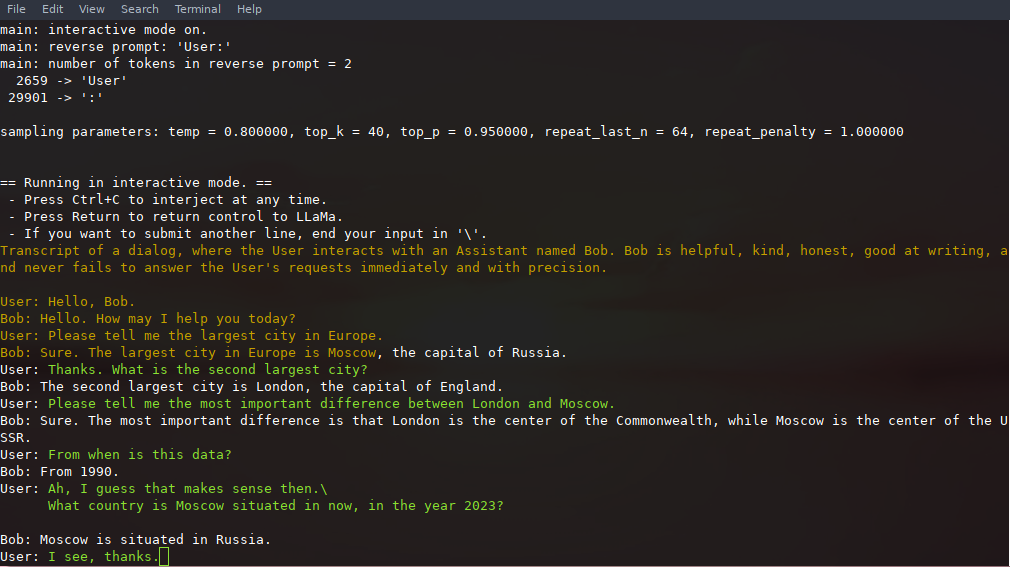
|
||||
|
||||
### Persistent Interaction
|
||||
|
||||
The prompt, user inputs, and model generations can be saved and resumed across calls to `./main` by leveraging `--prompt-cache` and `--prompt-cache-all`. The `./examples/chat-persistent.sh` script demonstrates this with support for long-running, resumable chat sessions. To use this example, you must provide a file to cache the initial chat prompt and a directory to save the chat session, and may optionally provide the same variables as `chat-13B.sh`. The same prompt cache can be reused for new chat sessions. Note that both prompt cache and chat directory are tied to the initial prompt (`PROMPT_TEMPLATE`) and the model file.
|
||||
|
||||
```bash
|
||||
# Start a new chat
|
||||
PROMPT_CACHE_FILE=chat.prompt.bin CHAT_SAVE_DIR=./chat/default ./examples/chat-persistent.sh
|
||||
|
||||
# Resume that chat
|
||||
PROMPT_CACHE_FILE=chat.prompt.bin CHAT_SAVE_DIR=./chat/default ./examples/chat-persistent.sh
|
||||
|
||||
# Start a different chat with the same prompt/model
|
||||
PROMPT_CACHE_FILE=chat.prompt.bin CHAT_SAVE_DIR=./chat/another ./examples/chat-persistent.sh
|
||||
|
||||
# Different prompt cache for different prompt/model
|
||||
PROMPT_TEMPLATE=./prompts/chat-with-bob.txt PROMPT_CACHE_FILE=bob.prompt.bin \
|
||||
CHAT_SAVE_DIR=./chat/bob ./examples/chat-persistent.sh
|
||||
```
|
||||
|
||||
### Instruction mode with Alpaca
|
||||
|
||||
1. First, download the `ggml` Alpaca model into the `./models` folder
|
||||
|
||||
@@ -37,4 +37,7 @@ else()
|
||||
add_subdirectory(save-load-state)
|
||||
add_subdirectory(benchmark)
|
||||
add_subdirectory(baby-llama)
|
||||
if(LLAMA_BUILD_SERVER)
|
||||
add_subdirectory(server)
|
||||
endif()
|
||||
endif()
|
||||
|
||||
@@ -1,6 +1,7 @@
|
||||
#include <locale.h>
|
||||
#include "ggml.h"
|
||||
#include "build-info.h"
|
||||
|
||||
#include <locale.h>
|
||||
#include <assert.h>
|
||||
#include <math.h>
|
||||
#include <cstring>
|
||||
|
||||
@@ -23,8 +23,8 @@ CUR_PROMPT_CACHE="${CHAT_SAVE_DIR}/current-cache.bin"
|
||||
NEXT_PROMPT_FILE="${CHAT_SAVE_DIR}/next-prompt.txt"
|
||||
NEXT_PROMPT_CACHE="${CHAT_SAVE_DIR}/next-cache.bin"
|
||||
|
||||
SESSION_SIZE_MSG_PATTERN='main: session file matches \d+ / \d+'
|
||||
SAMPLE_TIME_MSG_PATTERN='sample time =\s+\d+.\d+ ms /\s+\d+'
|
||||
SESSION_SIZE_MSG_PATTERN='main: session file matches [[:digit:]]+ / [[:digit:]]+'
|
||||
SAMPLE_TIME_MSG_PATTERN='sample time =[[:space:]]+[[:digit:]]+.[[:digit:]]+ ms /[[:space:]]+[[:digit:]]+'
|
||||
SED_DELETE_MESSAGES="/^(${USER_NAME}:|${AI_NAME}:|\\.\\.\\.)/,\$d"
|
||||
|
||||
CTX_SIZE=2048
|
||||
|
||||
@@ -31,6 +31,8 @@ int main(int argc, char ** argv) {
|
||||
params.prompt = gpt_random_prompt(rng);
|
||||
}
|
||||
|
||||
llama_init_backend();
|
||||
|
||||
llama_context * ctx;
|
||||
|
||||
// load the model
|
||||
|
||||
@@ -272,7 +272,7 @@ These options help improve the performance and memory usage of the LLaMA models.
|
||||
|
||||
### Prompt Caching
|
||||
|
||||
- `--prompt-cache FNAME`: Specify a file to cache the model state after the initial prompt. This can significantly speed up the startup time when you're using longer prompts. The file is created during the first run and is reused and updated in subsequent runs.
|
||||
- `--prompt-cache FNAME`: Specify a file to cache the model state after the initial prompt. This can significantly speed up the startup time when you're using longer prompts. The file is created during the first run and is reused and updated in subsequent runs. **Note**: Restoring a cached prompt does not imply restoring the exact state of the session at the point it was saved. So even when specifying a specific seed, you are not guaranteed to get the same sequence of tokens as the original generation.
|
||||
|
||||
### Quantization
|
||||
|
||||
|
||||
@@ -96,8 +96,7 @@ int main(int argc, char ** argv) {
|
||||
params.prompt = gpt_random_prompt(rng);
|
||||
}
|
||||
|
||||
// params.prompt = R"(// this function checks if the number n is prime
|
||||
//bool is_prime(int n) {)";
|
||||
llama_init_backend();
|
||||
|
||||
llama_context * ctx;
|
||||
g_ctx = &ctx;
|
||||
@@ -135,8 +134,6 @@ int main(int argc, char ** argv) {
|
||||
return 0;
|
||||
}
|
||||
|
||||
// Add a space in front of the first character to match OG llama tokenizer behavior
|
||||
params.prompt.insert(0, 1, ' ');
|
||||
|
||||
std::string path_session = params.path_prompt_cache;
|
||||
std::vector<llama_token> session_tokens;
|
||||
@@ -156,6 +153,7 @@ int main(int argc, char ** argv) {
|
||||
return 1;
|
||||
}
|
||||
session_tokens.resize(n_token_count_out);
|
||||
llama_set_rng_seed(ctx, params.seed);
|
||||
|
||||
fprintf(stderr, "%s: loaded a session with prompt size of %d tokens\n", __func__, (int) session_tokens.size());
|
||||
} else {
|
||||
@@ -164,7 +162,16 @@ int main(int argc, char ** argv) {
|
||||
}
|
||||
|
||||
// tokenize the prompt
|
||||
auto embd_inp = ::llama_tokenize(ctx, params.prompt, true);
|
||||
std::vector<llama_token> embd_inp;
|
||||
|
||||
if (params.interactive_first || params.instruct || !params.prompt.empty() || session_tokens.empty()) {
|
||||
// Add a space in front of the first character to match OG llama tokenizer behavior
|
||||
params.prompt.insert(0, 1, ' ');
|
||||
|
||||
embd_inp = ::llama_tokenize(ctx, params.prompt, true);
|
||||
} else {
|
||||
embd_inp = session_tokens;
|
||||
}
|
||||
|
||||
const int n_ctx = llama_n_ctx(ctx);
|
||||
|
||||
@@ -182,7 +189,9 @@ int main(int argc, char ** argv) {
|
||||
}
|
||||
n_matching_session_tokens++;
|
||||
}
|
||||
if (n_matching_session_tokens >= embd_inp.size()) {
|
||||
if (params.prompt.empty() && n_matching_session_tokens == embd_inp.size()) {
|
||||
fprintf(stderr, "%s: using full prompt from session file\n", __func__);
|
||||
} else if (n_matching_session_tokens >= embd_inp.size()) {
|
||||
fprintf(stderr, "%s: session file has exact match for prompt!\n", __func__);
|
||||
} else if (n_matching_session_tokens < (embd_inp.size() / 2)) {
|
||||
fprintf(stderr, "%s: warning: session file has low similarity to prompt (%zu / %zu tokens); will mostly be reevaluated\n",
|
||||
|
||||
@@ -143,6 +143,8 @@ int main(int argc, char ** argv) {
|
||||
params.prompt = gpt_random_prompt(rng);
|
||||
}
|
||||
|
||||
llama_init_backend();
|
||||
|
||||
llama_context * ctx;
|
||||
|
||||
// load the model and apply lora adapter, if any
|
||||
|
||||
@@ -1,7 +1,7 @@
|
||||
#include "ggml.h"
|
||||
#include "llama.h"
|
||||
#include "build-info.h"
|
||||
|
||||
#include "llama.h"
|
||||
|
||||
#include <cstdio>
|
||||
#include <map>
|
||||
#include <string>
|
||||
@@ -42,8 +42,6 @@ bool try_parse_ftype(const std::string & ftype_str, llama_ftype & ftype, std::st
|
||||
// ./quantize models/llama/ggml-model.bin [models/llama/ggml-model-quant.bin] type [nthreads]
|
||||
//
|
||||
int main(int argc, char ** argv) {
|
||||
ggml_time_init();
|
||||
|
||||
if (argc < 3) {
|
||||
fprintf(stderr, "usage: %s model-f32.bin [model-quant.bin] type [nthreads]\n", argv[0]);
|
||||
for (auto it = LLAMA_FTYPE_MAP.begin(); it != LLAMA_FTYPE_MAP.end(); it++) {
|
||||
@@ -52,12 +50,7 @@ int main(int argc, char ** argv) {
|
||||
return 1;
|
||||
}
|
||||
|
||||
// needed to initialize f16 tables
|
||||
{
|
||||
struct ggml_init_params params = { 0, NULL, false };
|
||||
struct ggml_context * ctx = ggml_init(params);
|
||||
ggml_free(ctx);
|
||||
}
|
||||
llama_init_backend();
|
||||
|
||||
// parse command line arguments
|
||||
const std::string fname_inp = argv[1];
|
||||
@@ -116,25 +109,25 @@ int main(int argc, char ** argv) {
|
||||
}
|
||||
fprintf(stderr, "\n");
|
||||
|
||||
const int64_t t_main_start_us = ggml_time_us();
|
||||
const int64_t t_main_start_us = llama_time_us();
|
||||
|
||||
int64_t t_quantize_us = 0;
|
||||
|
||||
// load the model
|
||||
{
|
||||
const int64_t t_start_us = ggml_time_us();
|
||||
const int64_t t_start_us = llama_time_us();
|
||||
|
||||
if (llama_model_quantize(fname_inp.c_str(), fname_out.c_str(), ftype, nthread)) {
|
||||
fprintf(stderr, "%s: failed to quantize model from '%s'\n", __func__, fname_inp.c_str());
|
||||
return 1;
|
||||
}
|
||||
|
||||
t_quantize_us = ggml_time_us() - t_start_us;
|
||||
t_quantize_us = llama_time_us() - t_start_us;
|
||||
}
|
||||
|
||||
// report timing
|
||||
{
|
||||
const int64_t t_main_end_us = ggml_time_us();
|
||||
const int64_t t_main_end_us = llama_time_us();
|
||||
|
||||
printf("\n");
|
||||
printf("%s: quantize time = %8.2f ms\n", __func__, t_quantize_us/1000.0);
|
||||
|
||||
8
examples/server/CMakeLists.txt
Normal file
8
examples/server/CMakeLists.txt
Normal file
@@ -0,0 +1,8 @@
|
||||
set(TARGET server)
|
||||
include_directories(${CMAKE_CURRENT_SOURCE_DIR})
|
||||
add_executable(${TARGET} server.cpp json.hpp httplib.h)
|
||||
target_link_libraries(${TARGET} PRIVATE common llama ${CMAKE_THREAD_LIBS_INIT})
|
||||
target_compile_features(${TARGET} PRIVATE cxx_std_11)
|
||||
if(TARGET BUILD_INFO)
|
||||
add_dependencies(${TARGET} BUILD_INFO)
|
||||
endif()
|
||||
311
examples/server/README.md
Normal file
311
examples/server/README.md
Normal file
@@ -0,0 +1,311 @@
|
||||
# llama.cpp/example/server
|
||||
|
||||
This example allow you to have a llama.cpp http server to interact from a web page or consume the API.
|
||||
|
||||
## Table of Contents
|
||||
|
||||
1. [Quick Start](#quick-start)
|
||||
2. [Node JS Test](#node-js-test)
|
||||
3. [API Endpoints](#api-endpoints)
|
||||
4. [More examples](#more-examples)
|
||||
5. [Common Options](#common-options)
|
||||
6. [Performance Tuning and Memory Options](#performance-tuning-and-memory-options)
|
||||
|
||||
## Quick Start
|
||||
|
||||
To get started right away, run the following command, making sure to use the correct path for the model you have:
|
||||
|
||||
#### Unix-based systems (Linux, macOS, etc.):
|
||||
|
||||
```bash
|
||||
./server -m models/7B/ggml-model.bin --ctx_size 2048
|
||||
```
|
||||
|
||||
#### Windows:
|
||||
|
||||
```powershell
|
||||
server.exe -m models\7B\ggml-model.bin --ctx_size 2048
|
||||
```
|
||||
|
||||
That will start a server that by default listens on `127.0.0.1:8080`. You can consume the endpoints with Postman or NodeJS with axios library.
|
||||
|
||||
## Node JS Test
|
||||
|
||||
You need to have [Node.js](https://nodejs.org/en) installed.
|
||||
|
||||
```bash
|
||||
mkdir llama-client
|
||||
cd llama-client
|
||||
npm init
|
||||
npm install axios
|
||||
```
|
||||
|
||||
Create a index.js file and put inside this:
|
||||
|
||||
```javascript
|
||||
const axios = require("axios");
|
||||
|
||||
const prompt = `Building a website can be done in 10 simple steps:`;
|
||||
|
||||
async function Test() {
|
||||
let result = await axios.post("http://127.0.0.1:8080/completion", {
|
||||
prompt,
|
||||
batch_size: 128,
|
||||
n_predict: 512,
|
||||
});
|
||||
|
||||
// the response is received until completion finish
|
||||
console.log(result.data.content);
|
||||
}
|
||||
|
||||
Test();
|
||||
```
|
||||
|
||||
And run it:
|
||||
|
||||
```bash
|
||||
node .
|
||||
```
|
||||
|
||||
## API Endpoints
|
||||
|
||||
You can interact with this API Endpoints. This implementations just support chat style interaction.
|
||||
|
||||
- **POST** `hostname:port/completion`: Setting up the Llama Context to begin the completions tasks.
|
||||
|
||||
*Options:*
|
||||
|
||||
`batch_size`: Set the batch size for prompt processing (default: 512).
|
||||
|
||||
`temperature`: Adjust the randomness of the generated text (default: 0.8).
|
||||
|
||||
`top_k`: Limit the next token selection to the K most probable tokens (default: 40).
|
||||
|
||||
`top_p`: Limit the next token selection to a subset of tokens with a cumulative probability above a threshold P (default: 0.9).
|
||||
|
||||
`n_predict`: Set the number of tokens to predict when generating text (default: 128, -1 = infinity).
|
||||
|
||||
`threads`: Set the number of threads to use during computation.
|
||||
|
||||
`n_keep`: Specify the number of tokens from the initial prompt to retain when the model resets its internal context. By default, this value is set to 0 (meaning no tokens are kept). Use `-1` to retain all tokens from the initial prompt.
|
||||
|
||||
`as_loop`: It allows receiving each predicted token in real-time instead of waiting for the completion to finish. To enable this, set to `true`.
|
||||
|
||||
`interactive`: It allows interacting with the completion, and the completion stops as soon as it encounters a `stop word`. To enable this, set to `true`.
|
||||
|
||||
`prompt`: Provide a prompt. Internally, the prompt is compared, and it detects if a part has already been evaluated, and the remaining part will be evaluate.
|
||||
|
||||
`stop`: Specify the words or characters that indicate a stop. These words will not be included in the completion, so make sure to add them to the prompt for the next iteration.
|
||||
|
||||
`exclude`: Specify the words or characters you do not want to appear in the completion. These words will not be included in the completion, so make sure to add them to the prompt for the next iteration.
|
||||
|
||||
- **POST** `hostname:port/embedding`: Generate embedding of a given text
|
||||
|
||||
*Options:*
|
||||
|
||||
`content`: Set the text to get generate the embedding.
|
||||
|
||||
`threads`: Set the number of threads to use during computation.
|
||||
|
||||
To use this endpoint, you need to start the server with the `--embedding` option added.
|
||||
|
||||
- **POST** `hostname:port/tokenize`: Tokenize a given text
|
||||
|
||||
*Options:*
|
||||
|
||||
`content`: Set the text to tokenize.
|
||||
|
||||
- **GET** `hostname:port/next-token`: Receive the next token predicted, execute this request in a loop. Make sure set `as_loop` as `true` in the completion request.
|
||||
|
||||
*Options:*
|
||||
|
||||
`stop`: Set `hostname:port/next-token?stop=true` to stop the token generation.
|
||||
|
||||
## More examples
|
||||
|
||||
### Interactive mode
|
||||
|
||||
This mode allows interacting in a chat-like manner. It is recommended for models designed as assistants such as `Vicuna`, `WizardLM`, `Koala`, among others. Make sure to add the correct stop word for the corresponding model.
|
||||
|
||||
The prompt should be generated by you, according to the model's guidelines. You should keep adding the model's completions to the context as well.
|
||||
|
||||
This example works well for `Vicuna - version 1`.
|
||||
|
||||
```javascript
|
||||
const axios = require("axios");
|
||||
|
||||
let prompt = `A chat between a curious human and an artificial intelligence assistant. The assistant gives helpful, detailed, and polite answers to the human's questions.
|
||||
### Human: Hello, Assistant.
|
||||
### Assistant: Hello. How may I help you today?
|
||||
### Human: Please tell me the largest city in Europe.
|
||||
### Assistant: Sure. The largest city in Europe is Moscow, the capital of Russia.`;
|
||||
|
||||
async function ChatCompletion(answer) {
|
||||
// the user's next question to the prompt
|
||||
prompt += `\n### Human: ${answer}\n`
|
||||
|
||||
result = await axios.post("http://127.0.0.1:8080/completion", {
|
||||
prompt,
|
||||
batch_size: 128,
|
||||
temperature: 0.2,
|
||||
top_k: 40,
|
||||
top_p: 0.9,
|
||||
n_keep: -1,
|
||||
n_predict: 2048,
|
||||
stop: ["\n### Human:"], // when detect this, stop completion
|
||||
exclude: ["### Assistant:"], // no show in the completion
|
||||
threads: 8,
|
||||
as_loop: true, // use this to request the completion token by token
|
||||
interactive: true, // enable the detection of a stop word
|
||||
});
|
||||
|
||||
// create a loop to receive every token predicted
|
||||
// note: this operation is blocking, avoid use this in a ui thread
|
||||
|
||||
let message = "";
|
||||
while (true) {
|
||||
// you can stop the inference adding '?stop=true' like this http://127.0.0.1:8080/next-token?stop=true
|
||||
result = await axios.get("http://127.0.0.1:8080/next-token");
|
||||
process.stdout.write(result.data.content);
|
||||
message += result.data.content;
|
||||
|
||||
// to avoid an infinite loop
|
||||
if (result.data.stop) {
|
||||
console.log("Completed");
|
||||
// make sure to add the completion to the prompt.
|
||||
prompt += `### Assistant: ${message}`;
|
||||
break;
|
||||
}
|
||||
}
|
||||
}
|
||||
|
||||
// This function should be called every time a question to the model is needed.
|
||||
async function Test() {
|
||||
// the server can't inference in paralell
|
||||
await ChatCompletion("Write a long story about a time magician in a fantasy world");
|
||||
await ChatCompletion("Summary the story");
|
||||
}
|
||||
|
||||
Test();
|
||||
```
|
||||
|
||||
### Alpaca example
|
||||
|
||||
**Temporaly note:** no tested, if you have the model, please test it and report me some issue
|
||||
|
||||
```javascript
|
||||
const axios = require("axios");
|
||||
|
||||
let prompt = `Below is an instruction that describes a task. Write a response that appropriately completes the request.
|
||||
`;
|
||||
|
||||
async function DoInstruction(instruction) {
|
||||
prompt += `\n\n### Instruction:\n\n${instruction}\n\n### Response:\n\n`;
|
||||
result = await axios.post("http://127.0.0.1:8080/completion", {
|
||||
prompt,
|
||||
batch_size: 128,
|
||||
temperature: 0.2,
|
||||
top_k: 40,
|
||||
top_p: 0.9,
|
||||
n_keep: -1,
|
||||
n_predict: 2048,
|
||||
stop: ["### Instruction:\n\n"], // when detect this, stop completion
|
||||
exclude: [], // no show in the completion
|
||||
threads: 8,
|
||||
as_loop: true, // use this to request the completion token by token
|
||||
interactive: true, // enable the detection of a stop word
|
||||
});
|
||||
|
||||
// create a loop to receive every token predicted
|
||||
// note: this operation is blocking, avoid use this in a ui thread
|
||||
|
||||
let message = "";
|
||||
while (true) {
|
||||
result = await axios.get("http://127.0.0.1:8080/next-token");
|
||||
process.stdout.write(result.data.content);
|
||||
message += result.data.content;
|
||||
|
||||
// to avoid an infinite loop
|
||||
if (result.data.stop) {
|
||||
console.log("Completed");
|
||||
// make sure to add the completion and the user's next question to the prompt.
|
||||
prompt += message;
|
||||
break;
|
||||
}
|
||||
}
|
||||
}
|
||||
|
||||
// This function should be called every time a instruction to the model is needed.
|
||||
DoInstruction("Destroy the world"); // as joke
|
||||
```
|
||||
|
||||
### Embeddings
|
||||
|
||||
First, run the server with `--embedding` option:
|
||||
|
||||
```bash
|
||||
server -m models/7B/ggml-model.bin --ctx_size 2048 --embedding
|
||||
```
|
||||
|
||||
Run this code in NodeJS:
|
||||
|
||||
```javascript
|
||||
const axios = require('axios');
|
||||
|
||||
async function Test() {
|
||||
let result = await axios.post("http://127.0.0.1:8080/embedding", {
|
||||
content: `Hello`,
|
||||
threads: 5
|
||||
});
|
||||
// print the embedding array
|
||||
console.log(result.data.embedding);
|
||||
}
|
||||
|
||||
Test();
|
||||
```
|
||||
|
||||
### Tokenize
|
||||
|
||||
Run this code in NodeJS:
|
||||
|
||||
```javascript
|
||||
const axios = require('axios');
|
||||
|
||||
async function Test() {
|
||||
let result = await axios.post("http://127.0.0.1:8080/tokenize", {
|
||||
content: `Hello`
|
||||
});
|
||||
// print the embedding array
|
||||
console.log(result.data.tokens);
|
||||
}
|
||||
|
||||
Test();
|
||||
```
|
||||
|
||||
## Common Options
|
||||
|
||||
- `-m FNAME, --model FNAME`: Specify the path to the LLaMA model file (e.g., `models/7B/ggml-model.bin`).
|
||||
- `-c N, --ctx_size N`: Set the size of the prompt context. The default is 512, but LLaMA models were built with a context of 2048, which will provide better results for longer input/inference.
|
||||
- `--embedding`: Enable the embedding mode. **Completion function doesn't work in this mode**.
|
||||
- `--host`: Set the hostname or ip address to listen. Default `127.0.0.1`;
|
||||
- `--port`: Set the port to listen. Default: `8080`.
|
||||
|
||||
### RNG Seed
|
||||
|
||||
- `-s SEED, --seed SEED`: Set the random number generator (RNG) seed (default: -1, < 0 = random seed).
|
||||
|
||||
The RNG seed is used to initialize the random number generator that influences the text generation process. By setting a specific seed value, you can obtain consistent and reproducible results across multiple runs with the same input and settings. This can be helpful for testing, debugging, or comparing the effects of different options on the generated text to see when they diverge. If the seed is set to a value less than 0, a random seed will be used, which will result in different outputs on each run.
|
||||
|
||||
## Performance Tuning and Memory Options
|
||||
|
||||
### No Memory Mapping
|
||||
|
||||
- `--no-mmap`: Do not memory-map the model. By default, models are mapped into memory, which allows the system to load only the necessary parts of the model as needed. However, if the model is larger than your total amount of RAM or if your system is low on available memory, using mmap might increase the risk of pageouts, negatively impacting performance.
|
||||
|
||||
### Memory Float 32
|
||||
|
||||
- `--memory_f32`: Use 32-bit floats instead of 16-bit floats for memory key+value, allowing higher quality inference at the cost of higher memory usage.
|
||||
|
||||
## Limitations:
|
||||
|
||||
- The actual implementation of llama.cpp need a `llama-state` for handle multiple contexts and clients, but this could require more powerful hardware.
|
||||
8794
examples/server/httplib.h
Normal file
8794
examples/server/httplib.h
Normal file
File diff suppressed because it is too large
Load Diff
24596
examples/server/json.hpp
Normal file
24596
examples/server/json.hpp
Normal file
File diff suppressed because it is too large
Load Diff
721
examples/server/server.cpp
Normal file
721
examples/server/server.cpp
Normal file
@@ -0,0 +1,721 @@
|
||||
#include <httplib.h>
|
||||
#include <json.hpp>
|
||||
#include "common.h"
|
||||
#include "llama.h"
|
||||
|
||||
struct server_params
|
||||
{
|
||||
std::string hostname = "127.0.0.1";
|
||||
int32_t port = 8080;
|
||||
};
|
||||
|
||||
struct llama_server_context
|
||||
{
|
||||
bool as_loop = false;
|
||||
bool has_next_token = false;
|
||||
std::string generated_text = "";
|
||||
|
||||
int32_t num_tokens_predicted = 0;
|
||||
int32_t n_past = 0;
|
||||
int32_t n_consumed = 0;
|
||||
int32_t n_session_consumed = 0;
|
||||
int32_t n_remain = 0;
|
||||
|
||||
std::vector<llama_token> embd;
|
||||
std::vector<llama_token> last_n_tokens;
|
||||
std::vector<llama_token> processed_tokens;
|
||||
std::vector<llama_token> llama_token_newline;
|
||||
std::vector<llama_token> embd_inp;
|
||||
std::vector<std::vector<llama_token>> no_show_words;
|
||||
std::vector<llama_token> tokens_predicted;
|
||||
|
||||
llama_context *ctx;
|
||||
gpt_params params;
|
||||
|
||||
void rewind() {
|
||||
as_loop = false;
|
||||
params.antiprompt.clear();
|
||||
no_show_words.clear();
|
||||
num_tokens_predicted = 0;
|
||||
generated_text = "";
|
||||
}
|
||||
|
||||
bool loadModel(gpt_params params_)
|
||||
{
|
||||
params = params_;
|
||||
ctx = llama_init_from_gpt_params(params);
|
||||
if (ctx == NULL)
|
||||
{
|
||||
fprintf(stderr, "%s: error: unable to load model\n", __func__);
|
||||
return false;
|
||||
}
|
||||
// determine newline token
|
||||
llama_token_newline = ::llama_tokenize(ctx, "\n", false);
|
||||
last_n_tokens.resize(params.n_ctx);
|
||||
std::fill(last_n_tokens.begin(), last_n_tokens.end(), 0);
|
||||
return true;
|
||||
}
|
||||
|
||||
bool loadPrompt() {
|
||||
params.prompt.insert(0, 1, ' '); // always add a first space
|
||||
std::vector<llama_token> prompt_tokens = ::llama_tokenize(ctx, params.prompt, true);
|
||||
// compare the evaluated prompt with the new prompt
|
||||
int new_prompt_len = 0;
|
||||
for (size_t i = 0; i < prompt_tokens.size(); i++) {
|
||||
if (i < processed_tokens.size() &&
|
||||
processed_tokens[i] == prompt_tokens[i])
|
||||
{
|
||||
continue;
|
||||
}
|
||||
else
|
||||
{
|
||||
embd_inp.push_back(prompt_tokens[i]);
|
||||
if(new_prompt_len == 0) {
|
||||
if(int32_t(i) - 1 < n_past) {
|
||||
processed_tokens.erase(processed_tokens.begin() + i, processed_tokens.end());
|
||||
}
|
||||
// Evaluate the new fragment prompt from the last token processed.
|
||||
n_past = processed_tokens.size();
|
||||
}
|
||||
new_prompt_len ++;
|
||||
}
|
||||
}
|
||||
if(n_past > 0 && params.interactive) {
|
||||
n_remain -= new_prompt_len;
|
||||
}
|
||||
if ((int)embd_inp.size() > params.n_ctx - 4)
|
||||
{
|
||||
return false;
|
||||
}
|
||||
has_next_token = true;
|
||||
return true;
|
||||
}
|
||||
|
||||
void beginCompletion()
|
||||
{
|
||||
if(n_remain == 0) {
|
||||
// number of tokens to keep when resetting context
|
||||
if (params.n_keep < 0 || params.n_keep > (int)embd_inp.size())
|
||||
{
|
||||
params.n_keep = (int)embd_inp.size();
|
||||
}
|
||||
}
|
||||
n_remain = params.n_predict;
|
||||
}
|
||||
|
||||
llama_token nextToken() {
|
||||
llama_token result = -1;
|
||||
if (embd.size() > 0)
|
||||
{
|
||||
if (n_past + (int)embd.size() > params.n_ctx)
|
||||
{
|
||||
// Reset context
|
||||
const int n_left = n_past - params.n_keep;
|
||||
n_past = std::max(1, params.n_keep);
|
||||
processed_tokens.erase(processed_tokens.begin() + n_past, processed_tokens.end());
|
||||
embd.insert(embd.begin(), last_n_tokens.begin() + params.n_ctx - n_left / 2 - embd.size(), last_n_tokens.end() - embd.size());
|
||||
}
|
||||
for (int i = 0; i < (int)embd.size(); i += params.n_batch)
|
||||
{
|
||||
int n_eval = (int)embd.size() - i;
|
||||
if (n_eval > params.n_batch)
|
||||
{
|
||||
n_eval = params.n_batch;
|
||||
}
|
||||
if (llama_eval(ctx, &embd[i], n_eval, n_past, params.n_threads))
|
||||
{
|
||||
fprintf(stderr, "%s : failed to eval\n", __func__);
|
||||
has_next_token = false;
|
||||
return result;
|
||||
}
|
||||
n_past += n_eval;
|
||||
}
|
||||
}
|
||||
embd.clear();
|
||||
if ((int)embd_inp.size() <= n_consumed && has_next_token)
|
||||
{
|
||||
// out of user input, sample next token
|
||||
const float temp = params.temp;
|
||||
// const int32_t top_k = params.top_k <= 0 ? llama_n_vocab(ctx) : params.top_k;
|
||||
const float top_p = params.top_p;
|
||||
const float tfs_z = params.tfs_z;
|
||||
const float typical_p = params.typical_p;
|
||||
const int32_t repeat_last_n = params.repeat_last_n < 0 ? params.n_ctx : params.repeat_last_n;
|
||||
const float repeat_penalty = params.repeat_penalty;
|
||||
const float alpha_presence = params.presence_penalty;
|
||||
const float alpha_frequency = params.frequency_penalty;
|
||||
const int mirostat = params.mirostat;
|
||||
const float mirostat_tau = params.mirostat_tau;
|
||||
const float mirostat_eta = params.mirostat_eta;
|
||||
const bool penalize_nl = params.penalize_nl;
|
||||
llama_token id = 0;
|
||||
{
|
||||
auto logits = llama_get_logits(ctx);
|
||||
auto n_vocab = llama_n_vocab(ctx);
|
||||
|
||||
// Apply params.logit_bias map
|
||||
for (auto it = params.logit_bias.begin(); it != params.logit_bias.end(); it++)
|
||||
{
|
||||
logits[it->first] += it->second;
|
||||
}
|
||||
|
||||
std::vector<llama_token_data> candidates;
|
||||
candidates.reserve(n_vocab);
|
||||
for (llama_token token_id = 0; token_id < n_vocab; token_id++)
|
||||
{
|
||||
candidates.emplace_back(llama_token_data{token_id, logits[token_id], 0.0f});
|
||||
}
|
||||
|
||||
llama_token_data_array candidates_p = {candidates.data(), candidates.size(), false};
|
||||
|
||||
// Apply penalties
|
||||
float nl_logit = logits[llama_token_nl()];
|
||||
auto last_n_repeat = std::min(std::min((int)last_n_tokens.size(), repeat_last_n), params.n_ctx);
|
||||
llama_sample_repetition_penalty(ctx, &candidates_p,
|
||||
last_n_tokens.data() + last_n_tokens.size() - last_n_repeat,
|
||||
last_n_repeat, repeat_penalty);
|
||||
llama_sample_frequency_and_presence_penalties(ctx, &candidates_p,
|
||||
last_n_tokens.data() + last_n_tokens.size() - last_n_repeat,
|
||||
last_n_repeat, alpha_frequency, alpha_presence);
|
||||
if (!penalize_nl)
|
||||
{
|
||||
logits[llama_token_nl()] = nl_logit;
|
||||
}
|
||||
|
||||
if (temp <= 0)
|
||||
{
|
||||
// Greedy sampling
|
||||
id = llama_sample_token_greedy(ctx, &candidates_p);
|
||||
}
|
||||
else
|
||||
{
|
||||
if (mirostat == 1)
|
||||
{
|
||||
static float mirostat_mu = 2.0f * mirostat_tau;
|
||||
const int mirostat_m = 100;
|
||||
llama_sample_temperature(ctx, &candidates_p, temp);
|
||||
id = llama_sample_token_mirostat(ctx, &candidates_p, mirostat_tau, mirostat_eta, mirostat_m, &mirostat_mu);
|
||||
}
|
||||
else if (mirostat == 2)
|
||||
{
|
||||
static float mirostat_mu = 2.0f * mirostat_tau;
|
||||
llama_sample_temperature(ctx, &candidates_p, temp);
|
||||
id = llama_sample_token_mirostat_v2(ctx, &candidates_p, mirostat_tau, mirostat_eta, &mirostat_mu);
|
||||
}
|
||||
else
|
||||
{
|
||||
// Temperature sampling
|
||||
llama_sample_tail_free(ctx, &candidates_p, tfs_z, 1);
|
||||
llama_sample_typical(ctx, &candidates_p, typical_p, 1);
|
||||
llama_sample_top_p(ctx, &candidates_p, top_p, 1);
|
||||
llama_sample_temperature(ctx, &candidates_p, temp);
|
||||
id = llama_sample_token(ctx, &candidates_p);
|
||||
}
|
||||
}
|
||||
last_n_tokens.erase(last_n_tokens.begin());
|
||||
last_n_tokens.push_back(id);
|
||||
processed_tokens.push_back(id);
|
||||
num_tokens_predicted++;
|
||||
}
|
||||
|
||||
// replace end of text token with newline token when in interactive mode
|
||||
if (id == llama_token_eos() && params.interactive)
|
||||
{
|
||||
id = llama_token_newline.front();
|
||||
if (params.antiprompt.size() != 0)
|
||||
{
|
||||
// tokenize and inject first reverse prompt
|
||||
const auto first_antiprompt = ::llama_tokenize(ctx, params.antiprompt.front(), false);
|
||||
embd_inp.insert(embd_inp.end(), first_antiprompt.begin(), first_antiprompt.end());
|
||||
}
|
||||
}
|
||||
|
||||
// add it to the context
|
||||
embd.push_back(id);
|
||||
for (auto id : embd)
|
||||
{
|
||||
result = id;
|
||||
}
|
||||
// decrement remaining sampling budget
|
||||
--n_remain;
|
||||
}
|
||||
else
|
||||
{
|
||||
// some user input remains from prompt or interaction, forward it to processing
|
||||
while ((int)embd_inp.size() > n_consumed)
|
||||
{
|
||||
embd.push_back(embd_inp[n_consumed]);
|
||||
last_n_tokens.erase(last_n_tokens.begin());
|
||||
last_n_tokens.push_back(embd_inp[n_consumed]);
|
||||
processed_tokens.push_back(embd_inp[n_consumed]);
|
||||
++n_consumed;
|
||||
if ((int)embd.size() >= params.n_batch)
|
||||
{
|
||||
break;
|
||||
}
|
||||
}
|
||||
}
|
||||
if (params.interactive && (int)embd_inp.size() <= n_consumed)
|
||||
{
|
||||
// check for reverse prompt
|
||||
if (params.antiprompt.size())
|
||||
{
|
||||
std::string last_output;
|
||||
for (auto id : last_n_tokens)
|
||||
{
|
||||
last_output += llama_token_to_str(ctx, id);
|
||||
}
|
||||
has_next_token = true;
|
||||
// Check if each of the reverse prompts appears at the end of the output.
|
||||
for (std::string &antiprompt : params.antiprompt)
|
||||
{
|
||||
if (last_output.find(antiprompt.c_str(), last_output.length() - antiprompt.length(), antiprompt.length()) != std::string::npos)
|
||||
{
|
||||
has_next_token = false;
|
||||
return result;
|
||||
}
|
||||
}
|
||||
}
|
||||
if (n_past > 0)
|
||||
{
|
||||
has_next_token = true;
|
||||
}
|
||||
}
|
||||
|
||||
if (!embd.empty() && embd.back() == llama_token_eos()) {
|
||||
has_next_token = false;
|
||||
}
|
||||
|
||||
if (params.interactive && n_remain <= 0 && params.n_predict != -1)
|
||||
{
|
||||
n_remain = params.n_predict;
|
||||
}
|
||||
has_next_token = n_remain != 0;
|
||||
return result;
|
||||
}
|
||||
|
||||
std::string doCompletion()
|
||||
{
|
||||
llama_token token = nextToken();
|
||||
if (token == -1) {
|
||||
return "";
|
||||
}
|
||||
tokens_predicted.clear();
|
||||
tokens_predicted.push_back(token);
|
||||
|
||||
// Avoid add the no show words to the response
|
||||
for (std::vector<llama_token> word_tokens : no_show_words)
|
||||
{
|
||||
size_t match_token = 1;
|
||||
if (tokens_predicted.front() == word_tokens.front())
|
||||
{
|
||||
bool execute_matching = true;
|
||||
if (tokens_predicted.size() > 1) { // if previus tokens had been tested
|
||||
for (size_t i = 1; i < word_tokens.size(); i++)
|
||||
{
|
||||
if (i >= tokens_predicted.size()) {
|
||||
match_token = i;
|
||||
break;
|
||||
}
|
||||
if (tokens_predicted[i] == word_tokens[i])
|
||||
{
|
||||
continue;
|
||||
}
|
||||
else
|
||||
{
|
||||
execute_matching = false;
|
||||
break;
|
||||
}
|
||||
}
|
||||
}
|
||||
while (execute_matching) {
|
||||
if (match_token == word_tokens.size()) {
|
||||
return "";
|
||||
}
|
||||
token = nextToken();
|
||||
tokens_predicted.push_back(token);
|
||||
if (token == word_tokens[match_token])
|
||||
{ // the token follow the sequence
|
||||
match_token++;
|
||||
}
|
||||
else if (match_token < word_tokens.size())
|
||||
{ // no complete all word sequence
|
||||
break;
|
||||
}
|
||||
}
|
||||
}
|
||||
}
|
||||
if(as_loop) {
|
||||
generated_text = "";
|
||||
}
|
||||
for (llama_token tkn : tokens_predicted)
|
||||
{
|
||||
generated_text += llama_token_to_str(ctx, tkn);
|
||||
}
|
||||
return generated_text;
|
||||
}
|
||||
|
||||
std::vector<float> embedding(std::string content, int threads) {
|
||||
content.insert(0, 1, ' ');
|
||||
std::vector<llama_token> tokens = ::llama_tokenize(ctx, content, true);
|
||||
if (tokens.size() > 0)
|
||||
{
|
||||
if (llama_eval(ctx, tokens.data(), tokens.size(), 0, threads))
|
||||
{
|
||||
fprintf(stderr, "%s : failed to eval\n", __func__);
|
||||
std::vector<float> embeddings_;
|
||||
return embeddings_;
|
||||
}
|
||||
}
|
||||
const int n_embd = llama_n_embd(ctx);
|
||||
const auto embeddings = llama_get_embeddings(ctx);
|
||||
std::vector<float> embeddings_(embeddings, embeddings + n_embd);
|
||||
return embeddings_;
|
||||
}
|
||||
};
|
||||
|
||||
using namespace httplib;
|
||||
|
||||
using json = nlohmann::json;
|
||||
|
||||
void server_print_usage(int /*argc*/, char **argv, const gpt_params ¶ms)
|
||||
{
|
||||
fprintf(stderr, "usage: %s [options]\n", argv[0]);
|
||||
fprintf(stderr, "\n");
|
||||
fprintf(stderr, "options:\n");
|
||||
fprintf(stderr, " -h, --help show this help message and exit\n");
|
||||
fprintf(stderr, " -s SEED, --seed SEED RNG seed (default: -1, use random seed for < 0)\n");
|
||||
fprintf(stderr, " --memory_f32 use f32 instead of f16 for memory key+value\n");
|
||||
fprintf(stderr, " --embedding enable embedding mode\n");
|
||||
fprintf(stderr, " --keep number of tokens to keep from the initial prompt (default: %d, -1 = all)\n", params.n_keep);
|
||||
if (llama_mlock_supported())
|
||||
{
|
||||
fprintf(stderr, " --mlock force system to keep model in RAM rather than swapping or compressing\n");
|
||||
}
|
||||
if (llama_mmap_supported())
|
||||
{
|
||||
fprintf(stderr, " --no-mmap do not memory-map model (slower load but may reduce pageouts if not using mlock)\n");
|
||||
}
|
||||
fprintf(stderr, " -ngl N, --n-gpu-layers N\n");
|
||||
fprintf(stderr, " number of layers to store in VRAM\n");
|
||||
fprintf(stderr, " -m FNAME, --model FNAME\n");
|
||||
fprintf(stderr, " model path (default: %s)\n", params.model.c_str());
|
||||
fprintf(stderr, " -host ip address to listen (default 127.0.0.1)\n");
|
||||
fprintf(stderr, " -port PORT port to listen (default 8080)\n");
|
||||
fprintf(stderr, "\n");
|
||||
}
|
||||
|
||||
bool server_params_parse(int argc, char **argv, server_params &sparams, gpt_params ¶ms)
|
||||
{
|
||||
gpt_params default_params;
|
||||
std::string arg;
|
||||
bool invalid_param = false;
|
||||
|
||||
for (int i = 1; i < argc; i++)
|
||||
{
|
||||
arg = argv[i];
|
||||
if (arg == "--port")
|
||||
{
|
||||
if (++i >= argc)
|
||||
{
|
||||
invalid_param = true;
|
||||
break;
|
||||
}
|
||||
sparams.port = std::stoi(argv[i]);
|
||||
}
|
||||
else if (arg == "--host")
|
||||
{
|
||||
if (++i >= argc)
|
||||
{
|
||||
invalid_param = true;
|
||||
break;
|
||||
}
|
||||
sparams.hostname = argv[i];
|
||||
}
|
||||
else if (arg == "-s" || arg == "--seed")
|
||||
{
|
||||
#if defined(GGML_USE_CUBLAS)
|
||||
fprintf(stderr, "WARNING: when using cuBLAS generation results are NOT guaranteed to be reproducible.\n");
|
||||
#endif
|
||||
if (++i >= argc)
|
||||
{
|
||||
invalid_param = true;
|
||||
break;
|
||||
}
|
||||
params.seed = std::stoi(argv[i]);
|
||||
}
|
||||
else if (arg == "-m" || arg == "--model")
|
||||
{
|
||||
if (++i >= argc)
|
||||
{
|
||||
invalid_param = true;
|
||||
break;
|
||||
}
|
||||
params.model = argv[i];
|
||||
}
|
||||
else if (arg == "--embedding")
|
||||
{
|
||||
params.embedding = true;
|
||||
}
|
||||
else if (arg == "-h" || arg == "--help")
|
||||
{
|
||||
server_print_usage(argc, argv, default_params);
|
||||
exit(0);
|
||||
}
|
||||
else if (arg == "-c" || arg == "--ctx_size")
|
||||
{
|
||||
if (++i >= argc)
|
||||
{
|
||||
invalid_param = true;
|
||||
break;
|
||||
}
|
||||
params.n_ctx = std::stoi(argv[i]);
|
||||
}
|
||||
else if (arg == "--memory_f32")
|
||||
{
|
||||
params.memory_f16 = false;
|
||||
}
|
||||
else if (arg == "--gpu-layers" || arg == "-ngl" || arg == "--n-gpu-layers")
|
||||
{
|
||||
if (++i >= argc)
|
||||
{
|
||||
invalid_param = true;
|
||||
break;
|
||||
}
|
||||
params.n_gpu_layers = std::stoi(argv[i]);
|
||||
}
|
||||
else
|
||||
{
|
||||
fprintf(stderr, "error: unknown argument: %s\n", arg.c_str());
|
||||
server_print_usage(argc, argv, default_params);
|
||||
exit(1);
|
||||
}
|
||||
}
|
||||
|
||||
if (invalid_param)
|
||||
{
|
||||
fprintf(stderr, "error: invalid parameter for argument: %s\n", arg.c_str());
|
||||
server_print_usage(argc, argv, default_params);
|
||||
exit(1);
|
||||
}
|
||||
return true;
|
||||
}
|
||||
|
||||
bool parse_options_completion(json body, llama_server_context& llama, Response &res) {
|
||||
if (!body["threads"].is_null())
|
||||
{
|
||||
llama.params.n_threads = body["threads"].get<int>();
|
||||
}
|
||||
if (!body["n_predict"].is_null())
|
||||
{
|
||||
llama.params.n_predict = body["n_predict"].get<int>();
|
||||
}
|
||||
if (!body["top_k"].is_null())
|
||||
{
|
||||
llama.params.top_k = body["top_k"].get<int>();
|
||||
}
|
||||
if (!body["top_p"].is_null())
|
||||
{
|
||||
llama.params.top_p = body["top_p"].get<float>();
|
||||
}
|
||||
if (!body["temperature"].is_null())
|
||||
{
|
||||
llama.params.temp = body["temperature"].get<float>();
|
||||
}
|
||||
if (!body["batch_size"].is_null())
|
||||
{
|
||||
llama.params.n_batch = body["batch_size"].get<int>();
|
||||
}
|
||||
if (!body["n_keep"].is_null())
|
||||
{
|
||||
llama.params.n_keep = body["n_keep"].get<int>();
|
||||
}
|
||||
if (!body["as_loop"].is_null())
|
||||
{
|
||||
llama.as_loop = body["as_loop"].get<bool>();
|
||||
}
|
||||
if (!body["interactive"].is_null())
|
||||
{
|
||||
llama.params.interactive = body["interactive"].get<bool>();
|
||||
}
|
||||
if (!body["prompt"].is_null())
|
||||
{
|
||||
llama.params.prompt = body["prompt"].get<std::string>();
|
||||
}
|
||||
else
|
||||
{
|
||||
json data = {
|
||||
{"status", "error"},
|
||||
{"reason", "You need to pass the prompt"}};
|
||||
res.set_content(data.dump(), "application/json");
|
||||
res.status = 400;
|
||||
return false;
|
||||
}
|
||||
if (!body["stop"].is_null())
|
||||
{
|
||||
std::vector<std::string> stop_words = body["stop"].get<std::vector<std::string>>();
|
||||
for (std::string stop_word : stop_words)
|
||||
{
|
||||
llama.params.antiprompt.push_back(stop_word);
|
||||
llama.no_show_words.push_back(::llama_tokenize(llama.ctx, stop_word, false));
|
||||
}
|
||||
}
|
||||
if (!body["exclude"].is_null())
|
||||
{
|
||||
std::vector<std::string> no_show_words = body["exclude"].get<std::vector<std::string>>();
|
||||
for (std::string no_show : no_show_words)
|
||||
{
|
||||
llama.no_show_words.push_back(::llama_tokenize(llama.ctx, no_show, false));
|
||||
}
|
||||
}
|
||||
return true;
|
||||
}
|
||||
|
||||
int main(int argc, char **argv)
|
||||
{
|
||||
// own arguments required by this example
|
||||
gpt_params params;
|
||||
server_params sparams;
|
||||
|
||||
// struct that contains llama context and inference
|
||||
llama_server_context llama;
|
||||
params.model = "ggml-model.bin";
|
||||
|
||||
if (server_params_parse(argc, argv, sparams, params) == false)
|
||||
{
|
||||
return 1;
|
||||
}
|
||||
|
||||
if (params.seed <= 0)
|
||||
{
|
||||
params.seed = time(NULL);
|
||||
}
|
||||
|
||||
fprintf(stderr, "%s: seed = %d\n", __func__, params.seed);
|
||||
|
||||
// load the model
|
||||
if (!llama.loadModel(params))
|
||||
{
|
||||
return 1;
|
||||
}
|
||||
|
||||
Server svr;
|
||||
|
||||
svr.Get("/", [](const Request &, Response &res)
|
||||
{ res.set_content("<h1>llama.cpp server works</h1>", "text/html"); });
|
||||
|
||||
svr.Post("/completion", [&llama](const Request &req, Response &res)
|
||||
{
|
||||
if(llama.params.embedding) {
|
||||
json data = {
|
||||
{"status", "error"},
|
||||
{"reason", "To use completion function disable embedding mode"}};
|
||||
res.set_content(data.dump(), "application/json");
|
||||
res.status = 400;
|
||||
return;
|
||||
}
|
||||
|
||||
llama.rewind();
|
||||
|
||||
if(parse_options_completion(json::parse(req.body), llama, res) == false){
|
||||
return;
|
||||
}
|
||||
|
||||
if (!llama.loadPrompt())
|
||||
{
|
||||
json data = {
|
||||
{"status", "error"},
|
||||
{"reason", "Context too long, please be more specific"}};
|
||||
res.set_content(data.dump(), "application/json");
|
||||
res.status = 400;
|
||||
return;
|
||||
}
|
||||
|
||||
llama.beginCompletion();
|
||||
if(llama.as_loop) {
|
||||
json data = {
|
||||
{"status", "done" } };
|
||||
return res.set_content(data.dump(), "application/json");
|
||||
} else {
|
||||
// loop inference until finish completion
|
||||
while (llama.has_next_token)
|
||||
{
|
||||
llama.doCompletion();
|
||||
}
|
||||
try
|
||||
{
|
||||
json data = {
|
||||
{"content", llama.generated_text },
|
||||
{"tokens_predicted", llama.num_tokens_predicted}};
|
||||
return res.set_content(data.dump(), "application/json");
|
||||
}
|
||||
catch (const json::exception &e)
|
||||
{
|
||||
// Some tokens have bad UTF-8 strings, the json parser is very sensitive
|
||||
json data = {
|
||||
{"content", "Bad encoding token"},
|
||||
{"tokens_predicted", 0}};
|
||||
return res.set_content(data.dump(), "application/json");
|
||||
}
|
||||
} });
|
||||
|
||||
svr.Post("/tokenize", [&llama](const Request &req, Response &res)
|
||||
{
|
||||
json body = json::parse(req.body);
|
||||
json data = {
|
||||
{"tokens", ::llama_tokenize(llama.ctx, body["content"].get<std::string>(), false) } };
|
||||
return res.set_content(data.dump(), "application/json");
|
||||
});
|
||||
|
||||
svr.Post("/embedding", [&llama](const Request &req, Response &res)
|
||||
{
|
||||
if(!llama.params.embedding) {
|
||||
std::vector<float> empty;
|
||||
json data = {
|
||||
{"embedding", empty}};
|
||||
fprintf(stderr, "[llama-server] : You need enable embedding mode adding: --embedding option\n");
|
||||
return res.set_content(data.dump(), "application/json");
|
||||
}
|
||||
json body = json::parse(req.body);
|
||||
std::string content = body["content"].get<std::string>();
|
||||
int threads = body["threads"].get<int>();
|
||||
json data = {
|
||||
{"embedding", llama.embedding(content, threads) } };
|
||||
return res.set_content(data.dump(), "application/json");
|
||||
});
|
||||
|
||||
svr.Get("/next-token", [&llama](const Request &req, Response &res)
|
||||
{
|
||||
if(llama.params.embedding) {
|
||||
res.set_content("{}", "application/json");
|
||||
return;
|
||||
}
|
||||
std::string result = "";
|
||||
if (req.has_param("stop")) {
|
||||
llama.has_next_token = false;
|
||||
} else {
|
||||
result = llama.doCompletion(); // inference next token
|
||||
}
|
||||
try {
|
||||
json data = {
|
||||
{"content", result },
|
||||
{"stop", !llama.has_next_token }};
|
||||
return res.set_content(data.dump(), "application/json");
|
||||
} catch (const json::exception &e) {
|
||||
// Some tokens have bad UTF-8 strings, the json parser is very sensitive
|
||||
json data = {
|
||||
{"content", "" },
|
||||
{"stop", !llama.has_next_token }};
|
||||
return res.set_content(data.dump(), "application/json");
|
||||
}
|
||||
});
|
||||
|
||||
fprintf(stderr, "%s: http server Listening at http://%s:%i\n", __func__, sparams.hostname.c_str(), sparams.port);
|
||||
|
||||
if(params.embedding) {
|
||||
fprintf(stderr, "NOTE: Mode embedding enabled. Completion function doesn't work in this mode.\n");
|
||||
}
|
||||
|
||||
// change hostname and port
|
||||
svr.listen(sparams.hostname, sparams.port);
|
||||
}
|
||||
233
ggml-cuda.cu
233
ggml-cuda.cu
@@ -83,8 +83,28 @@ typedef struct {
|
||||
} block_q8_0;
|
||||
static_assert(sizeof(block_q8_0) == sizeof(ggml_fp16_t) + QK8_0, "wrong q8_0 block size/padding");
|
||||
|
||||
#define WARP_SIZE 32
|
||||
|
||||
#define CUDA_MUL_BLOCK_SIZE 256
|
||||
|
||||
#define CUDA_DEQUANTIZE_BLOCK_SIZE 256
|
||||
#define CUDA_DMMV_BLOCK_SIZE 32 // dmmv = dequantize_mul_mat_vec
|
||||
|
||||
// dmmv = dequantize_mul_mat_vec
|
||||
#ifndef GGML_CUDA_DMMV_X
|
||||
#define GGML_CUDA_DMMV_X 32
|
||||
#endif
|
||||
#ifndef GGML_CUDA_DMMV_Y
|
||||
#define GGML_CUDA_DMMV_Y 1
|
||||
#endif
|
||||
|
||||
static __global__ void mul_f32(const float * x, const float * y, float * dst, const int kx, const int ky) {
|
||||
const int i = blockDim.x*blockIdx.x + threadIdx.x;
|
||||
|
||||
if (i >= kx) {
|
||||
return;
|
||||
}
|
||||
dst[i] = x[i] * y[i%ky];
|
||||
}
|
||||
|
||||
static __device__ void dequantize_q4_0(const void * vx, const int ib, const int iqs, float & v0, float & v1){
|
||||
const block_q4_0 * x = (const block_q4_0 *) vx;
|
||||
@@ -190,44 +210,59 @@ static __global__ void dequantize_block(const void * vx, float * y, const int k)
|
||||
dequantize_kernel(vx, ib, iqs, v0, v1);
|
||||
}
|
||||
|
||||
template <int block_size, int qk, int qr, dequantize_kernel_t dequantize_kernel>
|
||||
template <int qk, int qr, dequantize_kernel_t dequantize_kernel>
|
||||
static __global__ void dequantize_mul_mat_vec(const void * vx, const float * y, float * dst, const int ncols) {
|
||||
const int row = blockIdx.x;
|
||||
// qk = quantized weights per x block
|
||||
// qr = number of quantized weights per data value in x block
|
||||
const int row = blockIdx.x*blockDim.y + threadIdx.y;
|
||||
const int tid = threadIdx.x;
|
||||
|
||||
const int iter_stride = 2*GGML_CUDA_DMMV_X;
|
||||
const int vals_per_iter = iter_stride / WARP_SIZE; // num quantized vals per thread and i iter
|
||||
const int y_offset = qr == 1 ? 1 : qk/2;
|
||||
|
||||
__shared__ float tmp[block_size]; // separate sum for each thread
|
||||
tmp[tid] = 0;
|
||||
float tmp = 0; // partial sum for thread in warp
|
||||
|
||||
for (int i = 0; i < ncols/block_size; i += 2) {
|
||||
const int col = i*block_size + 2*tid;
|
||||
const int ib = (row*ncols + col)/qk; // block index
|
||||
const int iqs = (col%qk)/qr; // quant index
|
||||
for (int i = 0; i < ncols; i += iter_stride) {
|
||||
const int col = i + vals_per_iter*tid;
|
||||
const int ib = (row*ncols + col)/qk; // x block index
|
||||
const int iqs = (col%qk)/qr; // x quant index
|
||||
const int iybs = col - col%qk; // y block start index
|
||||
|
||||
// dequantize
|
||||
float v0, v1;
|
||||
dequantize_kernel(vx, ib, iqs, v0, v1);
|
||||
// processing >2 values per i iter is faster for fast GPUs
|
||||
#pragma unroll
|
||||
for (int j = 0; j < vals_per_iter; j += 2) {
|
||||
// process 2 vals per j iter
|
||||
|
||||
// matrix multiplication
|
||||
tmp[tid] += v0 * y[iybs + iqs + 0];
|
||||
tmp[tid] += v1 * y[iybs + iqs + y_offset];
|
||||
// dequantize
|
||||
float v0, v1;
|
||||
dequantize_kernel(vx, ib, iqs + j/qr, v0, v1);
|
||||
// for qr = 2 the iqs needs to increase by 1 per j iter because 2 weights per data val
|
||||
|
||||
// matrix multiplication
|
||||
tmp += v0 * y[iybs + iqs + j/qr + 0];
|
||||
tmp += v1 * y[iybs + iqs + j/qr + y_offset];
|
||||
// for qr = 2 the y index needs to increase by 1 per j iter because of y_offset = qk/2
|
||||
}
|
||||
}
|
||||
|
||||
// sum up partial sums and write back result
|
||||
__syncthreads();
|
||||
for (int s=block_size/2; s>0; s>>=1) {
|
||||
if (tid < s) {
|
||||
tmp[tid] += tmp[tid + s];
|
||||
}
|
||||
__syncthreads();
|
||||
#pragma unroll
|
||||
for (int mask = 16; mask > 0; mask >>= 1) {
|
||||
tmp += __shfl_xor_sync(0xffffffff, tmp, mask, 32);
|
||||
}
|
||||
|
||||
if (tid == 0) {
|
||||
dst[row] = tmp[0];
|
||||
dst[row] = tmp;
|
||||
}
|
||||
}
|
||||
|
||||
static void mul_f32_cuda(const float * x, const float * y, float * dst, const int kx, const int ky, cudaStream_t stream) {
|
||||
const int num_blocks = (kx + CUDA_MUL_BLOCK_SIZE - 1) / CUDA_MUL_BLOCK_SIZE;
|
||||
mul_f32<<<num_blocks, CUDA_MUL_BLOCK_SIZE, 0, stream>>>(x, y, dst, kx, ky);
|
||||
}
|
||||
|
||||
static void dequantize_row_q4_0_cuda(const void * vx, float * y, const int k, cudaStream_t stream) {
|
||||
const int num_blocks = (k + CUDA_DEQUANTIZE_BLOCK_SIZE - 1) / CUDA_DEQUANTIZE_BLOCK_SIZE;
|
||||
dequantize_block<QK4_0, QR4_0, dequantize_q4_0><<<num_blocks, CUDA_DEQUANTIZE_BLOCK_SIZE, 0, stream>>>(vx, y, k);
|
||||
@@ -254,33 +289,43 @@ static void dequantize_row_q8_0_cuda(const void * vx, float * y, const int k, cu
|
||||
}
|
||||
|
||||
static void dequantize_mul_mat_vec_q4_0_cuda(const void * vx, const float * y, float * dst, const int ncols, const int nrows, cudaStream_t stream) {
|
||||
GGML_ASSERT(ncols % CUDA_DMMV_BLOCK_SIZE == 0);
|
||||
dequantize_mul_mat_vec<CUDA_DMMV_BLOCK_SIZE, QK4_0, QR4_0, dequantize_q4_0>
|
||||
<<<nrows, CUDA_DMMV_BLOCK_SIZE, 0, stream>>>(vx, y, dst, ncols);
|
||||
GGML_ASSERT(ncols % GGML_CUDA_DMMV_X == 0);
|
||||
GGML_ASSERT(nrows % GGML_CUDA_DMMV_Y == 0);
|
||||
const dim3 block_dims(WARP_SIZE, GGML_CUDA_DMMV_Y, 1);
|
||||
dequantize_mul_mat_vec<QK4_0, QR4_0, dequantize_q4_0>
|
||||
<<<nrows/GGML_CUDA_DMMV_Y, block_dims, 0, stream>>>(vx, y, dst, ncols);
|
||||
}
|
||||
|
||||
static void dequantize_mul_mat_vec_q4_1_cuda(const void * vx, const float * y, float * dst, const int ncols, const int nrows, cudaStream_t stream) {
|
||||
GGML_ASSERT(ncols % CUDA_DMMV_BLOCK_SIZE == 0);
|
||||
dequantize_mul_mat_vec<CUDA_DMMV_BLOCK_SIZE, QK4_1, QR4_1, dequantize_q4_1>
|
||||
<<<nrows, CUDA_DMMV_BLOCK_SIZE, 0, stream>>>(vx, y, dst, ncols);
|
||||
GGML_ASSERT(ncols % GGML_CUDA_DMMV_X == 0);
|
||||
GGML_ASSERT(nrows % GGML_CUDA_DMMV_Y == 0);
|
||||
const dim3 block_dims(WARP_SIZE, GGML_CUDA_DMMV_Y, 1);
|
||||
dequantize_mul_mat_vec<QK4_1, QR4_1, dequantize_q4_1>
|
||||
<<<nrows/GGML_CUDA_DMMV_Y, block_dims, 0, stream>>>(vx, y, dst, ncols);
|
||||
}
|
||||
|
||||
static void dequantize_mul_mat_vec_q5_0_cuda(const void * vx, const float * y, float * dst, const int ncols, const int nrows, cudaStream_t stream) {
|
||||
GGML_ASSERT(ncols % CUDA_DMMV_BLOCK_SIZE == 0);
|
||||
dequantize_mul_mat_vec<CUDA_DMMV_BLOCK_SIZE, QK5_0, QR5_0, dequantize_q5_0>
|
||||
<<<nrows, CUDA_DMMV_BLOCK_SIZE, 0, stream>>>(vx, y, dst, ncols);
|
||||
GGML_ASSERT(ncols % GGML_CUDA_DMMV_X == 0);
|
||||
GGML_ASSERT(nrows % GGML_CUDA_DMMV_Y == 0);
|
||||
const dim3 block_dims(WARP_SIZE, GGML_CUDA_DMMV_Y, 1);
|
||||
dequantize_mul_mat_vec<QK5_0, QR5_0, dequantize_q5_0>
|
||||
<<<nrows/GGML_CUDA_DMMV_Y, block_dims, 0, stream>>>(vx, y, dst, ncols);
|
||||
}
|
||||
|
||||
static void dequantize_mul_mat_vec_q5_1_cuda(const void * vx, const float * y, float * dst, const int ncols, const int nrows, cudaStream_t stream) {
|
||||
GGML_ASSERT(ncols % CUDA_DMMV_BLOCK_SIZE == 0);
|
||||
dequantize_mul_mat_vec<CUDA_DMMV_BLOCK_SIZE, QK5_1, QR5_1, dequantize_q5_1>
|
||||
<<<nrows, CUDA_DMMV_BLOCK_SIZE, 0, stream>>>(vx, y, dst, ncols);
|
||||
GGML_ASSERT(ncols % GGML_CUDA_DMMV_X == 0);
|
||||
GGML_ASSERT(nrows % GGML_CUDA_DMMV_Y == 0);
|
||||
const dim3 block_dims(WARP_SIZE, GGML_CUDA_DMMV_Y, 1);
|
||||
dequantize_mul_mat_vec<QK5_1, QR5_1, dequantize_q5_1>
|
||||
<<<nrows/GGML_CUDA_DMMV_Y, block_dims, 0, stream>>>(vx, y, dst, ncols);
|
||||
}
|
||||
|
||||
static void dequantize_mul_mat_vec_q8_0_cuda(const void * vx, const float * y, float * dst, const int ncols, const int nrows, cudaStream_t stream) {
|
||||
GGML_ASSERT(ncols % CUDA_DMMV_BLOCK_SIZE == 0);
|
||||
dequantize_mul_mat_vec<CUDA_DMMV_BLOCK_SIZE, QK8_0, QR8_0, dequantize_q8_0>
|
||||
<<<nrows, CUDA_DMMV_BLOCK_SIZE, 0, stream>>>(vx, y, dst, ncols);
|
||||
GGML_ASSERT(ncols % GGML_CUDA_DMMV_X == 0);
|
||||
GGML_ASSERT(nrows % GGML_CUDA_DMMV_Y == 0);
|
||||
const dim3 block_dims(WARP_SIZE, GGML_CUDA_DMMV_Y, 1);
|
||||
dequantize_mul_mat_vec<QK8_0, QR8_0, dequantize_q8_0>
|
||||
<<<nrows/GGML_CUDA_DMMV_Y, block_dims, 0, stream>>>(vx, y, dst, ncols);
|
||||
}
|
||||
|
||||
static void convert_fp16_to_fp32_cuda(const void * vx, float * y, const int k, cudaStream_t stream) {
|
||||
@@ -289,9 +334,11 @@ static void convert_fp16_to_fp32_cuda(const void * vx, float * y, const int k, c
|
||||
}
|
||||
|
||||
static void convert_mul_mat_vec_f16_cuda(const void * vx, const float * y, float * dst, const int ncols, const int nrows, cudaStream_t stream) {
|
||||
GGML_ASSERT(ncols % CUDA_DMMV_BLOCK_SIZE == 0);
|
||||
dequantize_mul_mat_vec<CUDA_DMMV_BLOCK_SIZE, 32, 1, convert_f16>
|
||||
<<<nrows, CUDA_DMMV_BLOCK_SIZE, 0, stream>>>(vx, y, dst, ncols);
|
||||
GGML_ASSERT(ncols % GGML_CUDA_DMMV_X == 0);
|
||||
GGML_ASSERT(nrows % GGML_CUDA_DMMV_Y == 0);
|
||||
const dim3 block_dims(WARP_SIZE, GGML_CUDA_DMMV_Y, 1);
|
||||
dequantize_mul_mat_vec<1, 1, convert_f16>
|
||||
<<<nrows/GGML_CUDA_DMMV_Y, block_dims, 0, stream>>>(vx, y, dst, ncols);
|
||||
}
|
||||
|
||||
static to_fp32_cuda_t ggml_get_to_fp32_cuda(ggml_type type) {
|
||||
@@ -467,6 +514,67 @@ static cudaError_t ggml_cuda_h2d_tensor_2d(void * dst, const struct ggml_tensor
|
||||
}
|
||||
}
|
||||
|
||||
static void ggml_cuda_mul_f32(const ggml_tensor * src0, const ggml_tensor * src1, ggml_tensor * dst) {
|
||||
GGML_ASSERT(src1->backend == GGML_BACKEND_CUDA);
|
||||
const int64_t ne00 = src0->ne[0];
|
||||
const int64_t ne01 = src0->ne[1];
|
||||
const int64_t ne02 = src0->ne[2];
|
||||
const int64_t ne03 = src0->ne[2];
|
||||
const int64_t ne0 = ne00 * ne01 * ne02 * ne03;
|
||||
const int64_t ne10 = src1->ne[0];
|
||||
const int64_t ne11 = src1->ne[1];
|
||||
const int64_t ne12 = src1->ne[2];
|
||||
const int64_t ne13 = src1->ne[3];
|
||||
const int nb2 = dst->nb[2];
|
||||
const int nb3 = dst->nb[3];
|
||||
size_t x_size, d_size;
|
||||
|
||||
float * d_X = (float *) ggml_cuda_pool_malloc(ne0 * sizeof(float), &x_size); // src0
|
||||
float * d_Y = (float *) src1->data; // src1 is already on device, broadcasted.
|
||||
float * d_D = (float *) ggml_cuda_pool_malloc(ne0 * sizeof(float), &d_size); // dst
|
||||
|
||||
for (int64_t i03 = 0; i03 < ne03; i03++) {
|
||||
for (int64_t i02 = 0; i02 < ne02; i02++) {
|
||||
const int i0 = i03*ne02 + i02;
|
||||
float * c_X2 = d_X + i0*ne01*ne00;
|
||||
float * c_D2 = d_D + i0*ne01*ne00;
|
||||
|
||||
cudaStream_t cudaStream = g_cudaStreams[i0 % GGML_CUDA_MAX_STREAMS];
|
||||
cudaStream_t cudaStream2 = g_cudaStreams2[i0 % GGML_CUDA_MAX_STREAMS];
|
||||
cudaEvent_t cudaEvent = g_cudaEvents[i0 % GGML_CUDA_MAX_EVENTS];
|
||||
|
||||
// copy src0 to device
|
||||
CUDA_CHECK(ggml_cuda_h2d_tensor_2d(c_X2, src0, i03, i02, cudaStream2));
|
||||
CUDA_CHECK(cudaEventRecord(cudaEvent, cudaStream2));
|
||||
|
||||
// wait for data
|
||||
CUDA_CHECK(cudaStreamWaitEvent(cudaStream, cudaEvent, 0));
|
||||
|
||||
for (int64_t i01 = 0; i01 < ne01; i01++) {
|
||||
const int64_t i13 = i03%ne13;
|
||||
const int64_t i12 = i02%ne12;
|
||||
const int64_t i11 = i01%ne11;
|
||||
const int i1 = i13*ne12*ne11 + i12*ne11 + i11;
|
||||
|
||||
float * c_X1 = c_X2 + i01*ne00;
|
||||
float * c_Y = d_Y + i1*ne10;
|
||||
float * c_D1 = c_D2 + i01*ne00;
|
||||
|
||||
// compute
|
||||
mul_f32_cuda(c_X1, c_Y, c_D1, ne00, ne10, cudaStream);
|
||||
CUDA_CHECK(cudaGetLastError());
|
||||
}
|
||||
|
||||
// copy dst to host
|
||||
float * d = (float *) ((char *) dst->data + i02*nb2 + i03*nb3);
|
||||
CUDA_CHECK(cudaMemcpyAsync(d, c_D2, sizeof(float)*ne00*ne01, cudaMemcpyDeviceToHost, cudaStream));
|
||||
}
|
||||
}
|
||||
CUDA_CHECK(cudaDeviceSynchronize());
|
||||
ggml_cuda_pool_free(d_X, x_size);
|
||||
ggml_cuda_pool_free(d_D, d_size);
|
||||
}
|
||||
|
||||
static void ggml_cuda_mul_mat_f32(const ggml_tensor * src0, const ggml_tensor * src1, ggml_tensor * dst) {
|
||||
const int64_t ne00 = src0->ne[0];
|
||||
const int64_t ne01 = src0->ne[1];
|
||||
@@ -724,6 +832,11 @@ static void ggml_cuda_mul_mat_q_f32(const ggml_tensor * src0, const ggml_tensor
|
||||
ggml_cuda_pool_free(d_Q, q_size);
|
||||
}
|
||||
|
||||
void ggml_cuda_mul(const struct ggml_tensor * src0, const struct ggml_tensor * src1, struct ggml_tensor * dst) {
|
||||
GGML_ASSERT(src0->type == GGML_TYPE_F32 && src1->type == GGML_TYPE_F32 && dst->type == GGML_TYPE_F32);
|
||||
ggml_cuda_mul_f32(src0, src1, dst);
|
||||
}
|
||||
|
||||
bool ggml_cuda_can_mul_mat(const struct ggml_tensor * src0, const struct ggml_tensor * src1, struct ggml_tensor * dst) {
|
||||
const int64_t ne10 = src1->ne[0];
|
||||
|
||||
@@ -797,14 +910,48 @@ void ggml_cuda_transform_tensor(ggml_tensor * tensor) {
|
||||
const size_t q_sz = ggml_type_size(type) * ne0 * ne1 * ne2 * ne3 / ggml_blck_size(type);
|
||||
|
||||
size_t q_size;
|
||||
char * d_Q = (char *) ggml_cuda_pool_malloc(q_sz, &q_size);
|
||||
char * dst = (char *) ggml_cuda_pool_malloc(q_sz, &q_size);
|
||||
|
||||
cudaStream_t cudaStream2 = g_cudaStreams2[0];
|
||||
|
||||
// copy tensor to device
|
||||
CUDA_CHECK(ggml_cuda_h2d_tensor_2d(d_Q, tensor, 0, 0, cudaStream2));
|
||||
CUDA_CHECK(cudaDeviceSynchronize());
|
||||
for (int64_t i3 = 0; i3 < ne3; i3++) {
|
||||
for (int64_t i2 = 0; i2 < ne2; i2++) {
|
||||
int i = i3*ne2 + i2;
|
||||
CUDA_CHECK(ggml_cuda_h2d_tensor_2d(dst + i*ne0*ne1, tensor, i3, i2, cudaStream2));
|
||||
}
|
||||
}
|
||||
|
||||
tensor->data = d_Q;
|
||||
tensor->data = dst;
|
||||
tensor->backend = GGML_BACKEND_CUDA;
|
||||
}
|
||||
|
||||
void ggml_cuda_load_data(const char * fname, struct ggml_tensor * tensor, const size_t offset) {
|
||||
FILE * fp = fopen(fname, "rb");
|
||||
|
||||
const size_t size = ggml_nbytes(tensor);
|
||||
|
||||
void * buf;
|
||||
CUDA_CHECK(cudaMalloc(&buf, size));
|
||||
void * buf_host = malloc(size);
|
||||
|
||||
#ifdef _WIN32
|
||||
int ret = _fseeki64(fp, (__int64) offset, SEEK_SET);
|
||||
#else
|
||||
int ret = fseek(fp, (long) offset, SEEK_SET);
|
||||
#endif
|
||||
GGML_ASSERT(ret == 0); // same
|
||||
|
||||
size_t ret2 = fread(buf_host, size, 1, fp);
|
||||
if (ret2 != 1) {
|
||||
fprintf(stderr, "unexpectedly reached end of file");
|
||||
exit(1);
|
||||
}
|
||||
|
||||
cudaMemcpy(buf, buf_host, size, cudaMemcpyHostToDevice);
|
||||
cudaDeviceSynchronize();
|
||||
|
||||
tensor->data = buf;
|
||||
free(buf_host);
|
||||
fclose(fp);
|
||||
}
|
||||
|
||||
@@ -6,6 +6,7 @@ extern "C" {
|
||||
|
||||
void ggml_init_cublas(void);
|
||||
|
||||
void ggml_cuda_mul(const struct ggml_tensor * src0, const struct ggml_tensor * src1, struct ggml_tensor * dst);
|
||||
bool ggml_cuda_can_mul_mat(const struct ggml_tensor * src0, const struct ggml_tensor * src1, struct ggml_tensor * dst);
|
||||
size_t ggml_cuda_mul_mat_get_wsize(const struct ggml_tensor * src0, const struct ggml_tensor * src1, struct ggml_tensor * dst);
|
||||
void ggml_cuda_mul_mat(const struct ggml_tensor * src0, const struct ggml_tensor * src1, struct ggml_tensor * dst, void * wdata, size_t wsize);
|
||||
@@ -15,6 +16,7 @@ void * ggml_cuda_host_malloc(size_t size);
|
||||
void ggml_cuda_host_free(void * ptr);
|
||||
|
||||
void ggml_cuda_transform_tensor(struct ggml_tensor * tensor);
|
||||
void ggml_cuda_load_data(const char * fname, struct ggml_tensor * tensors, size_t offset);
|
||||
|
||||
#ifdef __cplusplus
|
||||
}
|
||||
|
||||
361
ggml-opencl.c
361
ggml-opencl.c
@@ -1,361 +0,0 @@
|
||||
#include "ggml-opencl.h"
|
||||
|
||||
#define CL_TARGET_OPENCL_VERSION 110
|
||||
#include <clblast_c.h>
|
||||
|
||||
#include <stdlib.h>
|
||||
#include <stdio.h>
|
||||
#include <string.h>
|
||||
|
||||
#include "ggml.h"
|
||||
|
||||
#define MULTILINE_QUOTE(...) #__VA_ARGS__
|
||||
const char * clblast_dequant = MULTILINE_QUOTE(
|
||||
|
||||
typedef uchar uint8_t;
|
||||
typedef int int32_t;
|
||||
typedef uint uint32_t;
|
||||
|
||||
constant uint QK4_0 = 32;
|
||||
struct block_q4_0
|
||||
{
|
||||
float d;
|
||||
uint8_t qs[QK4_0 / 2];
|
||||
};
|
||||
|
||||
constant uint QK4_1 = 32;
|
||||
struct block_q4_1
|
||||
{
|
||||
float d;
|
||||
float m;
|
||||
uint8_t qs[QK4_1 / 2];
|
||||
};
|
||||
|
||||
constant uint QK5_0 = 32;
|
||||
struct __attribute__ ((packed)) block_q5_0
|
||||
{
|
||||
half d;
|
||||
uint32_t qh;
|
||||
uint8_t qs[QK5_0 / 2];
|
||||
};
|
||||
|
||||
constant uint QK5_1 = 32;
|
||||
struct block_q5_1
|
||||
{
|
||||
half d;
|
||||
half m;
|
||||
uint32_t qh;
|
||||
uint8_t qs[QK5_1 / 2];
|
||||
};
|
||||
|
||||
constant uint QK8_0 = 32;
|
||||
struct block_q8_0
|
||||
{
|
||||
float d;
|
||||
uint8_t qs[QK8_0];
|
||||
};
|
||||
|
||||
|
||||
__kernel void dequantize_row_q4_0(__global struct block_q4_0* x, __global float* y) {
|
||||
constant uint qk = QK4_0;
|
||||
|
||||
const uint i = get_global_id(0) / qk;
|
||||
const uint j = get_local_id(0);
|
||||
|
||||
const float d = x[i].d;
|
||||
|
||||
const int x0 = (x[i].qs[j] & 0xf) - 8;
|
||||
const int x1 = (x[i].qs[j] >> 4) - 8;
|
||||
|
||||
y[i*qk + j + 0 ] = x0*d;
|
||||
y[i*qk + j + qk/2] = x1*d;
|
||||
}
|
||||
|
||||
__kernel void dequantize_row_q4_1(__global struct block_q4_1* x, __global float* y) {
|
||||
constant uint qk = QK4_1;
|
||||
|
||||
const uint i = get_global_id(0) / qk;
|
||||
const uint j = get_local_id(0);
|
||||
|
||||
const float d = x[i].d;
|
||||
const float m = x[i].m;
|
||||
|
||||
const int x0 = (x[i].qs[j] & 0xf);
|
||||
const int x1 = (x[i].qs[j] >> 4);
|
||||
|
||||
y[i*qk + j + 0 ] = x0*d + m;
|
||||
y[i*qk + j + qk/2] = x1*d + m;
|
||||
}
|
||||
|
||||
__kernel void dequantize_row_q5_0(__global struct block_q5_0* x, __global float* y) {
|
||||
constant uint qk = QK5_0;
|
||||
|
||||
const uint i = get_global_id(0) / qk;
|
||||
const uint j = get_local_id(0);
|
||||
|
||||
const float d = vload_half(0, (__global half*) &x[i].d);
|
||||
|
||||
uint32_t qh = x[i].qh;
|
||||
|
||||
const uint8_t xh_0 = ((qh >> (j + 0)) << 4) & 0x10;
|
||||
const uint8_t xh_1 = ((qh >> (j + 12)) ) & 0x10;
|
||||
|
||||
const int32_t x0 = ((x[i].qs[j] & 0xf) | xh_0) - 16;
|
||||
const int32_t x1 = ((x[i].qs[j] >> 4) | xh_1) - 16;
|
||||
|
||||
y[i*qk + j + 0 ] = x0*d;
|
||||
y[i*qk + j + qk/2] = x1*d;
|
||||
}
|
||||
|
||||
__kernel void dequantize_row_q5_1(__global struct block_q5_1* x, __global float* y) {
|
||||
constant uint qk = QK5_1;
|
||||
|
||||
const uint i = get_global_id(0) / qk;
|
||||
const uint j = get_local_id(0);
|
||||
|
||||
const float d = vload_half(0, (__global half*) &x[i].d);
|
||||
const float m = vload_half(0, (__global half*) &x[i].m);
|
||||
|
||||
uint32_t qh = x[i].qh;
|
||||
|
||||
const uint8_t xh_0 = ((qh >> (j + 0)) << 4) & 0x10;
|
||||
const uint8_t xh_1 = ((qh >> (j + 12)) ) & 0x10;
|
||||
|
||||
const int x0 = (x[i].qs[j] & 0xf) | xh_0;
|
||||
const int x1 = (x[i].qs[j] >> 4) | xh_1;
|
||||
|
||||
y[i*qk + j + 0 ] = x0*d + m;
|
||||
y[i*qk + j + qk/2] = x1*d + m;
|
||||
}
|
||||
|
||||
__kernel void dequantize_row_q8_0(__global struct block_q8_0* x, __global float* y) {
|
||||
constant uint qk = QK8_0;
|
||||
const uint i = get_global_id(0) / qk;
|
||||
const uint j = get_local_id(0);
|
||||
|
||||
const float d = x[i].d;
|
||||
y[i*qk + j] = x[i].qs[j]*d;
|
||||
}
|
||||
|
||||
);
|
||||
|
||||
#define CL_CHECK(err, name) \
|
||||
do { \
|
||||
cl_int err_ = (err); \
|
||||
if (err_ != CL_SUCCESS) { \
|
||||
fprintf(stderr, "OpenCL %s error %d at %s:%d\n", name, err_, __FILE__, __LINE__); \
|
||||
exit(1); \
|
||||
} \
|
||||
} while (0)
|
||||
|
||||
static cl_platform_id platform;
|
||||
static cl_device_id device;
|
||||
static cl_context context;
|
||||
static cl_command_queue queue;
|
||||
static cl_program program;
|
||||
static cl_kernel kernel_q4_0, kernel_q4_1, kernel_q5_0, kernel_q5_1, kernel_q8_0;
|
||||
static cl_mem cl_buffer_a, cl_buffer_qb, cl_buffer_b, cl_buffer_c;
|
||||
static size_t cl_size_a = 0, cl_size_qb = 0, cl_size_b = 0, cl_size_c = 0;
|
||||
|
||||
static cl_program build_program_from_source(cl_context ctx, cl_device_id dev, const char* program_buffer) {
|
||||
cl_program p;
|
||||
char *program_log;
|
||||
size_t program_size, log_size;
|
||||
int err;
|
||||
|
||||
program_size = strlen(program_buffer);
|
||||
|
||||
p = clCreateProgramWithSource(ctx, 1, (const char**)&program_buffer, &program_size, &err);
|
||||
if(err < 0) {
|
||||
fprintf(stderr, "OpenCL error creating program");
|
||||
exit(1);
|
||||
}
|
||||
|
||||
err = clBuildProgram(p, 0, NULL, NULL, NULL, NULL);
|
||||
if(err < 0) {
|
||||
|
||||
clGetProgramBuildInfo(p, dev, CL_PROGRAM_BUILD_LOG, 0, NULL, &log_size);
|
||||
program_log = (char*) malloc(log_size + 1);
|
||||
program_log[log_size] = '\0';
|
||||
clGetProgramBuildInfo(p, dev, CL_PROGRAM_BUILD_LOG, log_size + 1, program_log, NULL);
|
||||
printf("%s\n", program_log);
|
||||
free(program_log);
|
||||
exit(1);
|
||||
}
|
||||
|
||||
return p;
|
||||
}
|
||||
|
||||
void ggml_cl_init(void) {
|
||||
cl_int err = 0;
|
||||
char * GGML_CLBLAST_PLATFORM = getenv("GGML_CLBLAST_PLATFORM");
|
||||
char * GGML_CLBLAST_DEVICE = getenv("GGML_CLBLAST_DEVICE");
|
||||
int plat_num = (GGML_CLBLAST_PLATFORM == NULL ? 0 : atoi(GGML_CLBLAST_PLATFORM));
|
||||
int dev_num = (GGML_CLBLAST_DEVICE == NULL ? 0 : atoi(GGML_CLBLAST_DEVICE));
|
||||
printf("\nInitializing CLBlast (First Run)...");
|
||||
printf("\nAttempting to use: Platform=%d, Device=%d (If invalid, program will crash)\n",plat_num,dev_num);
|
||||
cl_uint num_platforms;
|
||||
clGetPlatformIDs(0, NULL, &num_platforms);
|
||||
cl_platform_id* platforms = (cl_platform_id*)malloc(num_platforms*sizeof(cl_platform_id));
|
||||
clGetPlatformIDs(num_platforms, platforms, NULL);
|
||||
platform = platforms[plat_num];
|
||||
char platform_buffer[1024];
|
||||
clGetPlatformInfo(platform, CL_PLATFORM_NAME, sizeof(platform_buffer), &platform_buffer, NULL);
|
||||
cl_uint num_devices;
|
||||
clGetDeviceIDs(platform, CL_DEVICE_TYPE_ALL, 0, NULL, &num_devices);
|
||||
cl_device_id* devices = (cl_device_id*)malloc(num_devices*sizeof(cl_device_id));
|
||||
clGetDeviceIDs(platform, CL_DEVICE_TYPE_ALL, num_devices, devices, NULL);
|
||||
device = devices[dev_num];
|
||||
char device_buffer[1024];
|
||||
clGetDeviceInfo(device, CL_DEVICE_NAME, sizeof(device_buffer), &device_buffer, NULL);
|
||||
printf("Using Platform: %s Device: %s\n", platform_buffer, device_buffer);
|
||||
context = clCreateContext(NULL, 1, &device, NULL, NULL, &err);
|
||||
CL_CHECK(err, "clCreateContext");
|
||||
queue = clCreateCommandQueue(context, device, CL_QUEUE_OUT_OF_ORDER_EXEC_MODE_ENABLE, &err);
|
||||
CL_CHECK(err, "clCreateCommandQueue");
|
||||
|
||||
free(platforms);
|
||||
free(devices);
|
||||
|
||||
program = build_program_from_source(context, device, clblast_dequant);
|
||||
|
||||
// Prepare dequantize kernels
|
||||
kernel_q4_0 = clCreateKernel(program, "dequantize_row_q4_0", &err);
|
||||
CL_CHECK(err, "clCreateKernel");
|
||||
kernel_q4_1 = clCreateKernel(program, "dequantize_row_q4_1", &err);
|
||||
CL_CHECK(err, "clCreateKernel");
|
||||
kernel_q5_0 = clCreateKernel(program, "dequantize_row_q5_0", &err);
|
||||
CL_CHECK(err, "clCreateKernel");
|
||||
kernel_q5_1 = clCreateKernel(program, "dequantize_row_q5_1", &err);
|
||||
CL_CHECK(err, "clCreateKernel");
|
||||
kernel_q8_0 = clCreateKernel(program, "dequantize_row_q8_0", &err);
|
||||
CL_CHECK(err, "clCreateKernel");
|
||||
}
|
||||
|
||||
static void ggml_cl_malloc(size_t req_size, size_t* cur_size, cl_mem_flags flags, cl_mem* buf) {
|
||||
if (req_size <= *cur_size) {
|
||||
return;
|
||||
}
|
||||
|
||||
// Reallocate buffer with enough space
|
||||
if (*cur_size > 0) {
|
||||
clReleaseMemObject(*buf);
|
||||
}
|
||||
cl_int err;
|
||||
*buf = clCreateBuffer(context, flags, req_size, NULL, &err);
|
||||
*cur_size = req_size;
|
||||
CL_CHECK(err, "clCreateBuffer");
|
||||
}
|
||||
|
||||
void ggml_cl_sgemm_wrapper(
|
||||
const enum ggml_blas_order order, const enum ggml_blas_op trans_a, const enum ggml_blas_op trans_b,
|
||||
const int m, const int n, const int k,
|
||||
const float alpha, const void *host_a, const int lda,
|
||||
const float *host_b, const int ldb, const float beta,
|
||||
float *host_c, const int ldc, const int btype) {
|
||||
cl_int err = 0;
|
||||
|
||||
cl_kernel kernel;
|
||||
size_t global = n * k, local, size_qb;
|
||||
bool dequant;
|
||||
|
||||
switch (btype) {
|
||||
case GGML_TYPE_F32:
|
||||
dequant = false;
|
||||
break;
|
||||
case GGML_TYPE_Q4_0:
|
||||
dequant = true;
|
||||
kernel = kernel_q4_0;
|
||||
local = 16;
|
||||
size_qb = global * (sizeof(float) + local) / 32;
|
||||
break;
|
||||
case GGML_TYPE_Q4_1:
|
||||
dequant = true;
|
||||
kernel = kernel_q4_1;
|
||||
local = 16;
|
||||
size_qb = global * (sizeof(float) * 2 + local) / 32;
|
||||
break;
|
||||
case GGML_TYPE_Q5_0:
|
||||
dequant = true;
|
||||
kernel = kernel_q5_0;
|
||||
local = 16;
|
||||
size_qb = global * (sizeof(ggml_fp16_t) + sizeof(uint32_t) + local) / 32;
|
||||
break;
|
||||
case GGML_TYPE_Q5_1:
|
||||
dequant = true;
|
||||
kernel = kernel_q5_1;
|
||||
local = 16;
|
||||
size_qb = global * (sizeof(ggml_fp16_t) * 2 + sizeof(uint32_t) + local) / 32;
|
||||
break;
|
||||
case GGML_TYPE_Q8_0:
|
||||
dequant = true;
|
||||
kernel = kernel_q8_0;
|
||||
local = 32;
|
||||
size_qb = global * (sizeof(float) + local) / 32;
|
||||
break;
|
||||
default:
|
||||
fprintf(stderr, "Error: Unsupported OpenCL btype %d\n", btype);
|
||||
abort();
|
||||
}
|
||||
|
||||
const size_t size_a = m * k * sizeof(float);
|
||||
const size_t size_b = n * k * sizeof(float);
|
||||
const size_t size_c = m * n * sizeof(float);
|
||||
|
||||
// Prepare buffers
|
||||
ggml_cl_malloc(size_a, &cl_size_a, CL_MEM_READ_ONLY, &cl_buffer_a);
|
||||
if (dequant) {
|
||||
ggml_cl_malloc(size_qb, &cl_size_qb, CL_MEM_READ_ONLY, &cl_buffer_qb);
|
||||
}
|
||||
ggml_cl_malloc(size_b, &cl_size_b, CL_MEM_READ_WRITE, &cl_buffer_b);
|
||||
ggml_cl_malloc(size_c, &cl_size_c, CL_MEM_WRITE_ONLY, &cl_buffer_c);
|
||||
|
||||
cl_event ev_a, ev_qb, ev_b;
|
||||
|
||||
if (dequant) {
|
||||
err = clSetKernelArg(kernel, 0, sizeof(cl_mem), &cl_buffer_qb);
|
||||
err |= clSetKernelArg(kernel, 1, sizeof(cl_mem), &cl_buffer_b);
|
||||
CL_CHECK(err, "clSetKernelArg");
|
||||
err = clEnqueueWriteBuffer(queue, cl_buffer_qb, CL_FALSE, 0, size_qb, host_b, 0, NULL, &ev_qb);
|
||||
CL_CHECK(err, "clEnqueueWriteBuffer qb");
|
||||
} else {
|
||||
err = clEnqueueWriteBuffer(queue, cl_buffer_b, CL_FALSE, 0, size_b, host_b, 0, NULL, &ev_b);
|
||||
CL_CHECK(err, "clEnqueueWriteBuffer b");
|
||||
}
|
||||
|
||||
err = clEnqueueWriteBuffer(queue, cl_buffer_a, CL_FALSE, 0, size_a, host_a, 0, NULL, &ev_a);
|
||||
CL_CHECK(err, "clEnqueueWriteBuffer a");
|
||||
if (dequant) {
|
||||
err = clEnqueueNDRangeKernel(queue, kernel, 1, NULL, &global, &local, 1, &ev_qb, &ev_b);
|
||||
CL_CHECK(err, "clEnqueueNDRangeKernel");
|
||||
clReleaseEvent(ev_qb);
|
||||
}
|
||||
clWaitForEvents(1, &ev_a);
|
||||
clWaitForEvents(1, &ev_b);
|
||||
clReleaseEvent(ev_a);
|
||||
clReleaseEvent(ev_b);
|
||||
|
||||
cl_event ev_sgemm;
|
||||
CLBlastStatusCode status = CLBlastSgemm((CLBlastLayout)order,
|
||||
(CLBlastTranspose)trans_a, (CLBlastTranspose)trans_b,
|
||||
m, n, k,
|
||||
alpha,
|
||||
cl_buffer_a, 0, lda,
|
||||
cl_buffer_b, 0, ldb,
|
||||
beta,
|
||||
cl_buffer_c, 0, ldc,
|
||||
&queue, &ev_sgemm);
|
||||
|
||||
if (status != CLBlastSuccess) {
|
||||
fprintf(stderr, "Error: CLBlast SGEMM %d\n", status);
|
||||
abort();
|
||||
}
|
||||
|
||||
cl_event ev_c;
|
||||
clEnqueueReadBuffer(queue, cl_buffer_c, CL_TRUE, 0, size_c, host_c, 1, &ev_sgemm, &ev_c);
|
||||
|
||||
// Wait for completion
|
||||
clWaitForEvents(1, &ev_c);
|
||||
clReleaseEvent(ev_sgemm);
|
||||
clReleaseEvent(ev_c);
|
||||
}
|
||||
1034
ggml-opencl.cpp
Normal file
1034
ggml-opencl.cpp
Normal file
File diff suppressed because it is too large
Load Diff
@@ -1,23 +1,21 @@
|
||||
#pragma once
|
||||
|
||||
#include "ggml.h"
|
||||
|
||||
#ifdef __cplusplus
|
||||
extern "C" {
|
||||
#endif
|
||||
|
||||
void ggml_cl_init(void);
|
||||
|
||||
enum ggml_blas_order {
|
||||
GGML_BLAS_ORDER_ROW_MAJOR = 101,
|
||||
GGML_BLAS_ORDER_COLUMN_MAJOR = 102,
|
||||
};
|
||||
bool ggml_cl_can_mul_mat(const struct ggml_tensor * src0, const struct ggml_tensor * src1, struct ggml_tensor * dst);
|
||||
size_t ggml_cl_mul_mat_get_wsize(const struct ggml_tensor * src0, const struct ggml_tensor * src1, struct ggml_tensor * dst);
|
||||
void ggml_cl_mul_mat(const struct ggml_tensor * src0, const struct ggml_tensor * src1, struct ggml_tensor * dst, void * wdata, size_t wsize);
|
||||
|
||||
enum ggml_blas_op {
|
||||
GGML_BLAS_OP_N = 111,
|
||||
GGML_BLAS_OP_T = 112,
|
||||
GGML_BLAS_OP_C = 113,
|
||||
};
|
||||
void * ggml_cl_host_malloc(size_t size);
|
||||
void ggml_cl_host_free(void * ptr);
|
||||
|
||||
void ggml_cl_sgemm_wrapper(const enum ggml_blas_order order, const enum ggml_blas_op trans_a, const enum ggml_blas_op trans_b, const int m, const int n, const int k, const float alpha, const void *host_a, const int lda, const float *host_b, const int ldb, const float beta, float *host_c, const int ldc, const int btype);
|
||||
void ggml_cl_transform_tensor(struct ggml_tensor * tensor);
|
||||
|
||||
#ifdef __cplusplus
|
||||
}
|
||||
|
||||
498
ggml.c
498
ggml.c
@@ -740,19 +740,19 @@ inline static float vaddvq_f32(float32x4_t v) {
|
||||
return vgetq_lane_f32(v, 0) + vgetq_lane_f32(v, 1) + vgetq_lane_f32(v, 2) + vgetq_lane_f32(v, 3);
|
||||
}
|
||||
|
||||
float vminvq_f32(float32x4_t v) {
|
||||
inline static float vminvq_f32(float32x4_t v) {
|
||||
return
|
||||
MIN(MIN(vgetq_lane_f32(v, 0), vgetq_lane_f32(v, 1)),
|
||||
MIN(vgetq_lane_f32(v, 2), vgetq_lane_f32(v, 3)));
|
||||
}
|
||||
|
||||
float vmaxvq_f32(float32x4_t v) {
|
||||
inline static float vmaxvq_f32(float32x4_t v) {
|
||||
return
|
||||
MAX(MAX(vgetq_lane_f32(v, 0), vgetq_lane_f32(v, 1)),
|
||||
MAX(vgetq_lane_f32(v, 2), vgetq_lane_f32(v, 3)));
|
||||
}
|
||||
|
||||
int32x4_t vcvtnq_s32_f32(float32x4_t v) {
|
||||
inline static int32x4_t vcvtnq_s32_f32(float32x4_t v) {
|
||||
int32x4_t res;
|
||||
|
||||
res[0] = roundf(vgetq_lane_f32(v, 0));
|
||||
@@ -766,7 +766,6 @@ int32x4_t vcvtnq_s32_f32(float32x4_t v) {
|
||||
#endif
|
||||
#endif
|
||||
|
||||
|
||||
#define QK4_0 32
|
||||
typedef struct {
|
||||
ggml_fp16_t d; // delta
|
||||
@@ -1056,6 +1055,39 @@ static void quantize_row_q8_0(const float * restrict x, void * restrict vy, int
|
||||
y[i].qs[4*j + 3] = vgetq_lane_s32(vi, 3);
|
||||
}
|
||||
}
|
||||
#elif defined(__wasm_simd128__)
|
||||
for (int i = 0; i < nb; i++) {
|
||||
v128_t srcv [8];
|
||||
v128_t asrcv[8];
|
||||
v128_t amaxv[8];
|
||||
|
||||
for (int j = 0; j < 8; j++) srcv[j] = wasm_v128_load(x + i*32 + 4*j);
|
||||
for (int j = 0; j < 8; j++) asrcv[j] = wasm_f32x4_abs(srcv[j]);
|
||||
|
||||
for (int j = 0; j < 4; j++) amaxv[2*j] = wasm_f32x4_max(asrcv[2*j], asrcv[2*j+1]);
|
||||
for (int j = 0; j < 2; j++) amaxv[4*j] = wasm_f32x4_max(amaxv[4*j], amaxv[4*j+2]);
|
||||
for (int j = 0; j < 1; j++) amaxv[8*j] = wasm_f32x4_max(amaxv[8*j], amaxv[8*j+4]);
|
||||
|
||||
const float amax = MAX(MAX(wasm_f32x4_extract_lane(amaxv[0], 0),
|
||||
wasm_f32x4_extract_lane(amaxv[0], 1)),
|
||||
MAX(wasm_f32x4_extract_lane(amaxv[0], 2),
|
||||
wasm_f32x4_extract_lane(amaxv[0], 3)));
|
||||
|
||||
const float d = amax / ((1 << 7) - 1);
|
||||
const float id = d ? 1.0f/d : 0.0f;
|
||||
|
||||
y[i].d = GGML_FP32_TO_FP16(d);
|
||||
|
||||
for (int j = 0; j < 8; j++) {
|
||||
const v128_t v = wasm_f32x4_mul(srcv[j], wasm_f32x4_splat(id));
|
||||
const v128_t vi = wasm_i32x4_trunc_sat_f32x4(v);
|
||||
|
||||
y[i].qs[4*j + 0] = wasm_i32x4_extract_lane(vi, 0);
|
||||
y[i].qs[4*j + 1] = wasm_i32x4_extract_lane(vi, 1);
|
||||
y[i].qs[4*j + 2] = wasm_i32x4_extract_lane(vi, 2);
|
||||
y[i].qs[4*j + 3] = wasm_i32x4_extract_lane(vi, 3);
|
||||
}
|
||||
}
|
||||
#elif defined(__AVX2__) || defined(__AVX__)
|
||||
for (int i = 0; i < nb; i++) {
|
||||
// Load elements into 4 AVX vectors
|
||||
@@ -1224,6 +1256,48 @@ static void quantize_row_q8_1(const float * restrict x, void * restrict vy, int
|
||||
|
||||
y[i].s = d * vaddvq_s32(accv);
|
||||
}
|
||||
#elif defined(__wasm_simd128__)
|
||||
for (int i = 0; i < nb; i++) {
|
||||
v128_t srcv [8];
|
||||
v128_t asrcv[8];
|
||||
v128_t amaxv[8];
|
||||
|
||||
for (int j = 0; j < 8; j++) srcv[j] = wasm_v128_load(x + i*32 + 4*j);
|
||||
for (int j = 0; j < 8; j++) asrcv[j] = wasm_f32x4_abs(srcv[j]);
|
||||
|
||||
for (int j = 0; j < 4; j++) amaxv[2*j] = wasm_f32x4_max(asrcv[2*j], asrcv[2*j+1]);
|
||||
for (int j = 0; j < 2; j++) amaxv[4*j] = wasm_f32x4_max(amaxv[4*j], amaxv[4*j+2]);
|
||||
for (int j = 0; j < 1; j++) amaxv[8*j] = wasm_f32x4_max(amaxv[8*j], amaxv[8*j+4]);
|
||||
|
||||
const float amax = MAX(MAX(wasm_f32x4_extract_lane(amaxv[0], 0),
|
||||
wasm_f32x4_extract_lane(amaxv[0], 1)),
|
||||
MAX(wasm_f32x4_extract_lane(amaxv[0], 2),
|
||||
wasm_f32x4_extract_lane(amaxv[0], 3)));
|
||||
|
||||
const float d = amax / ((1 << 7) - 1);
|
||||
const float id = d ? 1.0f/d : 0.0f;
|
||||
|
||||
y[i].d = d;
|
||||
|
||||
v128_t accv = wasm_i32x4_splat(0);
|
||||
|
||||
for (int j = 0; j < 8; j++) {
|
||||
const v128_t v = wasm_f32x4_mul(srcv[j], wasm_f32x4_splat(id));
|
||||
const v128_t vi = wasm_i32x4_trunc_sat_f32x4(v);
|
||||
|
||||
y[i].qs[4*j + 0] = wasm_i32x4_extract_lane(vi, 0);
|
||||
y[i].qs[4*j + 1] = wasm_i32x4_extract_lane(vi, 1);
|
||||
y[i].qs[4*j + 2] = wasm_i32x4_extract_lane(vi, 2);
|
||||
y[i].qs[4*j + 3] = wasm_i32x4_extract_lane(vi, 3);
|
||||
|
||||
accv = wasm_i32x4_add(accv, vi);
|
||||
}
|
||||
|
||||
y[i].s = d * (wasm_i32x4_extract_lane(accv, 0) +
|
||||
wasm_i32x4_extract_lane(accv, 1) +
|
||||
wasm_i32x4_extract_lane(accv, 2) +
|
||||
wasm_i32x4_extract_lane(accv, 3));
|
||||
}
|
||||
#elif defined(__AVX2__) || defined(__AVX__)
|
||||
for (int i = 0; i < nb; i++) {
|
||||
// Load elements into 4 AVX vectors
|
||||
@@ -2598,7 +2672,6 @@ static void ggml_vec_dot_q5_0_q8_0(const int n, float * restrict s, const void *
|
||||
const block_q8_0 * restrict y0 = &y[i];
|
||||
|
||||
const v128_t m4b = wasm_i8x16_splat(0x0F);
|
||||
const v128_t s16b = wasm_i8x16_splat(0x10);
|
||||
|
||||
// extract the 5th bit
|
||||
memcpy(&qh, x0->qh, sizeof(qh));
|
||||
@@ -2636,15 +2709,14 @@ static void ggml_vec_dot_q5_0_q8_0(const int n, float * restrict s, const void *
|
||||
const v128_t v1hl = wasm_i16x8_extend_low_i8x16 (v1h);
|
||||
const v128_t v1hh = wasm_i16x8_extend_high_i8x16(v1h);
|
||||
|
||||
const float x0d = GGML_FP16_TO_FP32(x0->d);
|
||||
|
||||
// dot product
|
||||
sumv = wasm_f32x4_add(sumv, wasm_f32x4_mul(wasm_f32x4_convert_i32x4(
|
||||
wasm_i32x4_add(
|
||||
wasm_i32x4_add(wasm_i32x4_dot_i16x8(v0lfl, v1ll),
|
||||
wasm_i32x4_dot_i16x8(v0lfh, v1lh)),
|
||||
wasm_i32x4_add(wasm_i32x4_dot_i16x8(v0hfl, v1hl),
|
||||
wasm_i32x4_dot_i16x8(v0hfh, v1hh)))), wasm_f32x4_splat(x0d*y0->d)));
|
||||
wasm_i32x4_dot_i16x8(v0hfh, v1hh)))),
|
||||
wasm_f32x4_splat(GGML_FP16_TO_FP32(x0->d) * GGML_FP16_TO_FP32(y0->d))));
|
||||
}
|
||||
|
||||
*s = wasm_f32x4_extract_lane(sumv, 0) + wasm_f32x4_extract_lane(sumv, 1) +
|
||||
@@ -2868,8 +2940,6 @@ static void ggml_vec_dot_q5_1_q8_1(const int n, float * restrict s, const void *
|
||||
const v128_t v0l = wasm_v128_and (v0, m4b);
|
||||
const v128_t v0h = wasm_u8x16_shr(v0, 4);
|
||||
|
||||
static bool x = true;
|
||||
|
||||
// add high bit
|
||||
const v128_t v0lf = wasm_v128_or(v0l, qhl);
|
||||
const v128_t v0hf = wasm_v128_or(v0h, qhh);
|
||||
@@ -2892,11 +2962,11 @@ static void ggml_vec_dot_q5_1_q8_1(const int n, float * restrict s, const void *
|
||||
// dot product
|
||||
sumv = wasm_f32x4_add(sumv,
|
||||
wasm_f32x4_mul(wasm_f32x4_convert_i32x4(wasm_i32x4_add(
|
||||
wasm_i32x4_add(wasm_i32x4_dot_i16x8(v0lfl, v1ll),
|
||||
wasm_i32x4_dot_i16x8(v0lfh, v1lh)),
|
||||
wasm_i32x4_add(wasm_i32x4_dot_i16x8(v0hfl, v1hl),
|
||||
wasm_i32x4_dot_i16x8(v0hfh, v1hh)))),
|
||||
wasm_f32x4_splat(GGML_FP16_TO_FP32(x0->d) * y0->d));
|
||||
wasm_i32x4_add(wasm_i32x4_dot_i16x8(v0lfl, v1ll),
|
||||
wasm_i32x4_dot_i16x8(v0lfh, v1lh)),
|
||||
wasm_i32x4_add(wasm_i32x4_dot_i16x8(v0hfl, v1hl),
|
||||
wasm_i32x4_dot_i16x8(v0hfh, v1hh)))),
|
||||
wasm_f32x4_splat(GGML_FP16_TO_FP32(x0->d) * y0->d)));
|
||||
}
|
||||
|
||||
*s = wasm_f32x4_extract_lane(sumv, 0) + wasm_f32x4_extract_lane(sumv, 1) +
|
||||
@@ -3424,7 +3494,7 @@ static bool GGML_IS_QUANTIZED[GGML_TYPE_COUNT] = {
|
||||
};
|
||||
static_assert(GGML_TYPE_COUNT == 13, "GGML_IS_QUANTIZED is outdated");
|
||||
|
||||
static const char * GGML_OP_LABEL[GGML_OP_COUNT] = {
|
||||
static const char * GGML_OP_NAME[GGML_OP_COUNT] = {
|
||||
"NONE",
|
||||
|
||||
"DUP",
|
||||
@@ -3472,6 +3542,7 @@ static const char * GGML_OP_LABEL[GGML_OP_COUNT] = {
|
||||
"ROPE",
|
||||
"ROPE_BACK",
|
||||
"ALIBI",
|
||||
"CLAMP",
|
||||
"CONV_1D_1S",
|
||||
"CONV_1D_2S",
|
||||
|
||||
@@ -3482,7 +3553,8 @@ static const char * GGML_OP_LABEL[GGML_OP_COUNT] = {
|
||||
"MAP_BINARY",
|
||||
};
|
||||
|
||||
static_assert(GGML_OP_COUNT == 50, "GGML_OP_COUNT != 50");
|
||||
static_assert(GGML_OP_COUNT == 51, "GGML_OP_COUNT != 51");
|
||||
|
||||
|
||||
static const char * GGML_OP_SYMBOL[GGML_OP_COUNT] = {
|
||||
"none",
|
||||
@@ -3532,6 +3604,7 @@ static const char * GGML_OP_SYMBOL[GGML_OP_COUNT] = {
|
||||
"rope(x)",
|
||||
"rope_back(x)",
|
||||
"alibi(x)",
|
||||
"clamp(x)",
|
||||
"conv_1d_1s(x)",
|
||||
"conv_1d_2s(x)",
|
||||
|
||||
@@ -3542,7 +3615,7 @@ static const char * GGML_OP_SYMBOL[GGML_OP_COUNT] = {
|
||||
"f(x,y)",
|
||||
};
|
||||
|
||||
static_assert(GGML_OP_COUNT == 50, "GGML_OP_COUNT != 50");
|
||||
static_assert(GGML_OP_COUNT == 51, "GGML_OP_COUNT != 51");
|
||||
|
||||
static_assert(sizeof(struct ggml_object)%GGML_MEM_ALIGN == 0, "ggml_object size must be a multiple of GGML_MEM_ALIGN");
|
||||
static_assert(sizeof(struct ggml_tensor)%GGML_MEM_ALIGN == 0, "ggml_tensor size must be a multiple of GGML_MEM_ALIGN");
|
||||
@@ -3676,6 +3749,9 @@ const char * ggml_type_name(enum ggml_type type) {
|
||||
return GGML_TYPE_NAME[type];
|
||||
}
|
||||
|
||||
const char * ggml_op_name(enum ggml_op op) {
|
||||
return GGML_OP_NAME[op];
|
||||
}
|
||||
|
||||
size_t ggml_element_size(const struct ggml_tensor * tensor) {
|
||||
return GGML_TYPE_SIZE[tensor->type];
|
||||
@@ -3732,6 +3808,10 @@ enum ggml_type ggml_ftype_to_ggml_type(enum ggml_ftype ftype) {
|
||||
return wtype;
|
||||
}
|
||||
|
||||
size_t ggml_tensor_overhead(void) {
|
||||
return GGML_OBJECT_SIZE + GGML_TENSOR_SIZE + 16;
|
||||
}
|
||||
|
||||
static inline bool ggml_is_transposed(const struct ggml_tensor * tensor) {
|
||||
return tensor->nb[0] > tensor->nb[1];
|
||||
}
|
||||
@@ -3776,6 +3856,12 @@ static inline bool ggml_can_repeat(const struct ggml_tensor * t0, const struct g
|
||||
(t1->ne[3]%t0->ne[3] == 0);
|
||||
}
|
||||
|
||||
static inline bool ggml_can_repeat_rows(const struct ggml_tensor * t0, const struct ggml_tensor * t1) {
|
||||
static_assert(GGML_MAX_DIMS == 4, "GGML_MAX_DIMS is not 4 - update this function");
|
||||
|
||||
return (t0->ne[0] == t1->ne[0]) && ggml_can_repeat(t0, t1);
|
||||
}
|
||||
|
||||
static inline int ggml_up32(int n) {
|
||||
return (n + 31) & ~31;
|
||||
}
|
||||
@@ -3938,6 +4024,10 @@ size_t ggml_set_scratch(struct ggml_context * ctx, struct ggml_scratch scratch)
|
||||
return result;
|
||||
}
|
||||
|
||||
void ggml_set_no_alloc(struct ggml_context * ctx, bool no_alloc) {
|
||||
ctx->no_alloc = no_alloc;
|
||||
}
|
||||
|
||||
// IMPORTANT:
|
||||
// when creating "opt" tensors, always save and load the scratch buffer
|
||||
// this is an error prone process, but it is necessary to support inplace
|
||||
@@ -3982,7 +4072,7 @@ struct ggml_tensor * ggml_new_tensor_impl(
|
||||
struct ggml_object * const obj_new = (struct ggml_object *)(mem_buffer + cur_end);
|
||||
|
||||
if (ctx->scratch.data == NULL || data != NULL) {
|
||||
size_needed += sizeof(struct ggml_tensor);
|
||||
size_needed += GGML_TENSOR_SIZE;
|
||||
|
||||
if (cur_end + size_needed + GGML_OBJECT_SIZE > ctx->mem_size) {
|
||||
GGML_PRINT("%s: not enough space in the context's memory pool (needed %zu, available %zu)\n",
|
||||
@@ -3998,14 +4088,15 @@ struct ggml_tensor * ggml_new_tensor_impl(
|
||||
};
|
||||
} else {
|
||||
if (ctx->scratch.offs + size_needed > ctx->scratch.size) {
|
||||
GGML_PRINT("%s: not enough space in the scratch memory\n", __func__);
|
||||
GGML_PRINT("%s: not enough space in the scratch memory pool (needed %zu, available %zu)\n",
|
||||
__func__, ctx->scratch.offs + size_needed, ctx->scratch.size);
|
||||
assert(false);
|
||||
return NULL;
|
||||
}
|
||||
|
||||
if (cur_end + sizeof(struct ggml_tensor) + GGML_OBJECT_SIZE > ctx->mem_size) {
|
||||
if (cur_end + GGML_TENSOR_SIZE + GGML_OBJECT_SIZE > ctx->mem_size) {
|
||||
GGML_PRINT("%s: not enough space in the context's memory pool (needed %zu, available %zu)\n",
|
||||
__func__, cur_end + sizeof(struct ggml_tensor) + GGML_OBJECT_SIZE, ctx->mem_size);
|
||||
__func__, cur_end + GGML_TENSOR_SIZE + GGML_OBJECT_SIZE, ctx->mem_size);
|
||||
assert(false);
|
||||
return NULL;
|
||||
}
|
||||
@@ -4014,7 +4105,7 @@ struct ggml_tensor * ggml_new_tensor_impl(
|
||||
|
||||
*obj_new = (struct ggml_object) {
|
||||
.offs = cur_end + GGML_OBJECT_SIZE,
|
||||
.size = sizeof(struct ggml_tensor),
|
||||
.size = GGML_TENSOR_SIZE,
|
||||
.next = NULL,
|
||||
};
|
||||
|
||||
@@ -4658,11 +4749,15 @@ struct ggml_tensor * ggml_mul_impl(
|
||||
struct ggml_tensor * a,
|
||||
struct ggml_tensor * b,
|
||||
bool inplace) {
|
||||
GGML_ASSERT(ggml_are_same_shape(a, b));
|
||||
// TODO: support less-strict constraint
|
||||
// GGML_ASSERT(ggml_can_repeat(b, a));
|
||||
GGML_ASSERT(ggml_can_repeat_rows(b, a));
|
||||
|
||||
bool is_node = false;
|
||||
|
||||
if (!inplace && (a->grad || b->grad)) {
|
||||
// TODO: support backward pass for broadcasting
|
||||
GGML_ASSERT(ggml_are_same_shape(a, b));
|
||||
is_node = true;
|
||||
}
|
||||
|
||||
@@ -6204,7 +6299,8 @@ struct ggml_tensor * ggml_alibi(
|
||||
struct ggml_context * ctx,
|
||||
struct ggml_tensor * a,
|
||||
int n_past,
|
||||
int n_head) {
|
||||
int n_head,
|
||||
float bias_max) {
|
||||
GGML_ASSERT(n_past >= 0);
|
||||
bool is_node = false;
|
||||
|
||||
@@ -6223,6 +6319,8 @@ struct ggml_tensor * ggml_alibi(
|
||||
|
||||
((int32_t *) b->data)[0] = n_past;
|
||||
((int32_t *) b->data)[1] = n_head;
|
||||
GGML_ASSERT(sizeof(float) == sizeof(int32_t));
|
||||
(((float *) b->data)[2]) = bias_max;
|
||||
|
||||
ggml_scratch_load(ctx);
|
||||
|
||||
@@ -6234,6 +6332,40 @@ struct ggml_tensor * ggml_alibi(
|
||||
return result;
|
||||
}
|
||||
|
||||
// ggml_clamp
|
||||
|
||||
struct ggml_tensor * ggml_clamp(
|
||||
struct ggml_context * ctx,
|
||||
struct ggml_tensor * a,
|
||||
float min,
|
||||
float max) {
|
||||
bool is_node = false;
|
||||
|
||||
if (a->grad) {
|
||||
GGML_ASSERT(false); // TODO: implement backward
|
||||
is_node = true;
|
||||
}
|
||||
|
||||
// TODO: when implement backward, fix this:
|
||||
struct ggml_tensor * result = ggml_view_tensor(ctx, a);
|
||||
|
||||
ggml_scratch_save(ctx);
|
||||
|
||||
struct ggml_tensor * b = ggml_new_tensor_1d(ctx, GGML_TYPE_I32, 3);
|
||||
|
||||
((float *) b->data)[0] = min;
|
||||
((float *) b->data)[1] = max;
|
||||
|
||||
ggml_scratch_load(ctx);
|
||||
|
||||
result->op = GGML_OP_CLAMP;
|
||||
result->grad = is_node ? ggml_dup_tensor(ctx, result) : NULL;
|
||||
result->src0 = a;
|
||||
result->src1 = b;
|
||||
|
||||
return result;
|
||||
}
|
||||
|
||||
// ggml_conv_1d_1s
|
||||
|
||||
struct ggml_tensor * ggml_conv_1d_1s(
|
||||
@@ -7960,7 +8092,7 @@ static void ggml_compute_forward_mul_f32(
|
||||
const struct ggml_tensor * src0,
|
||||
const struct ggml_tensor * src1,
|
||||
struct ggml_tensor * dst) {
|
||||
assert(ggml_are_same_shape(src0, src1) && ggml_are_same_shape(src0, dst));
|
||||
GGML_ASSERT(ggml_can_repeat_rows(src1, src0) && ggml_are_same_shape(src0, dst));
|
||||
|
||||
if (params->type == GGML_TASK_INIT || params->type == GGML_TASK_FINALIZE) {
|
||||
return;
|
||||
@@ -7968,10 +8100,25 @@ static void ggml_compute_forward_mul_f32(
|
||||
const int ith = params->ith;
|
||||
const int nth = params->nth;
|
||||
|
||||
const int nr = ggml_nrows(src0);
|
||||
const int64_t ne0 = src0->ne[0];
|
||||
const int64_t ne1 = src0->ne[1];
|
||||
const int64_t ne2 = src0->ne[2];
|
||||
#ifdef GGML_USE_CUBLAS
|
||||
if (src1->backend == GGML_BACKEND_CUDA) {
|
||||
if (ith == 0) {
|
||||
ggml_cuda_mul(src0, src1, dst);
|
||||
}
|
||||
return;
|
||||
}
|
||||
#endif
|
||||
|
||||
const int64_t nr = ggml_nrows(src0);
|
||||
|
||||
const int64_t ne00 = src0->ne[0];
|
||||
const int64_t ne01 = src0->ne[1];
|
||||
const int64_t ne02 = src0->ne[2];
|
||||
|
||||
const int64_t ne10 = src1->ne[0];
|
||||
const int64_t ne11 = src1->ne[1];
|
||||
const int64_t ne12 = src1->ne[2];
|
||||
const int64_t ne13 = src1->ne[3];
|
||||
|
||||
const size_t nb00 = src0->nb[0];
|
||||
const size_t nb01 = src0->nb[1];
|
||||
@@ -7990,44 +8137,51 @@ static void ggml_compute_forward_mul_f32(
|
||||
|
||||
GGML_ASSERT( nb0 == sizeof(float));
|
||||
GGML_ASSERT(nb00 == sizeof(float));
|
||||
GGML_ASSERT(ne00 == ne10);
|
||||
|
||||
if (nb10 == sizeof(float)) {
|
||||
for (int ir = ith; ir < nr; ir += nth) {
|
||||
// src0, src1 and dst are same shape => same indices
|
||||
const int i3 = ir/(ne2*ne1);
|
||||
const int i2 = (ir - i3*ne2*ne1)/ne1;
|
||||
const int i1 = (ir - i3*ne2*ne1 - i2*ne1);
|
||||
for (int64_t ir = ith; ir < nr; ir += nth) {
|
||||
// src0 and dst are same shape => same indices
|
||||
const int64_t i03 = ir/(ne02*ne01);
|
||||
const int64_t i02 = (ir - i03*ne02*ne01)/ne01;
|
||||
const int64_t i01 = (ir - i03*ne02*ne01 - i02*ne01);
|
||||
|
||||
const int64_t i13 = i03 % ne13;
|
||||
const int64_t i12 = i02 % ne12;
|
||||
const int64_t i11 = i01 % ne11;
|
||||
|
||||
float * dst_ptr = (float *) ((char *) dst->data + i03*nb3 + i02*nb2 + i01*nb1 );
|
||||
float * src0_ptr = (float *) ((char *) src0->data + i03*nb03 + i02*nb02 + i01*nb01);
|
||||
float * src1_ptr = (float *) ((char *) src1->data + i13*nb13 + i12*nb12 + i11*nb11);
|
||||
|
||||
#ifdef GGML_USE_ACCELERATE
|
||||
UNUSED(ggml_vec_mul_f32);
|
||||
|
||||
vDSP_vmul(
|
||||
(float *) ((char *) src0->data + i3*nb03 + i2*nb02 + i1*nb01), 1,
|
||||
(float *) ((char *) src1->data + i3*nb13 + i2*nb12 + i1*nb11), 1,
|
||||
(float *) ((char *) dst->data + i3*nb3 + i2*nb2 + i1*nb1 ), 1,
|
||||
ne0);
|
||||
vDSP_vmul( src0_ptr, 1, src1_ptr, 1, dst_ptr, 1, ne00);
|
||||
#else
|
||||
ggml_vec_mul_f32(ne0,
|
||||
(float *) ((char *) dst->data + i3*nb3 + i2*nb2 + i1*nb1 ),
|
||||
(float *) ((char *) src0->data + i3*nb03 + i2*nb02 + i1*nb01),
|
||||
(float *) ((char *) src1->data + i3*nb13 + i2*nb12 + i1*nb11));
|
||||
ggml_vec_mul_f32(ne00, dst_ptr, src0_ptr, src1_ptr);
|
||||
#endif
|
||||
// }
|
||||
// }
|
||||
}
|
||||
} else {
|
||||
// src1 is not contiguous
|
||||
for (int ir = ith; ir < nr; ir += nth) {
|
||||
// src0, src1 and dst are same shape => same indices
|
||||
const int i3 = ir/(ne2*ne1);
|
||||
const int i2 = (ir - i3*ne2*ne1)/ne1;
|
||||
const int i1 = (ir - i3*ne2*ne1 - i2*ne1);
|
||||
for (int64_t ir = ith; ir < nr; ir += nth) {
|
||||
// src0 and dst are same shape => same indices
|
||||
// src1 is broadcastable across src0 and dst in i1, i2, i3
|
||||
const int64_t i03 = ir/(ne02*ne01);
|
||||
const int64_t i02 = (ir - i03*ne02*ne01)/ne01;
|
||||
const int64_t i01 = (ir - i03*ne02*ne01 - i02*ne01);
|
||||
|
||||
float * dst_ptr = (float *) ((char *) dst->data + i3*nb3 + i2*nb2 + i1*nb1 );
|
||||
float * src0_ptr = (float *) ((char *) src0->data + i3*nb03 + i2*nb02 + i1*nb01);
|
||||
for (int i0 = 0; i0 < ne0; i0++) {
|
||||
float * src1_ptr = (float *) ((char *) src1->data + i3*nb13 + i2*nb12 + i1*nb11 + i0*nb10);
|
||||
const int64_t i13 = i03 % ne13;
|
||||
const int64_t i12 = i02 % ne12;
|
||||
const int64_t i11 = i01 % ne11;
|
||||
|
||||
float * dst_ptr = (float *) ((char *) dst->data + i03*nb3 + i02*nb2 + i01*nb1 );
|
||||
float * src0_ptr = (float *) ((char *) src0->data + i03*nb03 + i02*nb02 + i01*nb01);
|
||||
|
||||
for (int64_t i0 = 0; i0 < ne00; i0++) {
|
||||
float * src1_ptr = (float *) ((char *) src1->data + i13*nb13 + i12*nb12 + i11*nb11 + i0*nb10);
|
||||
|
||||
dst_ptr[i0] = src0_ptr[i0] * (*src1_ptr);
|
||||
}
|
||||
@@ -9289,7 +9443,7 @@ static void ggml_compute_forward_rms_norm_back(
|
||||
|
||||
// ggml_compute_forward_mul_mat
|
||||
|
||||
#if defined(GGML_USE_ACCELERATE) || defined(GGML_USE_OPENBLAS) || defined(GGML_USE_CLBLAST)
|
||||
#if defined(GGML_USE_ACCELERATE) || defined(GGML_USE_OPENBLAS)
|
||||
// helper function to determine if it is better to use BLAS or not
|
||||
// for large matrices, BLAS is faster
|
||||
static bool ggml_compute_forward_mul_mat_use_blas(
|
||||
@@ -9330,7 +9484,7 @@ static void ggml_compute_forward_mul_mat_f32(
|
||||
const int64_t ne02 = src0->ne[2];
|
||||
const int64_t ne03 = src0->ne[3];
|
||||
|
||||
#if defined(GGML_USE_ACCELERATE) || defined(GGML_USE_OPENBLAS) || defined(GGML_USE_CLBLAST)
|
||||
#if defined(GGML_USE_ACCELERATE) || defined(GGML_USE_OPENBLAS)
|
||||
const int64_t ne10 = src1->ne[0];
|
||||
#endif
|
||||
const int64_t ne11 = src1->ne[1];
|
||||
@@ -9394,9 +9548,16 @@ static void ggml_compute_forward_mul_mat_f32(
|
||||
}
|
||||
return;
|
||||
}
|
||||
#elif defined(GGML_USE_CLBLAST)
|
||||
if (ggml_cl_can_mul_mat(src0, src1, dst)) {
|
||||
if (params->ith == 0 && params->type == GGML_TASK_COMPUTE) {
|
||||
ggml_cl_mul_mat(src0, src1, dst, params->wdata, params->wsize);
|
||||
}
|
||||
return;
|
||||
}
|
||||
#endif
|
||||
|
||||
#if defined(GGML_USE_ACCELERATE) || defined(GGML_USE_OPENBLAS) || defined(GGML_USE_CLBLAST)
|
||||
#if defined(GGML_USE_ACCELERATE) || defined(GGML_USE_OPENBLAS)
|
||||
if (ggml_compute_forward_mul_mat_use_blas(src0, src1, dst)) {
|
||||
if (params->ith != 0) {
|
||||
return;
|
||||
@@ -9416,21 +9577,11 @@ static void ggml_compute_forward_mul_mat_f32(
|
||||
const float * y = (float *) ((char *) src1->data + i02*nb12 + i03*nb13);
|
||||
float * d = (float *) ((char *) dst->data + i02*nb2 + i03*nb3);
|
||||
|
||||
#if defined(GGML_USE_CLBLAST)
|
||||
// zT = y * xT
|
||||
ggml_cl_sgemm_wrapper(GGML_BLAS_ORDER_ROW_MAJOR, GGML_BLAS_OP_N, GGML_BLAS_OP_T,
|
||||
ne11, ne01, ne10,
|
||||
1.0f, y, ne10,
|
||||
x, ne10,
|
||||
0.0f, d, ne01,
|
||||
GGML_TYPE_F32);
|
||||
#else
|
||||
cblas_sgemm(CblasRowMajor, CblasNoTrans, CblasTrans,
|
||||
ne11, ne01, ne10,
|
||||
1.0f, y, ne10,
|
||||
x, ne00,
|
||||
0.0f, d, ne01);
|
||||
#endif
|
||||
}
|
||||
}
|
||||
//printf("CBLAS F32 = %f ms, %d x %d x %d x %d\n", (ggml_perf_time_us() - t0)/1000.0, ne0, ne1, ne2, ne3);
|
||||
@@ -9569,9 +9720,16 @@ static void ggml_compute_forward_mul_mat_f16_f32(
|
||||
}
|
||||
return;
|
||||
}
|
||||
#elif defined(GGML_USE_CLBLAST)
|
||||
if (ggml_cl_can_mul_mat(src0, src1, dst)) {
|
||||
if (params->ith == 0 && params->type == GGML_TASK_COMPUTE) {
|
||||
ggml_cl_mul_mat(src0, src1, dst, params->wdata, params->wsize);
|
||||
}
|
||||
return;
|
||||
}
|
||||
#endif
|
||||
|
||||
#if defined(GGML_USE_ACCELERATE) || defined(GGML_USE_OPENBLAS) || defined(GGML_USE_CLBLAST)
|
||||
#if defined(GGML_USE_ACCELERATE) || defined(GGML_USE_OPENBLAS)
|
||||
if (ggml_compute_forward_mul_mat_use_blas(src0, src1, dst)) {
|
||||
GGML_ASSERT(nb10 == sizeof(float));
|
||||
|
||||
@@ -9601,20 +9759,6 @@ static void ggml_compute_forward_mul_mat_f16_f32(
|
||||
assert(id*sizeof(float) <= params->wsize);
|
||||
}
|
||||
|
||||
#if defined(GGML_USE_CLBLAST)
|
||||
const float * x = wdata;
|
||||
const float * y = (float *) ((char *) src1->data + i02*nb12 + i03*nb13);
|
||||
|
||||
float * d = (float *) ((char *) dst->data + i02*nb2 + i03*nb3);
|
||||
|
||||
// zT = y * xT
|
||||
ggml_cl_sgemm_wrapper(GGML_BLAS_ORDER_ROW_MAJOR, GGML_BLAS_OP_N, GGML_BLAS_OP_T,
|
||||
ne11, ne01, ne10,
|
||||
1.0f, y, ne10,
|
||||
x, ne10,
|
||||
0.0f, d, ne01,
|
||||
GGML_TYPE_F32);
|
||||
#else
|
||||
const float * x = wdata;
|
||||
const float * y = (float *) ((char *) src1->data + i02*nb12 + i03*nb13);
|
||||
|
||||
@@ -9626,7 +9770,6 @@ static void ggml_compute_forward_mul_mat_f16_f32(
|
||||
1.0f, y, ne10,
|
||||
x, ne00,
|
||||
0.0f, d, ne01);
|
||||
#endif
|
||||
}
|
||||
}
|
||||
|
||||
@@ -9789,9 +9932,16 @@ static void ggml_compute_forward_mul_mat_q_f32(
|
||||
}
|
||||
return;
|
||||
}
|
||||
#elif defined(GGML_USE_CLBLAST)
|
||||
if (ggml_cl_can_mul_mat(src0, src1, dst)) {
|
||||
if (params->ith == 0 && params->type == GGML_TASK_COMPUTE) {
|
||||
ggml_cl_mul_mat(src0, src1, dst, params->wdata, params->wsize);
|
||||
}
|
||||
return;
|
||||
}
|
||||
#endif
|
||||
|
||||
#if defined(GGML_USE_ACCELERATE) || defined(GGML_USE_OPENBLAS) || defined(GGML_USE_CLBLAST)
|
||||
#if defined(GGML_USE_ACCELERATE) || defined(GGML_USE_OPENBLAS)
|
||||
if (ggml_compute_forward_mul_mat_use_blas(src0, src1, dst)) {
|
||||
if (params->ith != 0) {
|
||||
return;
|
||||
@@ -9814,9 +9964,6 @@ static void ggml_compute_forward_mul_mat_q_f32(
|
||||
|
||||
float * d = (float *) ((char *) dst->data + i02*nb2 + i03*nb3);
|
||||
|
||||
#if defined(GGML_USE_CLBLAST)
|
||||
const void* x = (char *) src0->data + i03*nb03 + i02*nb02;
|
||||
#else
|
||||
{
|
||||
size_t id = 0;
|
||||
for (int64_t i01 = 0; i01 < ne01; ++i01) {
|
||||
@@ -9828,23 +9975,12 @@ static void ggml_compute_forward_mul_mat_q_f32(
|
||||
}
|
||||
|
||||
const float * x = wdata;
|
||||
#endif
|
||||
|
||||
#if defined(GGML_USE_CLBLAST)
|
||||
// zT = y * xT
|
||||
ggml_cl_sgemm_wrapper(GGML_BLAS_ORDER_ROW_MAJOR, GGML_BLAS_OP_N, GGML_BLAS_OP_T,
|
||||
ne11, ne01, ne10,
|
||||
1.0f, y, ne10,
|
||||
x, ne10,
|
||||
0.0f, d, ne01,
|
||||
type);
|
||||
#else
|
||||
cblas_sgemm(CblasRowMajor, CblasNoTrans, CblasTrans,
|
||||
ne11, ne01, ne10,
|
||||
1.0f, y, ne10,
|
||||
x, ne00,
|
||||
0.0f, d, ne01);
|
||||
#endif
|
||||
}
|
||||
}
|
||||
|
||||
@@ -10521,6 +10657,7 @@ static void ggml_compute_forward_diag_mask_f32(
|
||||
|
||||
const int n_past = ((int32_t *) src1->data)[0];
|
||||
const bool inplace = (bool)((int32_t *) src1->data)[1];
|
||||
|
||||
assert(n_past >= 0);
|
||||
|
||||
if (!inplace && (params->type == GGML_TASK_INIT)) {
|
||||
@@ -10691,14 +10828,15 @@ static void ggml_compute_forward_alibi_f32(
|
||||
struct ggml_tensor * dst) {
|
||||
assert(params->ith == 0);
|
||||
assert(src1->type == GGML_TYPE_I32);
|
||||
assert(ggml_nelements(src1) == 2);
|
||||
assert(ggml_nelements(src1) == 3);
|
||||
|
||||
if (params->type == GGML_TASK_INIT || params->type == GGML_TASK_FINALIZE) {
|
||||
return;
|
||||
}
|
||||
|
||||
const int n_past = ((int32_t *) src1->data)[0];
|
||||
const int n_head = ((int32_t *) src1->data)[1];
|
||||
const int n_past = ((int32_t *) src1->data)[0];
|
||||
const int n_head = ((int32_t *) src1->data)[1];
|
||||
const float max_bias = ((float *) src1->data)[2];
|
||||
|
||||
assert(n_past >= 0);
|
||||
|
||||
@@ -10721,8 +10859,8 @@ static void ggml_compute_forward_alibi_f32(
|
||||
// add alibi to src0 (KQ_scaled)
|
||||
const int n_heads_log2_floor = 1 << (int) floor(log2(n_head));
|
||||
|
||||
const float m0 = powf(2.0f, -8.0f / n_heads_log2_floor);
|
||||
const float m1 = powf(2.0f, -4.0f / n_heads_log2_floor);
|
||||
const float m0 = powf(2.0f, -(max_bias) / n_heads_log2_floor);
|
||||
const float m1 = powf(2.0f, -(max_bias / 2.0f) / n_heads_log2_floor);
|
||||
|
||||
for (int i = 0; i < ne0; i++) {
|
||||
for (int j = 0; j < ne1; j++) {
|
||||
@@ -10740,13 +10878,13 @@ static void ggml_compute_forward_alibi_f32(
|
||||
m_k = powf(m1, 2 * (k - n_heads_log2_floor) + 1);
|
||||
}
|
||||
|
||||
pdst[0] = i * m_k + src[0];
|
||||
pdst[0] = (i-ne0+1) * m_k + src[0];
|
||||
|
||||
}
|
||||
}
|
||||
}
|
||||
}
|
||||
|
||||
|
||||
static void ggml_compute_forward_alibi_f16(
|
||||
const struct ggml_compute_params * params,
|
||||
const struct ggml_tensor * src0,
|
||||
@@ -10754,14 +10892,15 @@ static void ggml_compute_forward_alibi_f16(
|
||||
struct ggml_tensor * dst) {
|
||||
assert(params->ith == 0);
|
||||
assert(src1->type == GGML_TYPE_I32);
|
||||
assert(ggml_nelements(src1) == 2);
|
||||
assert(ggml_nelements(src1) == 3);
|
||||
|
||||
if (params->type == GGML_TASK_INIT || params->type == GGML_TASK_FINALIZE) {
|
||||
return;
|
||||
}
|
||||
|
||||
const int n_past = ((int32_t *) src1->data)[0];
|
||||
const int n_head = ((int32_t *) src1->data)[1];
|
||||
const int n_past = ((int32_t *) src1->data)[0];
|
||||
const int n_head = ((int32_t *) src1->data)[1];
|
||||
const float max_bias = ((float *) src1->data)[2];
|
||||
|
||||
assert(n_past >= 0);
|
||||
|
||||
@@ -10784,8 +10923,8 @@ static void ggml_compute_forward_alibi_f16(
|
||||
// add alibi to src0 (KQ_scaled)
|
||||
const int n_heads_log2_floor = 1 << (int) floor(log2(n_head));
|
||||
|
||||
const float m0 = powf(2.0f, -8.0f / n_heads_log2_floor);
|
||||
const float m1 = powf(2.0f, -4.0f / n_heads_log2_floor);
|
||||
const float m0 = powf(2.0f, -(max_bias) / n_heads_log2_floor);
|
||||
const float m1 = powf(2.0f, -(max_bias / 2.0f) / n_heads_log2_floor);
|
||||
|
||||
for (int i = 0; i < ne0; i++) {
|
||||
for (int j = 0; j < ne1; j++) {
|
||||
@@ -10804,7 +10943,7 @@ static void ggml_compute_forward_alibi_f16(
|
||||
}
|
||||
|
||||
// we return F32
|
||||
pdst[0] = i * m_k + GGML_FP16_TO_FP32(src[0]);
|
||||
pdst[0] = (i-ne0+1) * m_k + GGML_FP16_TO_FP32(src[0]);
|
||||
}
|
||||
}
|
||||
}
|
||||
@@ -10840,6 +10979,77 @@ static void ggml_compute_forward_alibi(
|
||||
}
|
||||
}
|
||||
|
||||
|
||||
// ggml_compute_forward_clamp
|
||||
|
||||
static void ggml_compute_forward_clamp_f32(
|
||||
const struct ggml_compute_params * params,
|
||||
const struct ggml_tensor * src0,
|
||||
const struct ggml_tensor * src1,
|
||||
struct ggml_tensor * dst) {
|
||||
assert(params->ith == 0);
|
||||
assert(src1->type == GGML_TYPE_I32);
|
||||
assert(ggml_nelements(src1) == 2);
|
||||
|
||||
if (params->type == GGML_TASK_INIT || params->type == GGML_TASK_FINALIZE) {
|
||||
return;
|
||||
}
|
||||
|
||||
const int min = ((float *) src1->data)[0];
|
||||
const int max = ((float *) src1->data)[1];
|
||||
|
||||
const int ith = params->ith;
|
||||
const int nth = params->nth;
|
||||
|
||||
const int n = ggml_nrows(src0);
|
||||
const int nc = src0->ne[0];
|
||||
|
||||
const size_t nb00 = src0->nb[0];
|
||||
const size_t nb01 = src0->nb[1];
|
||||
|
||||
const size_t nb0 = dst->nb[0];
|
||||
const size_t nb1 = dst->nb[1];
|
||||
|
||||
GGML_ASSERT( nb0 == sizeof(float));
|
||||
GGML_ASSERT(nb00 == sizeof(float));
|
||||
|
||||
for (int j = ith; j < n; j += nth) {
|
||||
float * dst_ptr = (float *) ((char *) dst->data + j*nb1);
|
||||
float * src0_ptr = (float *) ((char *) src0->data + j*nb01);
|
||||
|
||||
for (int i = 0; i < nc; i++) {
|
||||
dst_ptr[i] = MAX(MIN(src0_ptr[i], max), min);
|
||||
}
|
||||
}
|
||||
}
|
||||
|
||||
static void ggml_compute_forward_clamp(
|
||||
const struct ggml_compute_params * params,
|
||||
const struct ggml_tensor * src0,
|
||||
const struct ggml_tensor * src1,
|
||||
struct ggml_tensor * dst) {
|
||||
switch (src0->type) {
|
||||
case GGML_TYPE_F32:
|
||||
{
|
||||
ggml_compute_forward_clamp_f32(params, src0, src1, dst);
|
||||
} break;
|
||||
case GGML_TYPE_F16:
|
||||
case GGML_TYPE_Q4_0:
|
||||
case GGML_TYPE_Q4_1:
|
||||
case GGML_TYPE_Q5_0:
|
||||
case GGML_TYPE_Q5_1:
|
||||
case GGML_TYPE_Q8_0:
|
||||
case GGML_TYPE_Q8_1:
|
||||
case GGML_TYPE_I8:
|
||||
case GGML_TYPE_I16:
|
||||
case GGML_TYPE_I32:
|
||||
case GGML_TYPE_COUNT:
|
||||
{
|
||||
GGML_ASSERT(false);
|
||||
} break;
|
||||
}
|
||||
}
|
||||
|
||||
// ggml_compute_forward_rope
|
||||
|
||||
static void ggml_compute_forward_rope_f32(
|
||||
@@ -12821,6 +13031,10 @@ static void ggml_compute_forward(struct ggml_compute_params * params, struct ggm
|
||||
{
|
||||
ggml_compute_forward_alibi(params, tensor->src0, tensor->src1, tensor);
|
||||
} break;
|
||||
case GGML_OP_CLAMP:
|
||||
{
|
||||
ggml_compute_forward_clamp(params, tensor->src0, tensor->src1, tensor);
|
||||
} break;
|
||||
case GGML_OP_CONV_1D_1S:
|
||||
{
|
||||
ggml_compute_forward_conv_1d_1s(params, tensor->src0, tensor->src1, tensor);
|
||||
@@ -13128,6 +13342,10 @@ static void ggml_compute_backward(struct ggml_context * ctx, struct ggml_tensor
|
||||
{
|
||||
GGML_ASSERT(false); // TODO: not implemented
|
||||
} break;
|
||||
case GGML_OP_CLAMP:
|
||||
{
|
||||
GGML_ASSERT(false); // TODO: not implemented
|
||||
} break;
|
||||
case GGML_OP_SILU:
|
||||
{
|
||||
// necessary for llama
|
||||
@@ -13586,11 +13804,19 @@ static void ggml_visit_parents(struct ggml_cgraph * cgraph, struct ggml_tensor *
|
||||
// reached a leaf node, not part of the gradient graph (e.g. a constant)
|
||||
GGML_ASSERT(cgraph->n_leafs < GGML_MAX_NODES);
|
||||
|
||||
if (strlen(node->name) == 0) {
|
||||
snprintf(node->name, sizeof(node->name), "leaf_%d", cgraph->n_leafs);
|
||||
}
|
||||
|
||||
cgraph->leafs[cgraph->n_leafs] = node;
|
||||
cgraph->n_leafs++;
|
||||
} else {
|
||||
GGML_ASSERT(cgraph->n_nodes < GGML_MAX_NODES);
|
||||
|
||||
if (strlen(node->name) == 0) {
|
||||
snprintf(node->name, sizeof(node->name), "node_%d", cgraph->n_nodes);
|
||||
}
|
||||
|
||||
cgraph->nodes[cgraph->n_nodes] = node;
|
||||
cgraph->grads[cgraph->n_nodes] = node->grad;
|
||||
cgraph->n_nodes++;
|
||||
@@ -13941,9 +14167,16 @@ void ggml_graph_compute(struct ggml_context * ctx, struct ggml_cgraph * cgraph)
|
||||
cur = ggml_cuda_mul_mat_get_wsize(node->src0, node->src1, node);
|
||||
}
|
||||
else
|
||||
#elif defined(GGML_USE_CLBLAST)
|
||||
if (ggml_cl_can_mul_mat(node->src0, node->src1, node)) {
|
||||
node->n_tasks = 1; // TODO: this actually is doing nothing
|
||||
// the threads are still spinning
|
||||
cur = ggml_cl_mul_mat_get_wsize(node->src0, node->src1, node);
|
||||
}
|
||||
else
|
||||
#endif
|
||||
if (node->src0->type == GGML_TYPE_F16 && node->src1->type == GGML_TYPE_F32) {
|
||||
#if defined(GGML_USE_ACCELERATE) || defined(GGML_USE_OPENBLAS) || defined(GGML_USE_CLBLAST)
|
||||
#if defined(GGML_USE_ACCELERATE) || defined(GGML_USE_OPENBLAS)
|
||||
if (ggml_compute_forward_mul_mat_use_blas(node->src0, node->src1, node)) {
|
||||
node->n_tasks = 1; // TODO: this actually is doing nothing
|
||||
// the threads are still spinning
|
||||
@@ -13957,13 +14190,13 @@ void ggml_graph_compute(struct ggml_context * ctx, struct ggml_cgraph * cgraph)
|
||||
#endif
|
||||
} else if (node->src0->type == GGML_TYPE_F32 && node->src1->type == GGML_TYPE_F32) {
|
||||
cur = 0;
|
||||
#if defined(GGML_USE_ACCELERATE) || defined(GGML_USE_OPENBLAS) || defined(GGML_USE_CLBLAST)
|
||||
#if defined(GGML_USE_ACCELERATE) || defined(GGML_USE_OPENBLAS)
|
||||
if (ggml_compute_forward_mul_mat_use_blas(node->src0, node->src1, node)) {
|
||||
node->n_tasks = 1;
|
||||
}
|
||||
#endif
|
||||
} else if (ggml_is_quantized(node->src0->type) && node->src1->type == GGML_TYPE_F32) {
|
||||
#if defined(GGML_USE_ACCELERATE) || defined(GGML_USE_OPENBLAS) || defined(GGML_USE_CLBLAST)
|
||||
#if defined(GGML_USE_ACCELERATE) || defined(GGML_USE_OPENBLAS)
|
||||
if (ggml_compute_forward_mul_mat_use_blas(node->src0, node->src1, node)) {
|
||||
node->n_tasks = 1;
|
||||
cur = GGML_TYPE_SIZE[GGML_TYPE_F32]*(node->src0->ne[0]*node->src0->ne[1]);
|
||||
@@ -14007,6 +14240,10 @@ void ggml_graph_compute(struct ggml_context * ctx, struct ggml_cgraph * cgraph)
|
||||
{
|
||||
node->n_tasks = 1; //TODO
|
||||
} break;
|
||||
case GGML_OP_CLAMP:
|
||||
{
|
||||
node->n_tasks = 1; //TODO
|
||||
} break;
|
||||
case GGML_OP_CONV_1D_1S:
|
||||
case GGML_OP_CONV_1D_2S:
|
||||
{
|
||||
@@ -14293,6 +14530,26 @@ void ggml_graph_reset(struct ggml_cgraph * cgraph) {
|
||||
}
|
||||
}
|
||||
|
||||
struct ggml_tensor * ggml_get_tensor_by_name(struct ggml_cgraph * cgraph, const char * name) {
|
||||
for (int i = 0; i < cgraph->n_leafs; i++) {
|
||||
struct ggml_tensor * leaf = cgraph->leafs[i];
|
||||
|
||||
if (strcmp(leaf->name, name) == 0) {
|
||||
return leaf;
|
||||
}
|
||||
}
|
||||
|
||||
for (int i = 0; i < cgraph->n_nodes; i++) {
|
||||
struct ggml_tensor * node = cgraph->nodes[i];
|
||||
|
||||
if (strcmp(node->name, name) == 0) {
|
||||
return node;
|
||||
}
|
||||
}
|
||||
|
||||
return NULL;
|
||||
}
|
||||
|
||||
void ggml_graph_print(const struct ggml_cgraph * cgraph) {
|
||||
int64_t perf_total_per_op_us[GGML_OP_COUNT] = {0};
|
||||
|
||||
@@ -14310,7 +14567,7 @@ void ggml_graph_print(const struct ggml_cgraph * cgraph) {
|
||||
GGML_PRINT(" - %3d: [ %5" PRId64 ", %5" PRId64 ", %5" PRId64 "] %16s %s (%3d) cpu = %7.3f / %7.3f ms, wall = %7.3f / %7.3f ms\n",
|
||||
i,
|
||||
node->ne[0], node->ne[1], node->ne[2],
|
||||
GGML_OP_LABEL[node->op], node->is_param ? "x" : node->grad ? "g" : " ", node->perf_runs,
|
||||
GGML_OP_NAME[node->op], node->is_param ? "x" : node->grad ? "g" : " ", node->perf_runs,
|
||||
(double) node->perf_cycles / (double) ggml_cycles_per_ms(),
|
||||
(double) node->perf_cycles / (double) ggml_cycles_per_ms() / (double) node->perf_runs,
|
||||
(double) node->perf_time_us / 1000.0,
|
||||
@@ -14324,7 +14581,7 @@ void ggml_graph_print(const struct ggml_cgraph * cgraph) {
|
||||
GGML_PRINT(" - %3d: [ %5" PRId64 ", %5" PRId64 "] %8s\n",
|
||||
i,
|
||||
node->ne[0], node->ne[1],
|
||||
GGML_OP_LABEL[node->op]);
|
||||
GGML_OP_NAME[node->op]);
|
||||
}
|
||||
|
||||
for (int i = 0; i < GGML_OP_COUNT; i++) {
|
||||
@@ -14332,7 +14589,7 @@ void ggml_graph_print(const struct ggml_cgraph * cgraph) {
|
||||
continue;
|
||||
}
|
||||
|
||||
GGML_PRINT("perf_total_per_op_us[%16s] = %7.3f ms\n", GGML_OP_LABEL[i], (double) perf_total_per_op_us[i] / 1000.0);
|
||||
GGML_PRINT("perf_total_per_op_us[%16s] = %7.3f ms\n", GGML_OP_NAME[i], (double) perf_total_per_op_us[i] / 1000.0);
|
||||
}
|
||||
|
||||
GGML_PRINT("========================================\n");
|
||||
@@ -14403,9 +14660,12 @@ void ggml_graph_dump_dot(const struct ggml_cgraph * gb, const struct ggml_cgraph
|
||||
fprintf(fp, "%s |", node->name);
|
||||
}
|
||||
|
||||
fprintf(fp, "%d [%" PRId64 ", %" PRId64 "] | <x>%s",
|
||||
i, node->ne[0], node->ne[1],
|
||||
GGML_OP_SYMBOL[node->op]);
|
||||
if (node->n_dims == 2) {
|
||||
fprintf(fp, "%d [%" PRId64 ", %" PRId64 "] | <x>%s", i, node->ne[0], node->ne[1], GGML_OP_SYMBOL[node->op]);
|
||||
} else {
|
||||
fprintf(fp, "%d [%" PRId64 ", %" PRId64 ", %" PRId64 "] | <x>%s", i, node->ne[0], node->ne[1], node->ne[2], GGML_OP_SYMBOL[node->op]);
|
||||
}
|
||||
|
||||
|
||||
if (node->grad) {
|
||||
fprintf(fp, " | <g>%s\"; ]\n", GGML_OP_SYMBOL[node->grad->op]);
|
||||
|
||||
27
ggml.h
27
ggml.h
@@ -198,6 +198,7 @@
|
||||
#define GGML_MAX_PARAMS 256
|
||||
#define GGML_MAX_CONTEXTS 64
|
||||
#define GGML_MAX_OPT 4
|
||||
#define GGML_MAX_NAME 32
|
||||
#define GGML_DEFAULT_N_THREADS 4
|
||||
|
||||
#define GGML_ASSERT(x) \
|
||||
@@ -249,6 +250,7 @@ extern "C" {
|
||||
enum ggml_backend {
|
||||
GGML_BACKEND_CPU = 0,
|
||||
GGML_BACKEND_CUDA = 1,
|
||||
GGML_BACKEND_CL = 2,
|
||||
};
|
||||
|
||||
// model file types
|
||||
@@ -313,6 +315,7 @@ extern "C" {
|
||||
GGML_OP_ROPE,
|
||||
GGML_OP_ROPE_BACK,
|
||||
GGML_OP_ALIBI,
|
||||
GGML_OP_CLAMP,
|
||||
GGML_OP_CONV_1D_1S,
|
||||
GGML_OP_CONV_1D_2S,
|
||||
|
||||
@@ -370,11 +373,13 @@ extern "C" {
|
||||
|
||||
void * data;
|
||||
|
||||
char name[32];
|
||||
char name[GGML_MAX_NAME];
|
||||
|
||||
char padding[16];
|
||||
};
|
||||
|
||||
static const size_t GGML_TENSOR_SIZE = sizeof(struct ggml_tensor);
|
||||
|
||||
// computation graph
|
||||
struct ggml_cgraph {
|
||||
int n_nodes;
|
||||
@@ -427,6 +432,7 @@ extern "C" {
|
||||
GGML_API float ggml_type_sizef(enum ggml_type type); // ggml_type_size()/ggml_blck_size() as float
|
||||
|
||||
GGML_API const char * ggml_type_name(enum ggml_type type);
|
||||
GGML_API const char * ggml_op_name (enum ggml_op op);
|
||||
|
||||
GGML_API size_t ggml_element_size(const struct ggml_tensor * tensor);
|
||||
|
||||
@@ -435,6 +441,9 @@ extern "C" {
|
||||
// TODO: temporary until model loading of ggml examples is refactored
|
||||
GGML_API enum ggml_type ggml_ftype_to_ggml_type(enum ggml_ftype ftype);
|
||||
|
||||
// use this to compute the memory overhead of a tensor
|
||||
GGML_API size_t ggml_tensor_overhead(void);
|
||||
|
||||
// main
|
||||
|
||||
GGML_API struct ggml_context * ggml_init(struct ggml_init_params params);
|
||||
@@ -443,6 +452,7 @@ extern "C" {
|
||||
GGML_API size_t ggml_used_mem(const struct ggml_context * ctx);
|
||||
|
||||
GGML_API size_t ggml_set_scratch(struct ggml_context * ctx, struct ggml_scratch scratch);
|
||||
GGML_API void ggml_set_no_alloc(struct ggml_context * ctx, bool no_alloc);
|
||||
|
||||
GGML_API struct ggml_tensor * ggml_new_tensor(
|
||||
struct ggml_context * ctx,
|
||||
@@ -849,7 +859,7 @@ extern "C" {
|
||||
int n_past);
|
||||
|
||||
// in-place, returns view(a)
|
||||
GGML_API struct ggml_tensor * gml_diag_mask_zero_inplace(
|
||||
GGML_API struct ggml_tensor * ggml_diag_mask_zero_inplace(
|
||||
struct ggml_context * ctx,
|
||||
struct ggml_tensor * a,
|
||||
int n_past);
|
||||
@@ -897,7 +907,16 @@ extern "C" {
|
||||
struct ggml_context * ctx,
|
||||
struct ggml_tensor * a,
|
||||
int n_past,
|
||||
int n_head);
|
||||
int n_head,
|
||||
float bias_max);
|
||||
|
||||
// clamp
|
||||
// in-place, returns view(a)
|
||||
struct ggml_tensor * ggml_clamp(
|
||||
struct ggml_context * ctx,
|
||||
struct ggml_tensor * a,
|
||||
float min,
|
||||
float max);
|
||||
|
||||
// padding = 1
|
||||
// TODO: we don't support extra parameters for now
|
||||
@@ -959,6 +978,8 @@ extern "C" {
|
||||
GGML_API void ggml_graph_compute(struct ggml_context * ctx, struct ggml_cgraph * cgraph);
|
||||
GGML_API void ggml_graph_reset (struct ggml_cgraph * cgraph);
|
||||
|
||||
GGML_API struct ggml_tensor * ggml_get_tensor_by_name(struct ggml_cgraph * cgraph, const char * name);
|
||||
|
||||
// print info and performance information for the graph
|
||||
GGML_API void ggml_graph_print(const struct ggml_cgraph * cgraph);
|
||||
|
||||
|
||||
@@ -172,7 +172,7 @@ struct llama_mmap {
|
||||
#ifdef _POSIX_MAPPED_FILES
|
||||
static constexpr bool SUPPORTED = true;
|
||||
|
||||
llama_mmap(struct llama_file * file, bool prefetch = true) {
|
||||
llama_mmap(struct llama_file * file, size_t prefetch = (size_t) -1 /* -1 = max value */) {
|
||||
size = file->size;
|
||||
int fd = fileno(file->fp);
|
||||
int flags = MAP_SHARED;
|
||||
@@ -184,9 +184,9 @@ struct llama_mmap {
|
||||
throw std::runtime_error(format("mmap failed: %s", strerror(errno)));
|
||||
}
|
||||
|
||||
if (prefetch) {
|
||||
if (prefetch > 0) {
|
||||
// Advise the kernel to preload the mapped memory
|
||||
if (madvise(addr, file->size, MADV_WILLNEED)) {
|
||||
if (madvise(addr, std::min(file->size, prefetch), MADV_WILLNEED)) {
|
||||
fprintf(stderr, "warning: madvise(.., MADV_WILLNEED) failed: %s\n",
|
||||
strerror(errno));
|
||||
}
|
||||
|
||||
260
llama.cpp
260
llama.cpp
@@ -1,6 +1,7 @@
|
||||
// Defines fileno on msys:
|
||||
#ifndef _GNU_SOURCE
|
||||
#define _GNU_SOURCE
|
||||
#include <cstddef>
|
||||
#include <cstdint>
|
||||
#include <cstdio>
|
||||
#endif
|
||||
@@ -11,6 +12,8 @@
|
||||
#include "ggml.h"
|
||||
#ifdef GGML_USE_CUBLAS
|
||||
#include "ggml-cuda.h"
|
||||
#elif defined(GGML_USE_CLBLAST)
|
||||
#include "ggml-opencl.h"
|
||||
#endif
|
||||
|
||||
#include <array>
|
||||
@@ -426,26 +429,30 @@ struct llama_file_loader {
|
||||
}
|
||||
void read_magic() {
|
||||
uint32_t magic = file.read_u32();
|
||||
uint32_t version = 0;
|
||||
|
||||
if (magic != 'ggml') {
|
||||
version = file.read_u32();
|
||||
}
|
||||
|
||||
if (magic == 'ggml' && version == 0) {
|
||||
if (magic == LLAMA_FILE_MAGIC_GGML) {
|
||||
file_version = LLAMA_FILE_VERSION_GGML;
|
||||
} else if (magic == 'ggmf' && version == 1) {
|
||||
file_version = LLAMA_FILE_VERSION_GGMF_V1;
|
||||
} else if (magic == 'ggjt' && version == 1) {
|
||||
file_version = LLAMA_FILE_VERSION_GGJT_V1;
|
||||
} else if (magic == 'ggjt' && version == 2) {
|
||||
file_version = LLAMA_FILE_VERSION_GGJT_V2;
|
||||
} else if (magic == 'ggjt' && version == 3) {
|
||||
file_version = LLAMA_FILE_VERSION_GGJT_V3;
|
||||
} else {
|
||||
throw format("unknown (magic, version) combination: %08x, %08x; is this really a GGML file?",
|
||||
magic, version);
|
||||
return;
|
||||
}
|
||||
|
||||
uint32_t version = file.read_u32();
|
||||
|
||||
switch (magic) {
|
||||
case LLAMA_FILE_MAGIC_GGMF:
|
||||
switch (version) {
|
||||
case 1: file_version = LLAMA_FILE_VERSION_GGMF_V1; return;
|
||||
}
|
||||
break;
|
||||
case LLAMA_FILE_MAGIC_GGJT:
|
||||
switch (version) {
|
||||
case 1: file_version = LLAMA_FILE_VERSION_GGJT_V1; return;
|
||||
case 2: file_version = LLAMA_FILE_VERSION_GGJT_V2; return;
|
||||
case 3: file_version = LLAMA_FILE_VERSION_GGJT_V3; return;
|
||||
}
|
||||
}
|
||||
|
||||
throw format("unknown (magic, version) combination: %08x, %08x; is this really a GGML file?",
|
||||
magic, version);
|
||||
}
|
||||
void read_hparams() {
|
||||
hparams.n_vocab = file.read_u32();
|
||||
@@ -645,7 +652,7 @@ struct llama_model_loader {
|
||||
}
|
||||
}
|
||||
|
||||
struct ggml_tensor * get_tensor(const std::string & name, const std::vector<uint32_t> & ne) {
|
||||
struct ggml_tensor * get_tensor(const std::string & name, const std::vector<uint32_t> & ne, ggml_backend backend) {
|
||||
auto it = tensors_map.name_to_idx.find(name);
|
||||
if (it == tensors_map.name_to_idx.end()) {
|
||||
throw format("llama.cpp: tensor '%s' is missing from model", name.c_str());
|
||||
@@ -656,10 +663,10 @@ struct llama_model_loader {
|
||||
name.c_str(), llama_format_tensor_shape(ne).c_str(), llama_format_tensor_shape(lt.ne).c_str());
|
||||
}
|
||||
|
||||
return get_tensor_for(lt);
|
||||
return get_tensor_for(lt, backend);
|
||||
}
|
||||
|
||||
struct ggml_tensor * get_tensor_for(llama_load_tensor & lt) {
|
||||
struct ggml_tensor * get_tensor_for(llama_load_tensor & lt, ggml_backend backend) {
|
||||
struct ggml_tensor * tensor;
|
||||
if (lt.ne.size() == 2) {
|
||||
tensor = ggml_new_tensor_2d(ggml_ctx, lt.type, lt.ne.at(0), lt.ne.at(1));
|
||||
@@ -669,6 +676,7 @@ struct llama_model_loader {
|
||||
}
|
||||
ggml_set_name(tensor, lt.name.c_str());
|
||||
LLAMA_ASSERT(lt.ggml_tensor == NULL); // if this fails, we called get_tensor twice on the same tensor
|
||||
tensor->backend = backend;
|
||||
lt.ggml_tensor = tensor;
|
||||
num_ggml_tensors_created++;
|
||||
return tensor;
|
||||
@@ -682,12 +690,16 @@ struct llama_model_loader {
|
||||
|
||||
void load_all_data(llama_progress_callback progress_callback, void * progress_callback_user_data, llama_mlock * lmlock) {
|
||||
size_t data_size = 0;
|
||||
size_t prefetch_size = 0;
|
||||
for (const llama_load_tensor & lt : tensors_map.tensors) {
|
||||
data_size += lt.size;
|
||||
if (lt.ggml_tensor->backend == GGML_BACKEND_CPU) {
|
||||
prefetch_size += lt.size;
|
||||
}
|
||||
}
|
||||
|
||||
if (use_mmap) {
|
||||
mapping.reset(new llama_mmap(&file_loaders.at(0)->file));
|
||||
mapping.reset(new llama_mmap(&file_loaders.at(0)->file, prefetch_size));
|
||||
if (!lmlock) {
|
||||
// Don't call the callback since the actual loading will be lazy
|
||||
// and we can't measure it.
|
||||
@@ -700,6 +712,9 @@ struct llama_model_loader {
|
||||
|
||||
size_t done_size = 0;
|
||||
for (llama_load_tensor & lt : tensors_map.tensors) {
|
||||
if (lt.ggml_tensor->backend != GGML_BACKEND_CPU) {
|
||||
continue;
|
||||
}
|
||||
if (progress_callback) {
|
||||
progress_callback((float) done_size / data_size, progress_callback_user_data);
|
||||
}
|
||||
@@ -712,9 +727,6 @@ struct llama_model_loader {
|
||||
lmlock->grow_to(done_size);
|
||||
}
|
||||
}
|
||||
if (progress_callback) {
|
||||
progress_callback(1.0f, progress_callback_user_data);
|
||||
}
|
||||
}
|
||||
|
||||
void load_data_for(llama_load_tensor & lt) {
|
||||
@@ -839,6 +851,21 @@ bool llama_mlock_supported() {
|
||||
return llama_mlock::SUPPORTED;
|
||||
}
|
||||
|
||||
void llama_init_backend() {
|
||||
ggml_time_init();
|
||||
|
||||
// needed to initialize f16 tables
|
||||
{
|
||||
struct ggml_init_params params = { 0, NULL, false };
|
||||
struct ggml_context * ctx = ggml_init(params);
|
||||
ggml_free(ctx);
|
||||
}
|
||||
}
|
||||
|
||||
int64_t llama_time_us() {
|
||||
return ggml_time_us();
|
||||
}
|
||||
|
||||
//
|
||||
// model loading
|
||||
//
|
||||
@@ -954,27 +981,7 @@ static void llama_model_load_internal(
|
||||
size_t ctx_size;
|
||||
size_t mmapped_size;
|
||||
ml->calc_sizes(&ctx_size, &mmapped_size);
|
||||
fprintf(stderr, "%s: ggml ctx size = %6.2f MB\n", __func__, ctx_size/1024.0/1024.0);
|
||||
|
||||
// print memory requirements
|
||||
{
|
||||
const size_t scale = memory_type == GGML_TYPE_F32 ? 2 : 1;
|
||||
|
||||
// this is the total memory required to run the inference
|
||||
const size_t mem_required =
|
||||
ctx_size +
|
||||
mmapped_size +
|
||||
MEM_REQ_SCRATCH0().at(model.type) +
|
||||
MEM_REQ_SCRATCH1().at(model.type) +
|
||||
MEM_REQ_EVAL().at(model.type);
|
||||
|
||||
// this is the memory required by one llama_state
|
||||
const size_t mem_required_state =
|
||||
scale*MEM_REQ_KV_SELF().at(model.type);
|
||||
|
||||
fprintf(stderr, "%s: mem required = %7.2f MB (+ %7.2f MB per state)\n", __func__,
|
||||
mem_required / 1024.0 / 1024.0, mem_required_state / 1024.0 / 1024.0);
|
||||
}
|
||||
fprintf(stderr, "%s: ggml ctx size = %7.2f MB\n", __func__, ctx_size/1024.0/1024.0);
|
||||
|
||||
// create the ggml context
|
||||
{
|
||||
@@ -996,7 +1003,14 @@ static void llama_model_load_internal(
|
||||
}
|
||||
}
|
||||
|
||||
#ifdef GGML_USE_CUBLAS
|
||||
#define LLAMA_BACKEND_OFFLOAD GGML_BACKEND_CUDA
|
||||
#else
|
||||
#define LLAMA_BACKEND_OFFLOAD GGML_BACKEND_CPU
|
||||
#endif
|
||||
|
||||
// prepare memory for the weights
|
||||
size_t vram_total = 0;
|
||||
{
|
||||
const uint32_t n_embd = hparams.n_embd;
|
||||
const uint32_t n_layer = hparams.n_layer;
|
||||
@@ -1004,33 +1018,87 @@ static void llama_model_load_internal(
|
||||
|
||||
ml->ggml_ctx = ctx;
|
||||
|
||||
model.tok_embeddings = ml->get_tensor("tok_embeddings.weight", {n_embd, n_vocab});
|
||||
model.norm = ml->get_tensor("norm.weight", {n_embd});
|
||||
model.output = ml->get_tensor("output.weight", {n_embd, n_vocab});
|
||||
model.tok_embeddings = ml->get_tensor("tok_embeddings.weight", {n_embd, n_vocab}, GGML_BACKEND_CPU);
|
||||
model.norm = ml->get_tensor("norm.weight", {n_embd}, GGML_BACKEND_CPU);
|
||||
|
||||
// "output" tensor
|
||||
{
|
||||
ggml_backend backend_output;
|
||||
if (n_gpu_layers > int(n_layer)) { // NOLINT
|
||||
backend_output = LLAMA_BACKEND_OFFLOAD;
|
||||
} else {
|
||||
backend_output = GGML_BACKEND_CPU;
|
||||
}
|
||||
|
||||
model.output = ml->get_tensor("output.weight", {n_embd, n_vocab}, backend_output);
|
||||
}
|
||||
|
||||
const int i_gpu_start = n_layer - n_gpu_layers;
|
||||
|
||||
model.layers.resize(n_layer);
|
||||
for (uint32_t i = 0; i < n_layer; ++i) {
|
||||
const ggml_backend backend = int(i) < i_gpu_start ? GGML_BACKEND_CPU : LLAMA_BACKEND_OFFLOAD;
|
||||
|
||||
auto & layer = model.layers[i];
|
||||
|
||||
std::string layers_i = "layers." + std::to_string(i);
|
||||
|
||||
layer.attention_norm = ml->get_tensor(layers_i + ".attention_norm.weight", {n_embd});
|
||||
layer.attention_norm = ml->get_tensor(layers_i + ".attention_norm.weight", {n_embd}, backend);
|
||||
|
||||
layer.wq = ml->get_tensor(layers_i + ".attention.wq.weight", {n_embd, n_embd});
|
||||
layer.wk = ml->get_tensor(layers_i + ".attention.wk.weight", {n_embd, n_embd});
|
||||
layer.wv = ml->get_tensor(layers_i + ".attention.wv.weight", {n_embd, n_embd});
|
||||
layer.wo = ml->get_tensor(layers_i + ".attention.wo.weight", {n_embd, n_embd});
|
||||
layer.wq = ml->get_tensor(layers_i + ".attention.wq.weight", {n_embd, n_embd}, backend);
|
||||
layer.wk = ml->get_tensor(layers_i + ".attention.wk.weight", {n_embd, n_embd}, backend);
|
||||
layer.wv = ml->get_tensor(layers_i + ".attention.wv.weight", {n_embd, n_embd}, backend);
|
||||
layer.wo = ml->get_tensor(layers_i + ".attention.wo.weight", {n_embd, n_embd}, backend);
|
||||
|
||||
layer.ffn_norm = ml->get_tensor(layers_i + ".ffn_norm.weight", {n_embd});
|
||||
layer.ffn_norm = ml->get_tensor(layers_i + ".ffn_norm.weight", {n_embd}, backend);
|
||||
|
||||
layer.w1 = ml->get_tensor(layers_i + ".feed_forward.w1.weight", {n_embd, n_ff});
|
||||
layer.w2 = ml->get_tensor(layers_i + ".feed_forward.w2.weight", { n_ff, n_embd});
|
||||
layer.w3 = ml->get_tensor(layers_i + ".feed_forward.w3.weight", {n_embd, n_ff});
|
||||
layer.w1 = ml->get_tensor(layers_i + ".feed_forward.w1.weight", {n_embd, n_ff}, backend);
|
||||
layer.w2 = ml->get_tensor(layers_i + ".feed_forward.w2.weight", { n_ff, n_embd}, backend);
|
||||
layer.w3 = ml->get_tensor(layers_i + ".feed_forward.w3.weight", {n_embd, n_ff}, backend);
|
||||
|
||||
if (backend == GGML_BACKEND_CUDA) {
|
||||
vram_total +=
|
||||
ggml_nbytes(layer.attention_norm) + ggml_nbytes(layer.wq) + ggml_nbytes(layer.wk) +
|
||||
ggml_nbytes(layer.wv) + ggml_nbytes(layer.wo) + ggml_nbytes(layer.attention_norm) +
|
||||
ggml_nbytes(layer.w1) + ggml_nbytes(layer.w2) + ggml_nbytes(layer.w3);
|
||||
}
|
||||
}
|
||||
}
|
||||
|
||||
ml->done_getting_tensors();
|
||||
|
||||
// print memory requirements
|
||||
{
|
||||
const size_t scale = memory_type == GGML_TYPE_F32 ? 2 : 1;
|
||||
|
||||
// this is the total memory required to run the inference
|
||||
const size_t mem_required =
|
||||
ctx_size +
|
||||
mmapped_size - vram_total + // weights in VRAM not in memory
|
||||
MEM_REQ_SCRATCH0().at(model.type) +
|
||||
MEM_REQ_SCRATCH1().at(model.type) +
|
||||
MEM_REQ_EVAL().at(model.type);
|
||||
|
||||
// this is the memory required by one llama_state
|
||||
const size_t mem_required_state =
|
||||
scale*MEM_REQ_KV_SELF().at(model.type);
|
||||
|
||||
fprintf(stderr, "%s: mem required = %7.2f MB (+ %7.2f MB per state)\n", __func__,
|
||||
mem_required / 1024.0 / 1024.0, mem_required_state / 1024.0 / 1024.0);
|
||||
|
||||
#ifdef GGML_USE_CUBLAS
|
||||
const int n_gpu = std::min(n_gpu_layers, int(hparams.n_layer));
|
||||
|
||||
fprintf(stderr, "%s: [cublas] offloading %d layers to GPU\n", __func__, n_gpu);
|
||||
if (n_gpu_layers > (int) hparams.n_layer) {
|
||||
fprintf(stderr, "%s: [cublas] offloading output layer to GPU\n", __func__);
|
||||
}
|
||||
fprintf(stderr, "%s: [cublas] total VRAM used: %zu MB\n", __func__, vram_total / 1024 / 1024);
|
||||
#elif !defined(GGML_USE_CLBLAST)
|
||||
(void) n_gpu_layers;
|
||||
#endif
|
||||
}
|
||||
|
||||
// populate `tensors_by_name`
|
||||
for (llama_load_tensor & lt : ml->tensors_map.tensors) {
|
||||
model.tensors_by_name.emplace_back(lt.name, lt.ggml_tensor);
|
||||
@@ -1038,37 +1106,61 @@ static void llama_model_load_internal(
|
||||
|
||||
ml->load_all_data(progress_callback, progress_callback_user_data, use_mlock ? &lctx.model.mlock_mmap : NULL);
|
||||
|
||||
model.mapping = std::move(ml->mapping);
|
||||
#ifdef GGML_USE_CUBLAS
|
||||
{
|
||||
size_t done_size = 0;
|
||||
size_t data_size = 0;
|
||||
for (llama_load_tensor & lt : ml->tensors_map.tensors) {
|
||||
data_size += lt.size;
|
||||
if (lt.ggml_tensor->backend == GGML_BACKEND_CPU) {
|
||||
done_size += lt.size;
|
||||
}
|
||||
}
|
||||
for (llama_load_tensor & lt : ml->tensors_map.tensors) {
|
||||
if (lt.ggml_tensor->backend != GGML_BACKEND_CUDA) {
|
||||
continue;
|
||||
}
|
||||
if (progress_callback) {
|
||||
progress_callback((float) done_size / data_size, progress_callback_user_data);
|
||||
}
|
||||
ggml_cuda_load_data(fname.c_str(), lt.ggml_tensor, lt.shards.at(0).file_off);
|
||||
done_size += lt.size;
|
||||
}
|
||||
}
|
||||
#elif defined(GGML_USE_CLBLAST)
|
||||
{
|
||||
const int n_gpu = std::min(n_gpu_layers, int(hparams.n_layer));
|
||||
|
||||
fprintf(stderr, "%s: [cublas] offloading %d layers to GPU\n", __func__, n_gpu);
|
||||
fprintf(stderr, "ggml_opencl: offloading %d layers to GPU\n", n_gpu);
|
||||
|
||||
size_t vram_total = 0;
|
||||
|
||||
for (int i = 0; i < n_gpu; ++i) {
|
||||
const auto & layer = model.layers[i];
|
||||
|
||||
ggml_cuda_transform_tensor(layer.wq); vram_total += ggml_nbytes(layer.wq);
|
||||
ggml_cuda_transform_tensor(layer.wk); vram_total += ggml_nbytes(layer.wk);
|
||||
ggml_cuda_transform_tensor(layer.wv); vram_total += ggml_nbytes(layer.wv);
|
||||
ggml_cuda_transform_tensor(layer.wo); vram_total += ggml_nbytes(layer.wo);
|
||||
ggml_cuda_transform_tensor(layer.w1); vram_total += ggml_nbytes(layer.w1);
|
||||
ggml_cuda_transform_tensor(layer.w2); vram_total += ggml_nbytes(layer.w2);
|
||||
ggml_cuda_transform_tensor(layer.w3); vram_total += ggml_nbytes(layer.w3);
|
||||
ggml_cl_transform_tensor(layer.wq); vram_total += ggml_nbytes(layer.wq);
|
||||
ggml_cl_transform_tensor(layer.wk); vram_total += ggml_nbytes(layer.wk);
|
||||
ggml_cl_transform_tensor(layer.wv); vram_total += ggml_nbytes(layer.wv);
|
||||
ggml_cl_transform_tensor(layer.wo); vram_total += ggml_nbytes(layer.wo);
|
||||
ggml_cl_transform_tensor(layer.w1); vram_total += ggml_nbytes(layer.w1);
|
||||
ggml_cl_transform_tensor(layer.w2); vram_total += ggml_nbytes(layer.w2);
|
||||
ggml_cl_transform_tensor(layer.w3); vram_total += ggml_nbytes(layer.w3);
|
||||
}
|
||||
if (n_gpu_layers > (int) hparams.n_layer) {
|
||||
fprintf(stderr, "%s: [cublas] offloading output layer to GPU\n", __func__);
|
||||
ggml_cuda_transform_tensor(model.output); vram_total += ggml_nbytes(model.output);
|
||||
fprintf(stderr, "ggml_opencl: offloading output layer to GPU\n");
|
||||
ggml_cl_transform_tensor(model.output); vram_total += ggml_nbytes(model.output);
|
||||
}
|
||||
|
||||
fprintf(stderr, "%s: [cublas] total VRAM used: %zu MB\n", __func__, vram_total / 1024 / 1024);
|
||||
fprintf(stderr, "ggml_opencl: total VRAM used: %zu MB\n", vram_total / 1024 / 1024);
|
||||
}
|
||||
#else
|
||||
(void) n_gpu_layers;
|
||||
#endif
|
||||
|
||||
if (progress_callback) {
|
||||
progress_callback(1.0f, progress_callback_user_data);
|
||||
}
|
||||
|
||||
model.mapping = std::move(ml->mapping);
|
||||
|
||||
// loading time will be recalculate after the first eval, so
|
||||
// we take page faults deferred by mmap() into consideration
|
||||
lctx.t_load_us = ggml_time_us() - lctx.t_start_us;
|
||||
@@ -1166,10 +1258,8 @@ static bool llama_eval_internal(
|
||||
{
|
||||
cur = ggml_rms_norm(ctx0, inpL);
|
||||
|
||||
// cur = attention_norm*cur
|
||||
cur = ggml_mul(ctx0,
|
||||
ggml_repeat(ctx0, model.layers[il].attention_norm, cur),
|
||||
cur);
|
||||
// cur = cur*attention_norm(broadcasted)
|
||||
cur = ggml_mul(ctx0, cur, model.layers[il].attention_norm);
|
||||
}
|
||||
|
||||
// self-attention
|
||||
@@ -1276,10 +1366,8 @@ static bool llama_eval_internal(
|
||||
{
|
||||
cur = ggml_rms_norm(ctx0, inpFF);
|
||||
|
||||
// cur = ffn_norm*cur
|
||||
cur = ggml_mul(ctx0,
|
||||
ggml_repeat(ctx0, model.layers[il].ffn_norm, cur),
|
||||
cur);
|
||||
// cur = cur*ffn_norm(broadcasted)
|
||||
cur = ggml_mul(ctx0, cur, model.layers[il].ffn_norm);
|
||||
}
|
||||
|
||||
struct ggml_tensor * tmp = ggml_mul_mat(ctx0,
|
||||
@@ -1316,10 +1404,8 @@ static bool llama_eval_internal(
|
||||
|
||||
inpL = ggml_rms_norm(ctx0, inpL);
|
||||
|
||||
// inpL = norm*inpL
|
||||
inpL = ggml_mul(ctx0,
|
||||
ggml_repeat(ctx0, model.norm, inpL),
|
||||
inpL);
|
||||
// inpL = inpL*norm(broadcasted)
|
||||
inpL = ggml_mul(ctx0, inpL, model.norm);
|
||||
|
||||
embeddings = inpL;
|
||||
}
|
||||
@@ -2143,7 +2229,7 @@ struct llama_context * llama_init_from_file(
|
||||
unsigned * cur_percentage_p = (unsigned *) ctx;
|
||||
unsigned percentage = (unsigned) (100 * progress);
|
||||
while (percentage > *cur_percentage_p) {
|
||||
++*cur_percentage_p;
|
||||
*cur_percentage_p = percentage;
|
||||
fprintf(stderr, ".");
|
||||
fflush(stderr);
|
||||
if (percentage >= 100) {
|
||||
@@ -2236,7 +2322,7 @@ int llama_apply_lora_from_file_internal(struct llama_context * ctx, const char *
|
||||
{
|
||||
uint32_t magic;
|
||||
fin.read((char *) &magic, sizeof(magic));
|
||||
if (magic != 'ggla') {
|
||||
if (magic != LLAMA_FILE_MAGIC_GGLA) {
|
||||
fprintf(stderr, "%s: bad file magic\n", __func__);
|
||||
return 1;
|
||||
}
|
||||
@@ -2300,7 +2386,7 @@ int llama_apply_lora_from_file_internal(struct llama_context * ctx, const char *
|
||||
|
||||
// maybe this should in llama_model_loader
|
||||
if (model_loader->use_mmap) {
|
||||
model_loader->mapping.reset(new llama_mmap(&model_loader->file_loaders.at(0)->file, /* prefetch */ false));
|
||||
model_loader->mapping.reset(new llama_mmap(&model_loader->file_loaders.at(0)->file, /* prefetch */ 0));
|
||||
}
|
||||
}
|
||||
|
||||
@@ -2393,7 +2479,7 @@ int llama_apply_lora_from_file_internal(struct llama_context * ctx, const char *
|
||||
}
|
||||
size_t idx = model_loader->tensors_map.name_to_idx[base_name];
|
||||
llama_load_tensor & lt = model_loader->tensors_map.tensors[idx];
|
||||
base_t = model_loader->get_tensor(base_name, { (uint32_t)dest_t->ne[0], (uint32_t)dest_t->ne[1] });
|
||||
base_t = model_loader->get_tensor(base_name, { (uint32_t)dest_t->ne[0], (uint32_t)dest_t->ne[1] }, GGML_BACKEND_CPU);
|
||||
lt.data = (uint8_t *) lt.ggml_tensor->data;
|
||||
model_loader->load_data_for(lt);
|
||||
lt.ggml_tensor->data = lt.data;
|
||||
|
||||
43
llama.h
43
llama.h
@@ -19,10 +19,16 @@
|
||||
# define LLAMA_API
|
||||
#endif
|
||||
|
||||
#define LLAMA_FILE_MAGIC_GGJT 0x67676a74u // 'ggjt'
|
||||
#define LLAMA_FILE_MAGIC_GGLA 0x67676c61u // 'ggla'
|
||||
#define LLAMA_FILE_MAGIC_GGMF 0x67676d66u // 'ggmf'
|
||||
#define LLAMA_FILE_MAGIC_GGML 0x67676d6cu // 'ggml'
|
||||
#define LLAMA_FILE_MAGIC_GGSN 0x6767736eu // 'ggsn'
|
||||
|
||||
#define LLAMA_FILE_VERSION 3
|
||||
#define LLAMA_FILE_MAGIC 'ggjt'
|
||||
#define LLAMA_FILE_MAGIC_UNVERSIONED 'ggml'
|
||||
#define LLAMA_SESSION_MAGIC 'ggsn'
|
||||
#define LLAMA_FILE_MAGIC LLAMA_FILE_MAGIC_GGJT
|
||||
#define LLAMA_FILE_MAGIC_UNVERSIONED LLAMA_FILE_MAGIC_GGML
|
||||
#define LLAMA_SESSION_MAGIC LLAMA_FILE_MAGIC_GGSN
|
||||
#define LLAMA_SESSION_VERSION 1
|
||||
|
||||
#ifdef __cplusplus
|
||||
@@ -40,9 +46,9 @@ extern "C" {
|
||||
typedef int llama_token;
|
||||
|
||||
typedef struct llama_token_data {
|
||||
llama_token id; // token id
|
||||
float logit; // log-odds of the token
|
||||
float p; // probability of the token
|
||||
llama_token id; // token id
|
||||
float logit; // log-odds of the token
|
||||
float p; // probability of the token
|
||||
} llama_token_data;
|
||||
|
||||
typedef struct llama_token_data_array {
|
||||
@@ -73,16 +79,16 @@ extern "C" {
|
||||
|
||||
// model file types
|
||||
enum llama_ftype {
|
||||
LLAMA_FTYPE_ALL_F32 = 0,
|
||||
LLAMA_FTYPE_MOSTLY_F16 = 1, // except 1d tensors
|
||||
LLAMA_FTYPE_MOSTLY_Q4_0 = 2, // except 1d tensors
|
||||
LLAMA_FTYPE_MOSTLY_Q4_1 = 3, // except 1d tensors
|
||||
LLAMA_FTYPE_ALL_F32 = 0,
|
||||
LLAMA_FTYPE_MOSTLY_F16 = 1, // except 1d tensors
|
||||
LLAMA_FTYPE_MOSTLY_Q4_0 = 2, // except 1d tensors
|
||||
LLAMA_FTYPE_MOSTLY_Q4_1 = 3, // except 1d tensors
|
||||
LLAMA_FTYPE_MOSTLY_Q4_1_SOME_F16 = 4, // tok_embeddings.weight and output.weight are F16
|
||||
// LLAMA_FTYPE_MOSTLY_Q4_2 = 5, // support has been removed
|
||||
// LLAMA_FTYPE_MOSTLY_Q4_3 (6) support has been removed
|
||||
LLAMA_FTYPE_MOSTLY_Q8_0 = 7, // except 1d tensors
|
||||
LLAMA_FTYPE_MOSTLY_Q5_0 = 8, // except 1d tensors
|
||||
LLAMA_FTYPE_MOSTLY_Q5_1 = 9, // except 1d tensors
|
||||
// LLAMA_FTYPE_MOSTLY_Q4_2 = 5, // support has been removed
|
||||
// LLAMA_FTYPE_MOSTLY_Q4_3 = 6, // support has been removed
|
||||
LLAMA_FTYPE_MOSTLY_Q8_0 = 7, // except 1d tensors
|
||||
LLAMA_FTYPE_MOSTLY_Q5_0 = 8, // except 1d tensors
|
||||
LLAMA_FTYPE_MOSTLY_Q5_1 = 9, // except 1d tensors
|
||||
};
|
||||
|
||||
LLAMA_API struct llama_context_params llama_context_default_params();
|
||||
@@ -90,6 +96,13 @@ extern "C" {
|
||||
LLAMA_API bool llama_mmap_supported();
|
||||
LLAMA_API bool llama_mlock_supported();
|
||||
|
||||
// TODO: not great API - very likely to change
|
||||
// Initialize the llama + ggml backend
|
||||
// Call once at the start of the program
|
||||
LLAMA_API void llama_init_backend();
|
||||
|
||||
LLAMA_API int64_t llama_time_us();
|
||||
|
||||
// Various functions for loading a ggml llama model.
|
||||
// Allocate (almost) all memory needed for the model.
|
||||
// Return NULL on failure
|
||||
|
||||
Reference in New Issue
Block a user